 ⭐ Featured
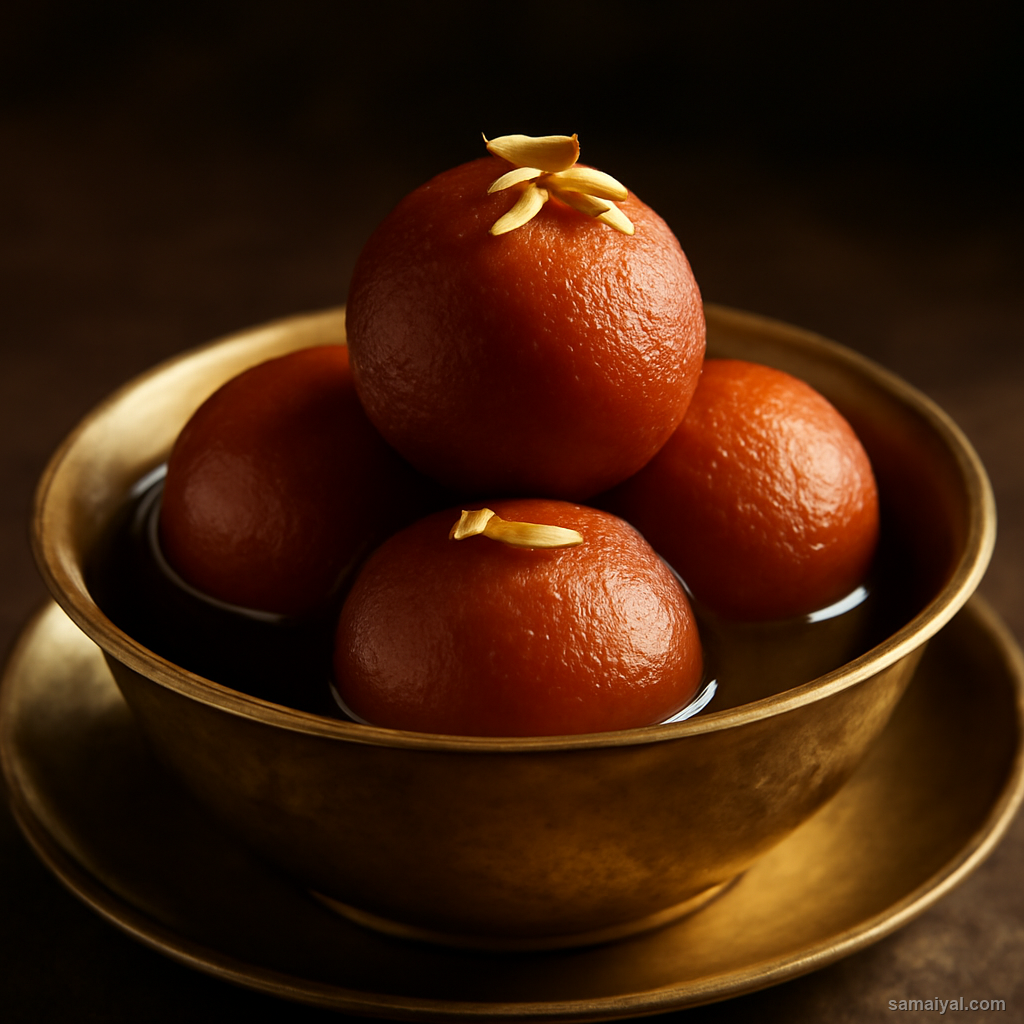
Gulab Jamun
Soft milk-solid dumplings soaked in fragrant rose sugar syrup — India's most beloved sweet.
Thick condensed milk with saffron and cardamom — the Bihar slow-cooked milk dessert

About Bihari Kesari Rabdi: Rabdi is the slow-cooked condensed milk dessert of North India — milk is gradually reduced until it transforms into a thick, malt-flavoured cream. The Bihari version is finished with saffron and cardamom, and served warm or chilled. There is no shortcut; the entire technique is patience. The reward is a dessert that no commercial product can match.
Use the right milk: Use 1 litre (about 4 cups) of full-fat whole milk. Skimmed or low-fat milk will not produce rabdi — the fat content is what creates the thick creamy texture. Plant-based milks generally do not work; the proteins behave differently.
Use a wide heavy pan: Use the widest, heaviest pan you have — a wide kadhai, a non-stick frying pan, or a heavy-bottomed saute pan. The wider the pan, the faster the milk reduces and the better the malki layer formation. A narrow tall pot will not produce proper rabdi.
Prepare the saffron: Take a generous pinch of saffron threads — about 12-15 strands. Place in a small bowl with 2 tbsp warm milk taken from the 1 litre. Let soak for 15 minutes. The strands will release their colour and aroma into the milk, turning it golden orange.
Prepare the nuts: Take 1 tbsp pistachios and 1 tbsp almonds. Slice thinly into long slivers. Set aside for garnish.
Measure cardamom: Use 1/2 tsp cardamom powder. Freshly ground from whole pods is dramatically more aromatic than pre-ground — crack open 6-7 pods and grind the seeds in a mortar.
Start boiling the milk: Pour the remaining milk (about 950ml after taking out 2 tbsp for saffron) into the wide pan. Place over high heat. Bring to a full rolling boil — bubbles across the entire surface.
Reduce to medium-low: Once boiling, reduce heat to medium-low. The milk should simmer steadily, with active small bubbles, but not be boiling violently. Watch carefully — milk loves to overflow during the first few minutes.
The long reduction: This is the only technique. Stir every 2-3 minutes with a flat wooden spoon or rubber spatula, scraping the sides and bottom each time to prevent sticking. Do not stir constantly; the gentle steady simmering is what creates the layers of cream that define rabdi.
Watch the malai (cream layer) form: After 5-10 minutes you will see a thin film forming on the surface — this is malai (cream). Each time you stir, push this film toward the side of the pan. As more layers form, push them up against the side. These accumulating cream layers are the soul of authentic rabdi.
Continue the reduction: After 20 minutes, the milk will have noticeably reduced and thickened. After 30 minutes you will see a distinctly creamy texture forming. After 40 minutes the milk should have reduced to about a third of its original volume — this is when rabdi is approaching ready.
Watch for the right consistency: After 40-45 minutes total, the rabdi should be clearly thick — when you drag a spoon through the centre, the trail stays visible for a moment before slowly closing back. The colour will have deepened from white to a pale cream-tan.
Scrape the malai back: After 45 minutes of reduction, gently scrape all the cream layers you accumulated on the sides back into the milk. Stir gently to combine. The rabdi will look richly textured with little ripples and clumps of softened cream visible — this rustic texture is what you want.
Add sugar: Reduce heat to low. Add 4 tbsp sugar. Stir gently until fully dissolved — about 1 minute. The rabdi will thin slightly as the sugar dissolves; continue cooking 2-3 more minutes to thicken back up.
Add saffron and cardamom: Pour in the saffron-infused milk along with the threads. Sprinkle 1/2 tsp cardamom powder. Stir gently to combine. The rabdi will turn a beautiful golden orange.
Finish with ghee: Add 1 tbsp ghee. Stir gently for 30 seconds — the ghee adds final richness and a beautiful gloss. Switch off the heat.
Final taste check: Dip a clean spoon and taste. The rabdi should taste richly creamy, sweet but not cloying, with clear saffron and cardamom notes coming through the deep malted milk character. Adjust by stirring in 1 tbsp more sugar if you prefer sweeter.
Serve warm or chilled: Pour into a serving bowl or individual ramekins. Garnish with the sliced pistachios and almonds. Bihari Kesari Rabdi can be served warm (more comforting, traditional) or chilled (more refreshing in summer). For chilled, refrigerate for at least 2 hours; the rabdi thickens further into a creamy custard-like texture as it cools. Stored in the fridge in an airtight container, it keeps for 3-4 days.
⭐ Featured
Soft milk-solid dumplings soaked in fragrant rose sugar syrup — India's most beloved sweet.

Slow-cooked rice pudding with cardamom, saffron, nuts and rose water — pure comfort in a bowl.

Slow-cooked grated carrot pudding with ghee, milk and cardamom — a winter celebration classic.

Spongy soft chenna balls cooked in light sugar syrup — the iconic Bengali sweet.
Comments & Tips
Be the first to share your experience with this recipe!
Leave a Comment