 ⭐ Featured
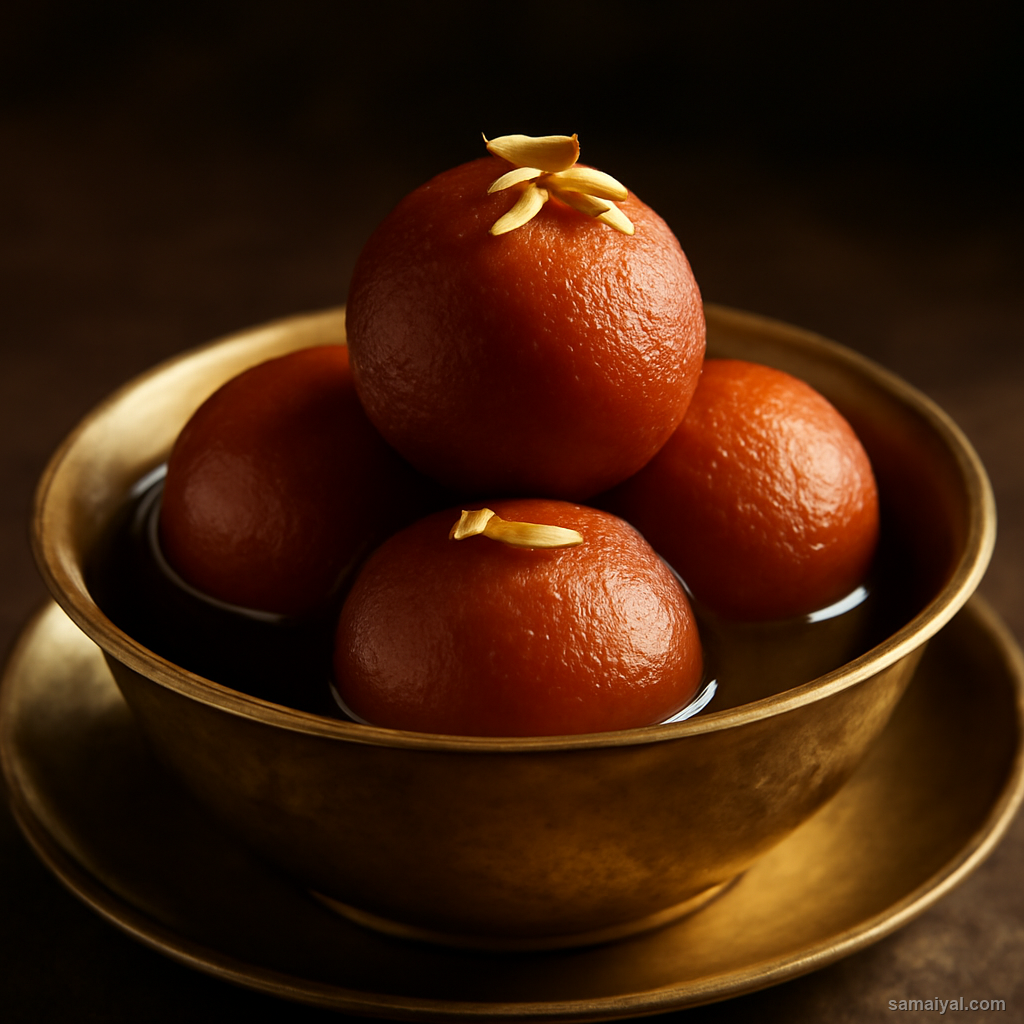
Gulab Jamun
Soft milk-solid dumplings soaked in fragrant rose sugar syrup — India's most beloved sweet.
Chettinad specialty — The most prized Chettinad sweet — black sticky rice in coconut milk.

About Chettinad Kavuni Arisi: Chettinad Kavuni Arisi is the most prized Chettinad sweet — black sticky rice in coconut milk. Across the Chettinad region of Tamil Nadu, kavuni arisi is the signature sweet of the wealthy merchant community — appearing at weddings, festivals, and special family gatherings.
Note on source: The original recipe instructions were template-generated and inappropriate (described savoury tempering for a sweet pudding). This rewrite provides correct technique for the actual dish.
Understand black rice: Use 1.5 cups Chettinad black sticky rice (kavuni arisi). The traditional Chettinad source is Manipuri or Burmese black rice, brought through merchant trade. Available at South Indian groceries.
If Chettinad black rice unavailable: Substitute with Manipuri Chak Hao or Thai black sticky rice. Slightly different flavour but same technique.
The critical overnight soak: Wash the black rice in 4-5 changes of cold water. Soak for 8 hours minimum, preferably overnight. Black rice has a tougher hull than white rice and requires extended soaking.
Understand coconut milk: Use 2 cups full-fat coconut milk and 1 cup whole milk. The combination produces the rich character that defines Chettinad-style.
If strictly vegan: Use 3 cups coconut milk total.
Understand palm jaggery: Use 1/2 cup grated palm jaggery (panangkalkandu in Tamil). Use the dark brown variety for the most authentic deep flavour.
Measure the cardamom: Use 1/4 tsp cardamom powder, freshly ground from whole pods.
Measure the cashews: Use 2 tbsp cashews, halved.
Measure the ghee: Use 1 tbsp pure cow ghee for traditional Chettinad richness.
Use a heavy-bottomed pot: Thin pots will scorch the milk on the bottom — once burned, the entire kavuni arisi is unsalvageable.
The traditional clay pot: Some Chettinad families cook in mud pots (mann chatti) for subtle mineral character. Cast-iron is the closest substitute.
Drain after soaking: Drain the rice in a sieve.
Combine rice and milks: Place the drained rice in the pot with 2 cups coconut milk and 1 cup whole milk. Stir gently.
Bring to a boil: Place over medium-high heat. Stir gently as it heats. Watch carefully — the milk-coconut mixture can foam and overflow.
Reduce to lowest heat: Once approaching a boil, reduce to the lowest setting your stove allows.
The critical 35-minute slow cook: Cook on lowest heat for 35 minutes, stirring every 5 minutes with a wooden spoon. The slow cooking produces the thick creamy texture and lets the black rice fully release its colour and flavour.
Watch the texture transformation: After 10 minutes, the rice softens and the milk turns pale lavender. After 20 minutes, the colour deepens to beautiful purple. After 35 minutes, deep purple with rich creamy character.
The stirring rhythm: Stir gently every 5 minutes — too much stirring breaks the grains; too little leads to scorching. Each stir, scrape the milk solids forming on the sides and bottom back into the kheer.
Why slow cooking matters: Black rice has a chewy texture even when fully cooked — this is its character, not a defect. Slow simmering allows the rice to release colour and flavour completely while maintaining pleasant chewiness.
Check the consistency: Should be moderately thick — pourable but with body. Rice grains should be tender enough to bite through but still have some chew.
Add jaggery and cardamom: Add the grated palm jaggery and 1/4 tsp cardamom powder. Stir well. The jaggery will dissolve within 1-2 minutes and the kheer will deepen further in colour.
The critical jaggery integration: Cook for 10 more minutes on lowest heat, stirring every 2 minutes. The flavours will fully meld.
Add ghee: Add the 1 tbsp ghee. Stir until fully melted and integrated. The ghee adds the characteristic Chettinad richness.
Roast the cashews: In a small pan, heat 1 tsp ghee. Add the 2 tbsp halved cashews. Stir for 1-2 minutes until light golden brown. Cool.
Garnish: Sprinkle the roasted cashews over the kavuni arisi just before serving.
Final taste check: Should taste deeply rich, complex, sweetened with the mineral character of jaggery, fragrant with cardamom and ghee, with chewy nutty black rice providing satisfying texture. The flavour is fundamentally different from any white rice kheer — earthier, deeper, more substantial.
Serve warm or chilled: Both excellent. Warm for religious offerings; chilled for festive home meals or summer days.
The cold version: Cold kavuni arisi thickens dramatically into custard-like texture. Many Chettinad families prefer the cold version.
Serve in small bowls: This is rich dessert eaten in modest portions (about 1/3 cup per person).
The Chettinad wedding tradition: At weddings, kavuni arisi is one of the centrepiece sweets — served alongside paal payasam and rava kesari. The dish announces the family's prosperity.
For those new to black rice: The chewy texture and complex flavour can be surprising. Most people who try properly made kavuni arisi find it deeply rewarding.
Variations: Some Chettinad families add 2 tbsp grated coconut along with the rice for additional coconut character. Others add 1 tbsp finely chopped pistachios for visual contrast.
A cultural and historical note: The Chettinad community traded across South and Southeast Asia for centuries. Black rice came through these trade connections. The combination of imported rice with local coconut milk and palm jaggery created uniquely Chettinad kavuni arisi. Eating this dish connects you to extraordinary commercial-cultural heritage.
A nutritional note: Black rice is exceptionally rich in anthocyanins (the antioxidant compounds in blueberries). Contains more iron and protein than white rice. Genuinely more nutritious than most Indian sweets.
Leftover storage: Stored in the fridge, kavuni arisi keeps for 4-5 days. The texture firms up considerably overnight. Refresh by stirring in 2-3 tbsp warm coconut milk before reheating gently. Many find day-old kavuni arisi tastes even better than fresh.
⭐ Featured
Soft milk-solid dumplings soaked in fragrant rose sugar syrup — India's most beloved sweet.

Slow-cooked rice pudding with cardamom, saffron, nuts and rose water — pure comfort in a bowl.

Slow-cooked grated carrot pudding with ghee, milk and cardamom — a winter celebration classic.

Spongy soft chenna balls cooked in light sugar syrup — the iconic Bengali sweet.
Comments & Tips
Be the first to share your experience with this recipe!
Leave a Comment