 ⭐ Featured
Dal Makhani
Slow-cooked black lentils in a rich buttery tomato gravy — a Punjabi classic that...
Prawns cooked in a mustard-coconut paste and served inside a whole green coconut shell — the most theatrical Bengali preparation where the coconut is sealed and the contents cooked inside it. The coconut water and flesh flavour the prawns from the inside.
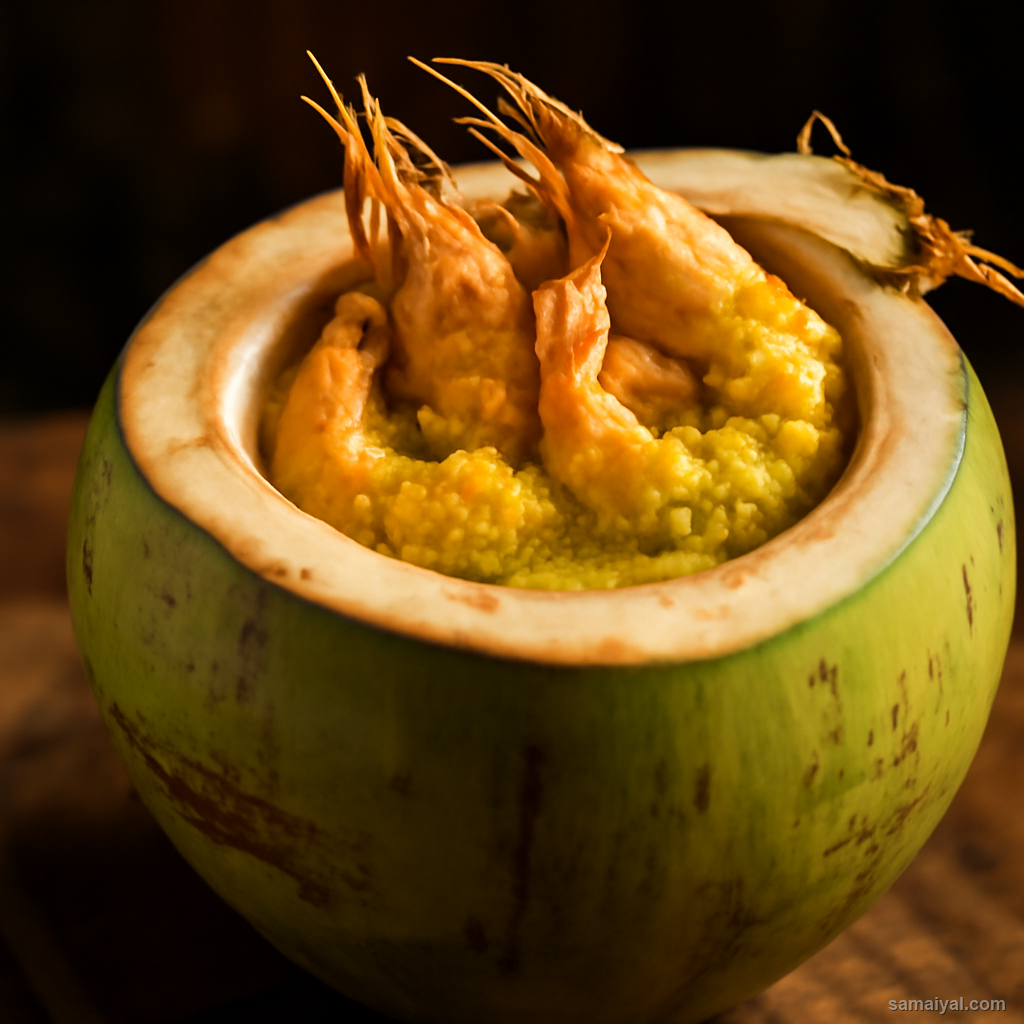
Prepare the green coconut: The fresh green coconut should have its top cut open (the coconut seller does this). The coconut water inside should be retained — do not discard it. Scrape a small amount of the tender, jelly-like coconut flesh from the inner walls using a spoon — this will mix with the prawn preparation.
Make the mustard-poppy paste: Drain soaked mustard seeds and poppy seeds. Grind together with green chilli, turmeric and salt in a mixer with 3 tbsp water. Grind for 3 to 4 minutes to a very smooth, silky paste.
Marinate the prawns: Mix the cleaned prawns with the ground mustard-poppy paste. Add 1 tbsp raw mustard oil. Mix well to coat every prawn with the paste.
Fill the coconut: Pour the marinated prawns with all the paste into the green coconut through the opening. The coconut water inside will mix with the prawn-mustard paste.
Add more raw mustard oil: Add 1 tbsp more raw mustard oil through the top.
Seal the coconut: Replace the cut coconut top as a lid. Seal around the edges with atta (wheat flour dough) pressed firmly — this creates an airtight seal.
Steam the sealed coconut: Fill a steamer or large pot with water. Place the sealed green coconut in the steamer. Cover and steam on medium heat for 30 to 35 minutes.
Check: After 35 minutes, carefully remove the dough seal. The prawns inside should be fully pink and cooked through. The coconut water will have reduced and the mustard paste will have turned into a sauce infused with coconut.
Serve dramatically at the table: Bring the whole coconut to the table. Open the top seal at the table — the fragrant steam carrying coconut and mustard aromas escapes immediately. Serve the prawns and sauce directly from the coconut.
Scoop the coconut flesh: Encourage guests to scrape the softened coconut flesh from the walls and eat it with the prawns and rice.
Note: Daab Chingri is one of the most theatrical Bengali preparations — made specifically to impress guests at important occasions. The concept of cooking prawns inside a sealed tender coconut so they steam in coconut water and absorb the coconut character is uniquely Bengali and not found in any other Indian regional cuisine. The preparation requires a green tender coconut, not a mature hard coconut.
⭐ Featured
Slow-cooked black lentils in a rich buttery tomato gravy — a Punjabi classic that...

Red kidney beans in a thick spiced tomato gravy, best eaten with steamed basmati rice.

Royal Mughlai-style paneer in a cashew-cream gravy — rich, indulgent and perfect for...

Soft potato-paneer dumplings in a luscious cashew gravy — the vegetarian showstopper.
Comments & Tips
Be the first to share your experience with this recipe!
Leave a Comment