 ⭐ Featured
Dal Makhani
Slow-cooked black lentils in a rich buttery tomato gravy — a Punjabi classic that...
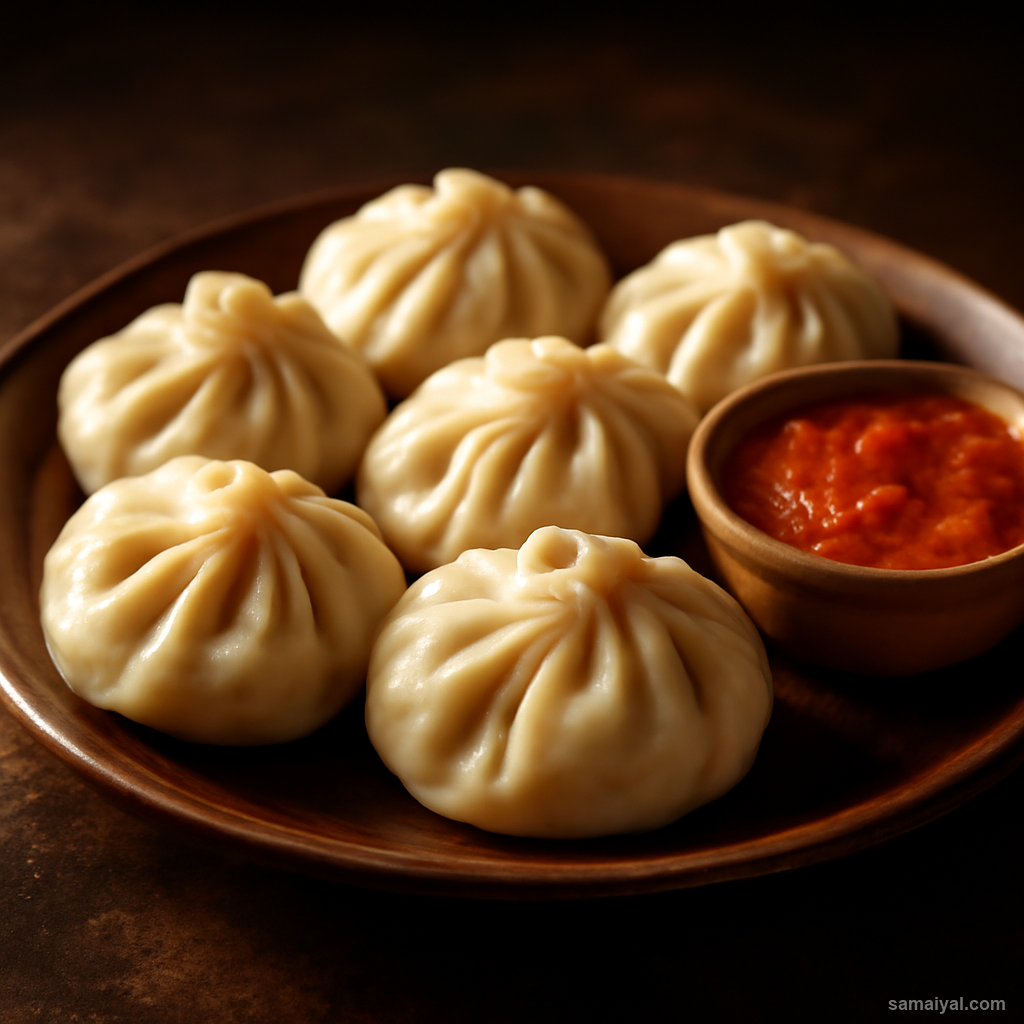
Steamed wheat flour dumplings filled with spiced cabbage and pork or vegetable — the Tibetan-origin preparation that has been assimilated into the food culture of Darjeeling, Kalimpong and Siliguri in north Bengal where large Tibetan, Nepali and Lepcha communities have shaped the local food.
Make the dough: Combine maida and salt. Add water to form a medium-firm, smooth dough. Knead 5 minutes. Cover and rest 20 minutes.
Make the filling: Combine minced pork with very finely chopped cabbage, spring onion, grated ginger, minced garlic, soy sauce, sesame oil, black pepper and salt. Mix thoroughly by hand for 2 minutes.
Make the dipping sauce: Blend soaked dried red chilli with garlic, tomato and salt to a smooth paste. Cook in 1 tsp oil for 5 minutes until fragrant. Cool.
Divide the dough: Divide the rested dough into 24 small balls.
Roll each wrapper: Roll each ball into a thin circle about 8 to 9 cm. The edges should be thinner than the centre — this allows the pleating to be sealed easily.
Fill and pleat: Place 1 tablespoon of filling in the centre of each wrapper. Gather the edges upward and pleat around the top — 8 to 10 small pleats — pinching them together at the top to seal. The Tibetan pleat creates a characteristic wrinkled top.
Set up the steamer: Bring water to a vigorous boil. Grease the steamer tray with oil.
Steam: Place momos on the greased steamer tray without touching each other. Steam on high heat for 12 to 15 minutes until the skin is translucent and slightly shiny.
Check doneness: A momo is done when it pulls away cleanly from the steamer tray.
Serve hot with dipping sauce: Serve immediately with the red chilli dipping sauce.
Note: Momos arrived in Darjeeling and Kalimpong with Tibetan refugees fleeing Chinese occupation of Tibet in 1959 — the refugee camps around Darjeeling brought not only people but an entire food culture that has been absorbed into the hill station's food identity. Today momos are eaten by all communities in north Bengal — Nepali, Bengali, Tibetan and Lepcha — from roadside stalls, school tiffins and restaurants. The Darjeeling momo scene, with dozens of specialist stalls on Chowrasta and in the bazaar, is one of the most authentic outside Tibet.
⭐ Featured
Slow-cooked black lentils in a rich buttery tomato gravy — a Punjabi classic that...

Red kidney beans in a thick spiced tomato gravy, best eaten with steamed basmati rice.

Royal Mughlai-style paneer in a cashew-cream gravy — rich, indulgent and perfect for...

Soft potato-paneer dumplings in a luscious cashew gravy — the vegetarian showstopper.
Comments & Tips
Be the first to share your experience with this recipe!
Leave a Comment