 ⭐ Featured
Aloo Paratha
Stuffed whole-wheat flatbread with spiced potato filling — the quintessential Punjabi...
Overnight fermented rice with mustard oil and raw onion — the probiotic cooling summer staple of Assamese farmers
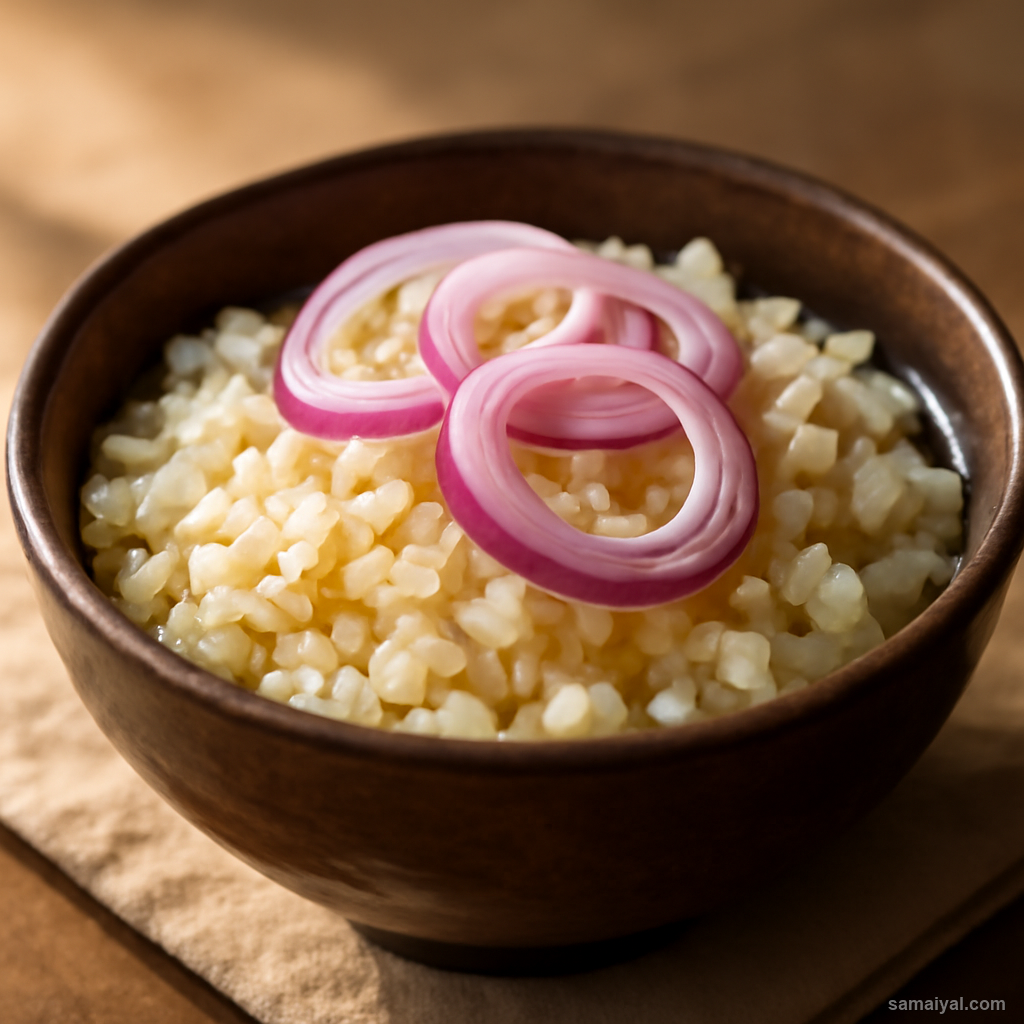
About Poita Bhat: Poita Bhat is leftover rice soaked overnight until lightly fermented — the summer breakfast of Assamese farmers. Probiotic, cooling and filling, it is a brilliant example of how traditional foods solved problems we now pay premium prices to address — gut health, hydration, and energy in hot weather. Where modern eating throws away leftovers, Assamese kitchens have transformed them into one of the most refreshing breakfasts in Indian cuisine.
Understand the technique: This is a wild fermentation — natural yeasts and bacteria from the air ferment the rice gently overnight, producing a slightly sour, probiotic, alcohol-free version of cooked rice. The technique is found across South and Southeast Asia under different names (the Filipino kanin lugan, the Indonesian nasi tutok).
IMPORTANT food safety note: Wild fermentation is generally safe but must be done correctly. The room temperature should be cool (under 30°C ideally) and the soaking time limited to 8-12 hours. Hot weather, longer soaking, or improper storage can lead to spoilage or harmful fermentation. Trust your senses — if the rice smells sour and pleasant in the morning, it is good; if it smells off, fishy, or strongly alcoholic, discard.
Use the right rice: Use 2 cups of cooked leftover rice. Day-old rice from the fridge is fine. Plain steamed rice (basmati, Joha, or any short-grain) works best. Avoid heavily seasoned rice or rice with added vegetables.
Use a clean bowl: Use a clean glass, ceramic, or stainless steel bowl with at least 4-cup capacity. Avoid metal bowls (especially aluminium) — they can react with the slightly acidic fermentation.
Place the rice in the bowl: Tip the cooked rice into the bowl. Spread evenly.
Add the water: Pour cold water over the rice until it is fully submerged — about 3 cups. The water level should be 2-3cm above the rice.
The water choice: Use clean drinking water (filtered if your tap water has chlorine, which can interfere with fermentation). Some Assamese traditions use water that has been boiled and cooled, for extra safety.
Cover loosely: Cover the bowl with a clean cloth or loosely with a plate (not airtight — fermentation needs some air circulation). The cloth keeps insects out while allowing the wild yeasts in the air to populate the rice.
Leave at room temperature: Place in a cool dark spot in your kitchen. Avoid direct sunlight or temperatures above 30°C — heat speeds fermentation too aggressively.
The overnight ferment: Leave for 8-10 hours overnight. The optimal time depends on room temperature — cooler rooms need more time, warmer rooms less. By morning, the rice should smell pleasantly sour with a faint sweet note — like buttermilk or yogurt.
The morning check: When you uncover the bowl in the morning, the smell should be bright, slightly sour, and pleasant. The water may have a faint cloudy or pale-tan tinge — this is normal. Tiny bubbles may be visible — also normal.
Safety check: If the rice smells unpleasant (like vomit, strongly alcoholic, fishy, or mouldy), discard immediately. If you see visible mould (fuzzy growth, particularly green or pink), discard. The fermentation is meant to be very mild — anything strong indicates problems.
Drain most of the water: Pour off most of the soaking water — keep about 1/4 cup mixed in for the traditional Assamese poita texture. The remaining water has fermentation flavour and probiotic bacteria; it is part of the dish.
The rice texture: The rice should be soft, slightly puffy from absorbed water, and have a faint tangy-sweet character. Some Assamese prefer a drier poita; others keep more water. Adjust to your taste.
Prepare the green chilli: Take 1 fresh green chilli. Slice into thin rounds. Adjust the chilli amount to your heat tolerance — poita is meant to have a clear chilli kick.
Prepare the onion: Take 1 small onion. Peel and chop into very fine 5mm dice. The onion goes in raw — its sharp pungency is essential to poita.
The critical mustard oil: Use 1 tsp raw mustard oil. Raw, unheated mustard oil is the traditional choice — its sharp pungency cuts through the gentle sourness of the fermented rice. If you find raw mustard oil too sharp, briefly heat it in a small pan for 30 seconds until it just smokes, then cool completely before using.
Add everything to the rice: Add the chopped onion, sliced green chilli, 1 tsp mustard oil, and salt to taste — about 1/2 tsp.
Mix with hands: The traditional Assamese way is to mix poita with clean hands. The warmth of your hand and the gentle pressure helps the flavours marry beautifully. The mixing should be vigorous enough to break up any clumps but gentle enough to preserve the rice grain structure.
If you prefer a spoon: Use a wooden spoon to fold and mix gently. The result is similar — slightly less integrated than hand-mixing.
Taste and adjust: Dip a clean spoon and taste. The dish should hit you with multiple flavours simultaneously — soft slightly tangy fermented rice, sharp raw onion, gentle chilli heat, pungent mustard oil. Adjust salt to your liking.
Add more chilli if needed: Some Assamese add 2 chillies for extra heat. Some homes also add a few finely chopped fresh ginger pieces for warmth.
Eat immediately: Poita Bhat must be eaten as soon as it is mixed. The rice keeps absorbing the flavours, the onion turns soft, the chilli mellows. Within 30 minutes the dish loses its peak character.
Serve in deep bowls: Spoon into deep bowls — the slight wetness of poita means flat plates do not work well. Provide small spoons for eating.
The traditional accompaniments: Some Assamese serve poita with a small portion of mashed boiled potatoes (aloo pitika, recipe id 1205) for a more substantial breakfast. Others serve with a piece of dried fish (xor bhura, recipe id 1283) crumbled on top — the saltiness of the dried fish and the gentle sourness of poita are an excellent combination.
For hot summer days: Poita is specifically a hot-weather dish. The probiotic bacteria, the cooling effect of fermented rice, and the moisture content all combine to keep the body cool and hydrated through Assam's brutal summer humidity.
A cultural note: The poita tradition reflects Assamese rural wisdom — every meal's leftover rice was destined for the next morning's breakfast. This zero-waste approach is now being studied by nutritionists for its health benefits: probiotic content, reduced glycemic index from fermentation, and B vitamin enhancement. Modern Assamese youth are rediscovering poita as a heritage food worth preserving.
Leftover storage: Once mixed with onion and chilli, poita does not store well. The components separate and the texture changes within hours. Make only what you will eat immediately. The unmixed fermented rice (without onion/chilli) keeps in the fridge for 1 more day, but quality drops.
⭐ Featured
Stuffed whole-wheat flatbread with spiced potato filling — the quintessential Punjabi...
 ⭐ Featured
Thin crispy rice-lentil crepe filled with spiced potato masala — the iconic South...
 ⭐ Featured
Steamed fermented rice cakes served with tangy lentil vegetable soup — South India's...

Crispy ring-shaped lentil fritters with fluffy interior — a South Indian must-have with sambar.
Comments & Tips
Be the first to share your experience with this recipe!
Leave a Comment