 ⭐ Featured
Dal Makhani
Slow-cooked black lentils in a rich buttery tomato gravy — a Punjabi classic that...
Slow-smoked pork belly — the preserved winter protein of Arunachali highlands
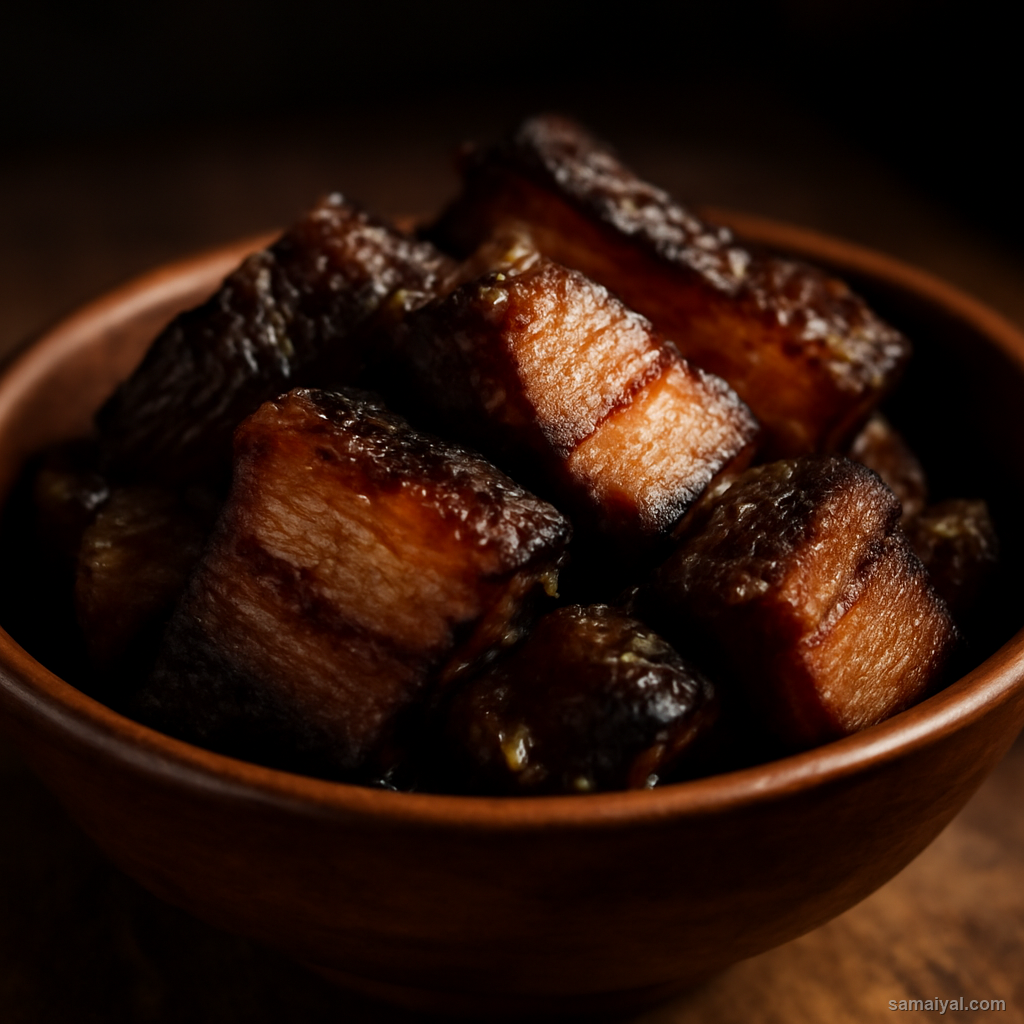
About Smoked Pork Arunachal: Smoked pork is the winter staple of Arunachali highlands. Smoking preserves the pork through cold months and produces deeply complex flavour that elevates any dish. Across Apatani, Adi, Galo, and Nyishi communities, pork smoking has been practised for centuries. Made in autumn when pigs are slaughtered, the smoked meat is hung from kitchen rafters and used throughout winter — adding to soups, stews, curries, and stir-fries.
Understand the dish: Smoked pork is essentially pork pieces seasoned with salt, then exposed to wood smoke over multiple days until fully smoked-cured. Used as flavouring and protein ingredient in cooked dishes — rarely eaten alone. The dish is more about creating a preserved flavouring ingredient than a finished meal.
IMPORTANT food safety note: Smoking is a controlled preservation process. Improper smoking (insufficient time, wrong temperature, contamination) can produce harmful bacteria. Follow the protocol carefully. The traditional Arunachali method uses constant wood smoke for 5-7 days — modern adaptations may use shorter periods with refrigeration.
Gather ingredients: 1 kg pork belly or pork shoulder (with fat — lean cuts dry out completely during smoking; avoid pork loin), 2 tbsp salt for the cure, traditional smoking equipment (small smoker or improvised setup with heat source, smoke source, and rack), wood for smoking (oak, hickory, or fruitwood; pine or cedar produce off-flavours).
Prepare the pork: Wash pork pieces under cold running water. Pat very dry with kitchen paper. Cut into long strips or 5x10cm slabs — about 2cm thick. Smaller pieces smoke faster but may dry out. The 2cm thickness is the sweet spot for proper smoking penetration.
The critical salt cure: Place pork pieces in a wide bowl. Sprinkle generously with 2 tbsp salt. Use clean hands to massage the salt into every surface. Let rest in fridge for 24 hours — salt cure firms the flesh, draws out excess moisture, and provides preservation. After 24 hours, pat the pork dry with kitchen paper.
Set up the smoker: Traditional Arunachali method: hang the salted pork from the kitchen rafters above a continuously smoldering wood fire. The rafters are typically 2-3 meters above the fire — high enough that the pork smokes rather than cooks. Modern adaptation: use a backyard smoker with wood chips, or improvise with a metal box, hot plate, and wood chips.
The critical smoking process: Maintain low temperature (60-80°C/140-180°F) during smoking. Higher temperatures cook the pork (different process); lower temperatures don't produce proper smoking. Continuous wood smoke is essential. Smoke for 5-7 days, monitoring daily. Some traditional Arunachali kitchens smoke for 2-3 weeks. Modern home smokers may smoke for 12-24 hours, then continue drying in a cool dry place for 2-3 weeks.
Doneness check: Properly smoked pork is darker than fresh pork — surface has caramelized brown-mahogany color with dry firm texture. The meat should weigh significantly less than when fresh. Should smell deeply smoky-meaty without any off-odors. If smell is sour or off, discard — smoking has gone wrong.
Long-term storage: Properly smoked pork keeps for 3-6 months in a cool dry place at room temperature, hanging from rafters or on a rack. For modern home storage, refrigerate in an airtight container — keeps for 2-3 months. The flavour deepens slightly over time.
Using smoked pork — soups: Slice or chop 50-100g of smoked pork. Add to vegetable soups, dal, or galho rice porridge (recipe id 1107). The smoked pork releases its flavour into the broth, providing umami depth.
Using smoked pork — curries: Chop 100-200g of smoked pork. Add along with fresh meat in pork curries — the combination of fresh and smoked produces extraordinary depth. Particularly excellent in bamboo shoot curry (recipe id 1104).
Using smoked pork — stir-fries and rice: Slice thinly. Add to vegetable stir-fries during the final 2 minutes — produces smoky vegetable dishes. Particularly excellent with bok choy, cabbage, or fermented vegetables. Add chopped smoked pork to rice preparations during the final 5-10 minutes of cooking — produces fragrant rice with smoky depth.
Serve across contexts: At Arunachali winter meals, smoked pork is the essential flavouring ingredient. Pair with substantial dishes for an elaborate winter spread. The dish is genuinely a flavouring ingredient — used in small quantities (50-100g per dish for 4 servings) — rather than a main eating ingredient.
A cultural and historical note: The pork smoking tradition has been part of Arunachali highland life for centuries. The technique reflects deep agricultural-culinary wisdom: turn autumn abundance (pig slaughter) into year-long flavouring resource. As modern refrigeration has become available, traditional smoking has declined; cooks who maintain the tradition are valuable cultural keepers.
A nutritional note: Smoked pork provides exceptional protein, B vitamins, iron, and concentrated minerals. Combined with vegetables, rice, and other dishes, the meal provides complete nutrition with deeply complex flavour.
Leftover storage: Properly smoked pork keeps for 3-6 months at room temperature in cool dry place, or 2-3 months refrigerated. The flavour does not noticeably degrade — smoked pork is genuinely shelf-stable.
⭐ Featured
Slow-cooked black lentils in a rich buttery tomato gravy — a Punjabi classic that...

Red kidney beans in a thick spiced tomato gravy, best eaten with steamed basmati rice.

Royal Mughlai-style paneer in a cashew-cream gravy — rich, indulgent and perfect for...

Soft potato-paneer dumplings in a luscious cashew gravy — the vegetarian showstopper.
Comments & Tips
Be the first to share your experience with this recipe!
Leave a Comment