 ⭐ Featured
Pav Bhaji
Mumbai's beloved mashed vegetable curry served on butter-toasted soft buns — street food gold.
Deep-fried sweet wheat and jaggery cookies — the sacred Chhath Puja offering of Bihar

About Thekua: Thekua is Bihar's most sacred food — the offering to Surya (Sun God) during Chhath Puja. Every Bihar home fills with its aroma during the festival. The deep-fried sweet wheat-and-jaggery cookies are not just a treat but a religious obligation: Chhath Puja, the four-day worship of the Sun God, is incomplete without thekua. The dish represents Bihari devotion expressed through food.
Understand the religious significance: Chhath Puja is one of the most important Bihari festivals — celebrated in October-November and again in March-April. During the four-day fast and ritual, thekua is offered to the Sun God along with seasonal fruits. The making of thekua is itself a spiritual practice in many Bihari families.
The ritual purity requirement: When making thekua for Chhath Puja, traditional Bihari families maintain ritual purity — clean kitchen, clean hands, no eating or drinking during preparation. This recipe can be made for everyday eating without these strict requirements.
Understand the ingredients: Just 5 ingredients — wheat flour, jaggery, ghee, fennel, and cardamom — plus desiccated coconut. The simplicity is essential. Traditional thekua never uses sugar (only jaggery), butter (only ghee), or any leavening.
Choose whole wheat flour: Use 2 cups of whole wheat flour (atta). The flour should be fresh — old flour produces dense, less flavourful thekua.
Understand the jaggery: Use 1/2 cup of grated jaggery. Use dark Bihari palm jaggery for the most authentic deep flavour and ritual significance. Grate fine on the small holes of a box grater.
Prepare the jaggery water: Place the grated jaggery in a small saucepan with 3/4 cup warm water. Heat on very low heat, stirring continuously, for 2-3 minutes until the jaggery is fully dissolved into a smooth dark syrup. Strain through a fine sieve to remove any grit.
The critical cooling of jaggery water: Let the jaggery water cool completely to room temperature before using — about 20-30 minutes. Hot jaggery water added to flour produces gummy thekua.
While the jaggery water cools — prepare other ingredients:
Lightly crush the fennel: Use 1/4 tsp fennel seeds (saunf). Slightly crush between your fingertips or in a mortar to release the aroma.
Measure the cardamom: Use 1/4 tsp cardamom powder. Freshly ground from whole pods is dramatically more aromatic than pre-ground.
Measure the coconut: Use 3 tbsp desiccated coconut. The coconut adds traditional Bihari character and a slight chewy texture.
Measure the ghee: Use 2 tbsp ghee. The ghee is the binding fat — it makes the thekua flaky.
Mix the dough: In a wide bowl combine the 2 cups whole wheat flour, the 2 tbsp ghee, lightly crushed fennel, cardamom powder, and desiccated coconut. Use your fingertips to rub the ghee into the flour for 2-3 minutes — the mixture should look like coarse breadcrumbs and the spices should be evenly distributed.
Why rub the ghee: This step is essential for flaky thekua. The ghee coats the flour granules, preventing gluten formation. Without proper rubbing, thekua turns out tough.
Add the cooled jaggery water: Pour about half the cooled jaggery water over the flour mixture. Mix with a fork at first, then your hands as the mixture comes together. Add more jaggery water as needed.
The critical stiff dough: Knead for 3-4 minutes into a very stiff dough — much stiffer than roti dough. The stiffness ensures the thekua holds its shape during deep-frying. If the dough is too soft, the thekua will go soft and oily during frying.
The consistency check: Press the dough — it should hold its shape and barely yield to pressure. If too soft, knead in 2 tbsp more flour. If too dry and cracking, add 1 tsp more jaggery water.
Let the dough rest: Cover and rest for 10 minutes. The rest allows the flour to fully hydrate.
Roll out the dough: Place the rested dough on a clean work surface. Use a rolling pin to roll out into a thick disc — about 1cm thick. The thickness must be 1cm — thinner thekua becomes too crispy, thicker stays raw inside.
The critical pattern-pressing: Use a fork to press patterns into the rolled dough — traditionally, parallel lines and cross-hatch patterns. The patterns are decorative but also functional: they help the thekua cook evenly and retain its decorative appearance.
Cut into rectangles: Use a sharp knife to cut the dough into rectangular pieces — typically 4cm x 6cm rectangles. You should get 12-15 pieces.
Prepare the oil for frying: Pour neutral cooking oil into a deep heavy pan to a depth of at least 5cm. Place over medium heat. The oil should be moderately hot — not too hot, which would brown the thekua before the inside cooks; not too cool, which would make them oil-soaked.
Test the oil temperature: Drop a small piece of dough into the oil. It should sink briefly, then rise to the surface within 5-7 seconds with steady bubbles around it. If it browns immediately, oil is too hot — wait 1 minute.
Fry one or two at a time: Carefully slide one or two thekua at a time into the hot oil. Do not crowd — temperature drops if too many go in.
The critical slow fry: Cook on medium heat for 3-4 minutes per side, turning once with a slotted spoon. The thekua should turn deep golden-brown on both sides — almost mahogany.
Why slow fry matters: The slow fry allows the thick thekua to cook through completely while developing the deep golden colour. Quick frying produces underdone centres and overdone exteriors.
Drain on paper or rack: Lift each thekua out with a slotted spoon and drain on a wire rack — best for keeping them firm.
Let cool completely: Once all are fried, let cool to room temperature for at least 30 minutes. Thekua firms up dramatically as it cools — from soft-warm to firm-crisp.
The final texture: Properly made thekua is firm-crisp on the outside, slightly chewy inside, and breaks cleanly into pieces. The colour is deep golden-brown with the fork patterns clearly visible.
Serve at room temperature: Thekua is meant to be served at room temperature — never warm, never refrigerated.
The Chhath offering: For Chhath Puja, traditional Bihari families place thekua in a wide brass plate (thali) along with bananas, sugarcane pieces, sweet potatoes, and other seasonal offerings. The plate is offered to the rising and setting sun during the four-day festival.
For everyday eating: Thekua makes an excellent sweet snack with hot tea or chai. The deep flavour and slow-release sweetness from jaggery provides sustained energy.
For gifting: During Chhath season, thekua are exchanged between families and shared with neighbours. Pack 6-8 pieces in a small box for gifting.
A cultural and historical note: Chhath Puja is one of the oldest known Hindu festivals — references to similar sun worship appear in the Rig Veda. Thekua, as the central offering, has accompanied this worship for thousands of years. Eating thekua connects you to one of the deepest religious-culinary traditions in India.
Leftover storage: Stored in an airtight container at room temperature, thekua keeps for 2 weeks. The texture firms up further over time but remains delicious. In humid climates, store with silica gel to prevent softening. They make excellent travel food — keep well in dry storage.
⭐ Featured
Mumbai's beloved mashed vegetable curry served on butter-toasted soft buns — street food gold.
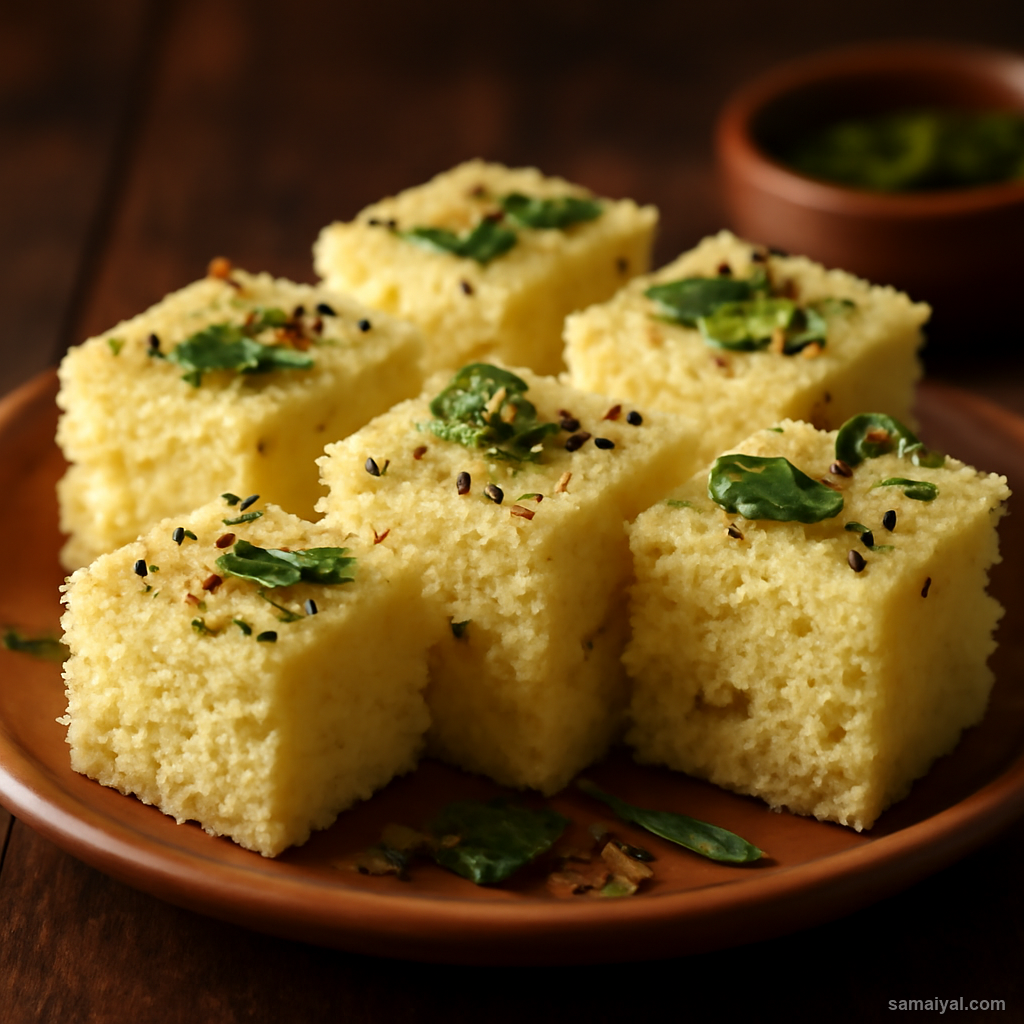
Fluffy steamed chickpea flour cake from Gujarat — light, spongy, tangy and totally addictive.
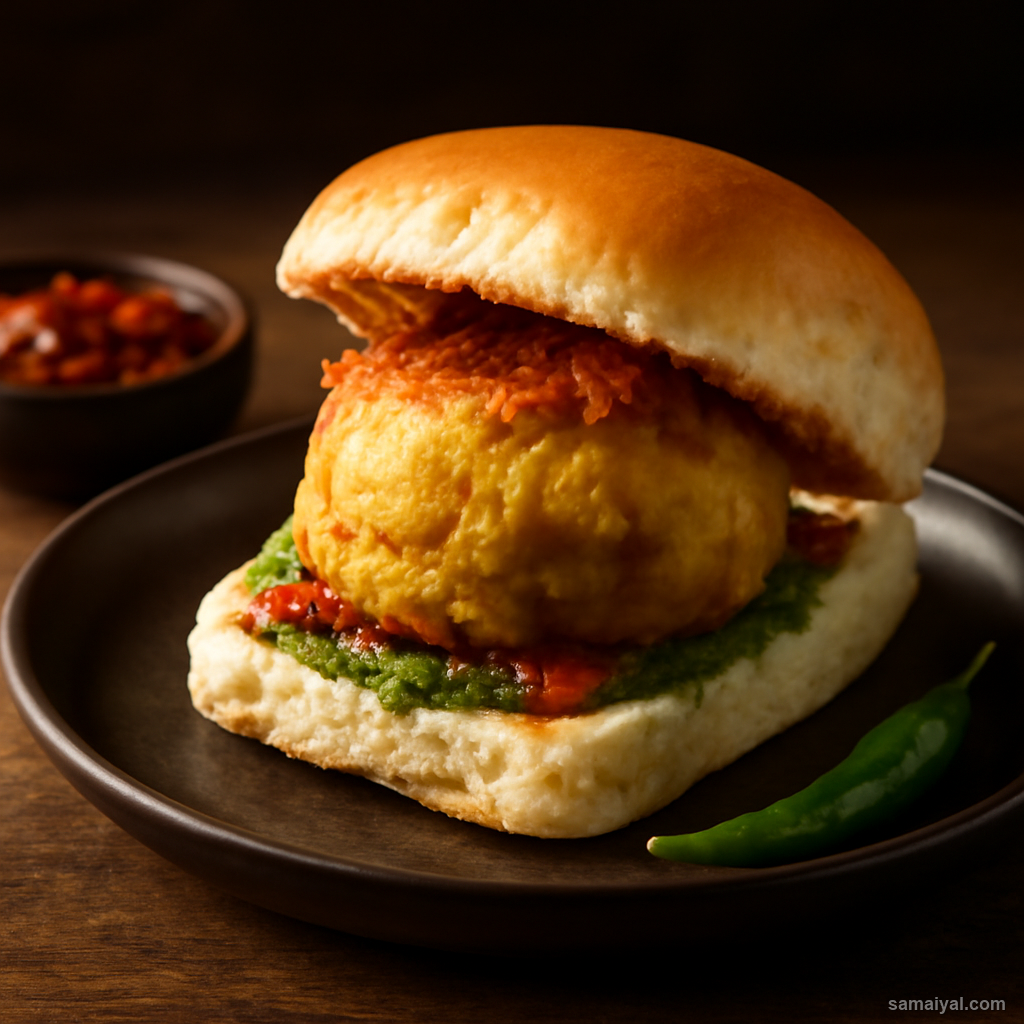
Mumbai's vegetarian burger — spiced potato dumpling in a fried batter, served in a...
 ⭐ Featured
Crispy golden pastry filled with spiced potatoes and peas — India's most loved snack,...
Comments & Tips
Be the first to share your experience with this recipe!
Leave a Comment