 ⭐ Featured
Dal Makhani
Slow-cooked black lentils in a rich buttery tomato gravy — a Punjabi classic that...
Pork dry-rubbed with local spices and slow-cooked — the tribal dry pork of highland Arunachal
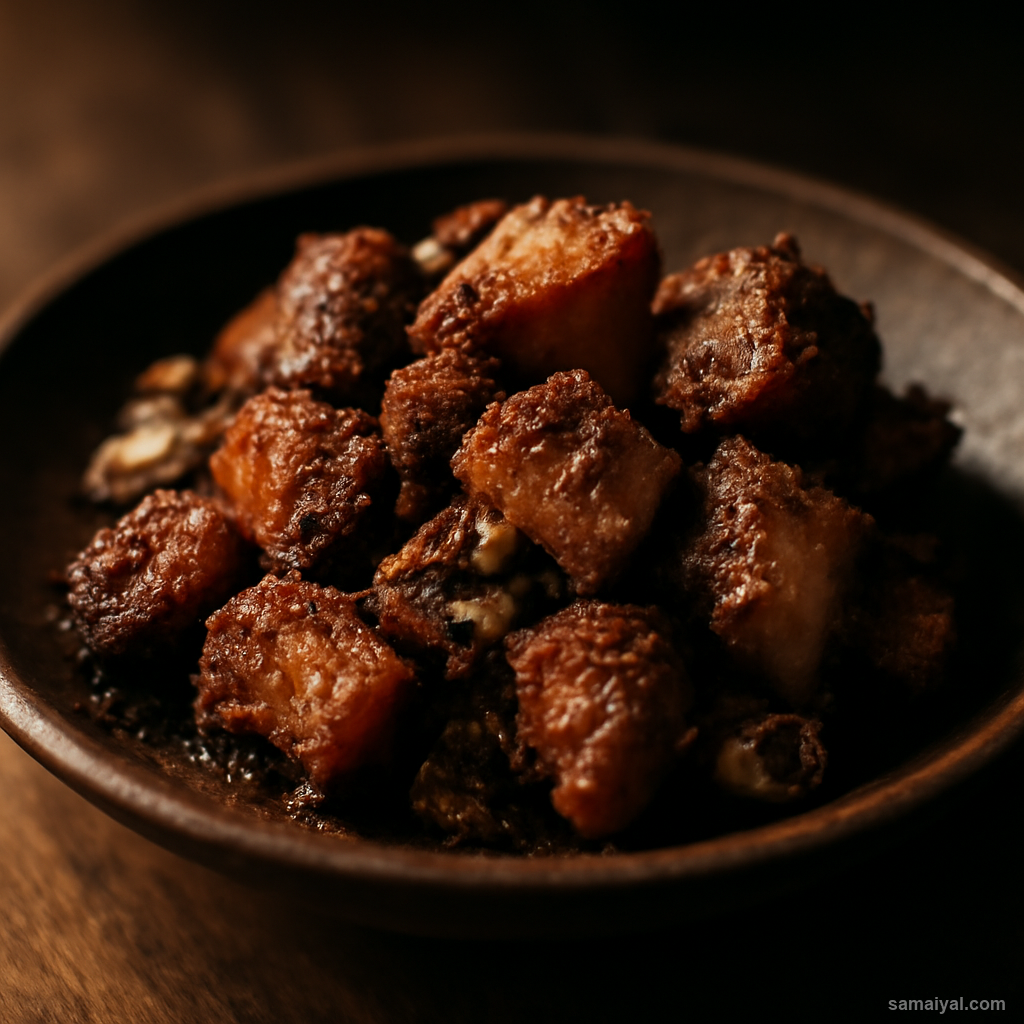
About Tribal Pork Dry Rub Arunachal: Tribal dry rub pork is the weekend cooking of highland Arunachali communities — pork rubbed with bold spices, then slow-cooked over wood fire or in heavy pots. Across Apatani, Adi, Galo, and Naga communities, pork is the prestige meat — appearing at celebrations, feasts, and major weekend gatherings. The dry rub style emphasises the meat itself rather than gravy or sauce — letting the pork's natural flavour shine through bold seasonings.
Understand the dish: Tribal dry rub pork is essentially pork pieces marinated with a bold spice rub, then slow-cooked in a heavy pot until the meat is tender, the fat rendered, and the seasonings deeply integrated. Distinct from saucy curries — this is pork-forward cooking.
Gather ingredients: 1 kg pork belly or pork shoulder cubed into 4-5cm pieces (substitute with chicken thigh — much faster cooking; avoid lean cuts which dry out), 4 tbsp neutral cooking oil, 2 medium onions finely chopped (yes, two — substantial onion is essential for foundation), 6 garlic cloves minced, 2-inch fresh ginger grated, 2 tsp turmeric powder, 1 tsp red chilli powder (or 2-3 fresh green chillies slit, or 1/2 raja mircha for extreme heat), 2 tsp ground coriander, 1 tsp ground cumin, 1/2 tsp ground black pepper, 1.5 tsp salt, optional 1 tbsp finely chopped fresh wild herbs (Northeast Indian wild basil or similar), 1/2 cup water, fresh coriander to garnish.
IMPORTANT chilli safety and pork prep: If using raja mircha (ghost chilli), WEAR GLOVES — it is one of the world's hottest. Most home cooks should skip raja mircha; use red chilli powder or green chillies for accessible heat. Wash pork pieces (fresh pork belly is pink-rose with white-cream fat) under cold running water. Pat very dry with kitchen paper.
Make and apply the dry rub: In a small bowl, combine 2 tsp turmeric, 1 tsp red chilli powder, 2 tsp ground coriander, 1 tsp ground cumin, 1/2 tsp black pepper, and 1.5 tsp salt. Mix thoroughly. Place pork pieces in a wide bowl. Sprinkle the dry rub over the pork. Use clean hands to massage the rub into every surface of the meat — every piece should be uniformly coated. Cover. Let marinate 30 minutes minimum (or up to 4 hours in the fridge for deeper flavour penetration).
Prepare the cooking pot: Use a heavy-bottomed pot with a tight-fitting lid (Dutch oven, large kadhai with lid, or thick casserole). The heavy bottom prevents scorching during long slow cooking. Pour the 4 tbsp oil into the pot over high heat. Heat 1-2 minutes until very hot.
Fry the aromatics: Add chopped onions and minced garlic to the hot oil. Stir-fry for 4-5 minutes, stirring often, until the onions are deep golden brown and starting to caramelise. The deep browning is essential — provides flavour foundation.
The critical pork sear: Increase heat to maximum. Add the marinated pork pieces with all the spice rub. Spread in a single layer. Sear hard for 8 minutes WITHOUT stirring. The pork releases liquid initially, then gradually browns deeply on the bottom. Stirring during this stage prevents proper Maillard browning.
Stir, brown, add ginger and water: After 8 minutes of sear, stir the pork. Continue cooking 5 more minutes — pork should be browned on multiple sides with rendered fat visible. Add the grated ginger and stir for 1 minute. Pour in 1/2 cup hot water. Bring to a gentle simmer. Reduce heat to low. Cover the pot tightly.
The critical low simmer: Cook covered for 45 minutes, lifting the lid every 15 minutes to gently stir and check moisture. The braising liquid should always be present at the bottom — pork releases its own juices during cooking. If it gets too dry, add 2-3 tbsp hot water.
Doneness check at 45 minutes: Pierce a piece of pork with a fork — should slide in easily. The meat should pull apart with light fork pressure. The fat should look fully translucent and rendered. Properly cooked pork is tender, deeply browned, with the seasoning visible as a rich coating.
Reduce the gravy: Remove the lid. Increase heat to medium-high. Stir gently every 1-2 minutes for the next 5 minutes, allowing the cooking liquid to reduce to a thick glossy coating that clings to the pork. Should be relatively dry — meat with sticky glossy seasoning rather than liquid sauce.
Final flavour check: Should taste deeply rich and complex — succulent pork with bold spices fully integrated, deeply caramelised onions, sharp ginger warmth, and complex chilli heat (if using). The dish is meat-forward; vegetables are not the focus. If chilli heat insufficient, sprinkle 1/4 tsp red chilli powder during the final 5-minute reduce. If too intense, you cannot reduce heat — serve with extra rice and yogurt.
Garnish and serve: Switch off heat. Sprinkle 2 tbsp finely chopped fresh coriander over the top. Add 1 tbsp finely chopped wild herbs if using. Serve hot over plain steamed rice — the most traditional Arunachali pairing. Pair with simple sides — a vegetable stir-fry, a small dal, plain yogurt, raw onion-and-chilli pickle, lemon wedges. Particularly satisfying for weekend meals — the substantial 1-hour cooking time and deep flavour are the reward of slow weekend cooking.
For weekend feasts and variations: At Arunachali tribal feasts, this dish is one of the centrepieces — pair with smoked pork (1113), galho rice porridge (1107), and traditional accompaniments. Variations: add 200g cubed potato during simmer; 1 tbsp pehak fermented soybean for umami depth; 1 tbsp finely chopped smoked pork for smokey character; reduce oil to 2 tbsp and use pork loin for cleaner faster version.
A cultural and nutritional note: Tribal pork cooking represents the festive heart of Arunachali highland cuisine. Pork is genuinely the prestige meat — saved for celebrations and weekend gatherings. As tribal communities modernise, traditional pork cooking remains beloved. The dish provides exceptional protein, complex amino acid profile, B vitamins, iron, and substantial calories. Combined with rice and vegetables, the meal is genuinely nutritionally complete for active tribal eating.
Leftover storage: Stored in fridge in an airtight container, the dry rub pork keeps for 4-5 days and tastes even better the next day. The flavours mature beautifully overnight. Reheat gently on the stovetop with a splash of water if needed. Excellent for next-day rice — the flavour benefits from leftover treatment.
⭐ Featured
Slow-cooked black lentils in a rich buttery tomato gravy — a Punjabi classic that...

Red kidney beans in a thick spiced tomato gravy, best eaten with steamed basmati rice.

Royal Mughlai-style paneer in a cashew-cream gravy — rich, indulgent and perfect for...

Soft potato-paneer dumplings in a luscious cashew gravy — the vegetarian showstopper.
Comments & Tips
Be the first to share your experience with this recipe!
Leave a Comment