 ⭐ Featured
Butter Paneer Masala
Creamy tomato-based curry with soft paneer cubes — the all-time favourite of Indian...
Pumpkin with fermented soybean paste and chilli — earthy and comforting Arunachali vegetarian curry
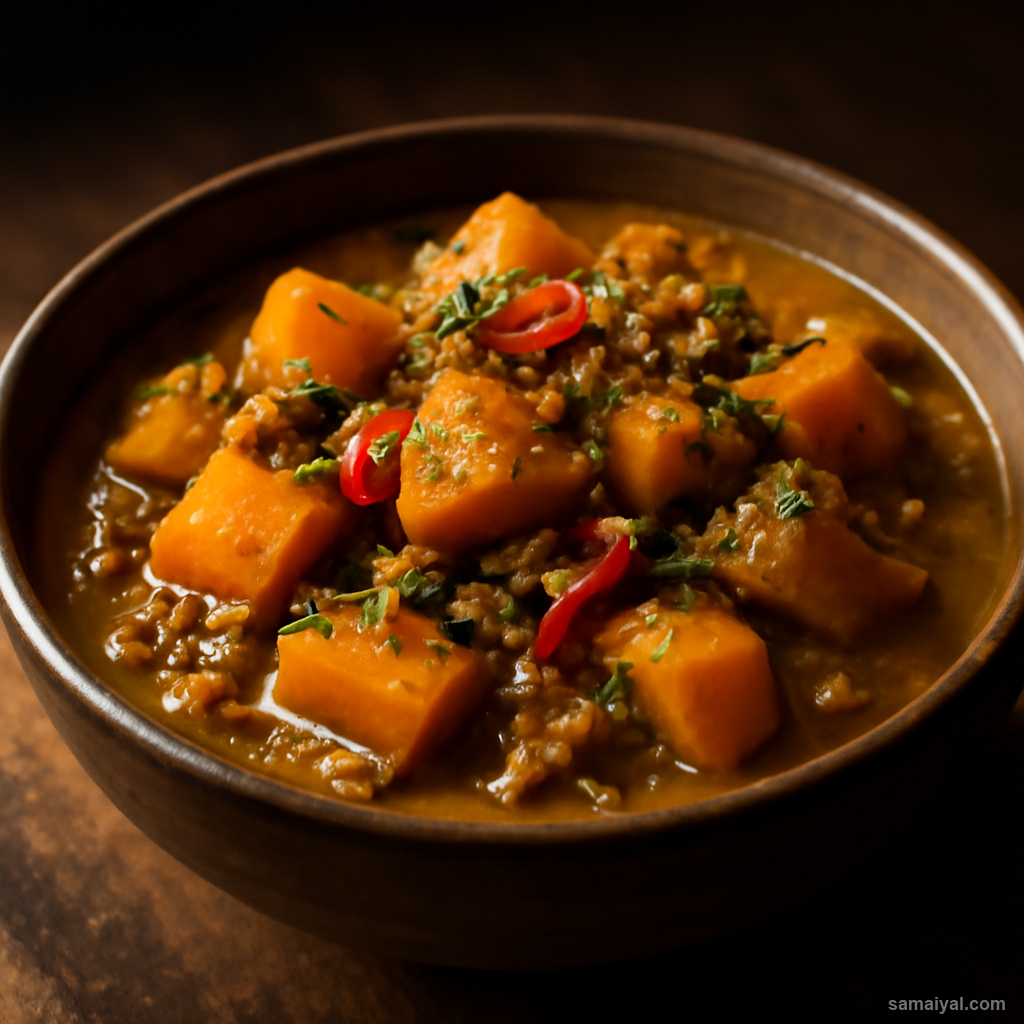
About Tribal Pumpkin Curry: Pumpkin with pehak (fermented soybean paste) is the most common vegetable curry in Nyishi territory and across many Arunachali tribal communities. The fermented soy transforms simple pumpkin into something deeply savoury, providing the umami foundation that traditional Arunachali cooking values. It is a humble dish that demonstrates how a few key ingredients — when chosen and combined wisely — can produce extraordinary flavour.
Understand pehak: Pehak (also called kinema or akhuni) is the Northeast Indian fermented soybean paste — small dark brown soybeans that have been fermented to a powerful, intensely savoury condiment. Sold at Northeast Indian groceries and specialty Asian markets.
If pehak is unavailable: Use 2 tbsp Korean doenjang or Japanese miso paste — both deliver similar umami fermented soybean character. The flavour profile differs slightly but the dish works.
Measure carefully: Use 2 tbsp pehak — fermented soybean is intensely flavoured, but for this pumpkin curry you can use slightly more than for other dishes since the sweetness of pumpkin balances the saltiness.
Choose the right pumpkin: Use 500g of red pumpkin (kaddu) — the deep orange-fleshed variety. Avoid butternut squash (too sweet) or watery pumpkins. The pumpkin flesh should be firm and feel dense.
Prepare the pumpkin: Cut the pumpkin in half. Scoop out and discard the seeds and stringy fibres with a spoon. Peel the skin using a sturdy knife or peeler.
Cube the flesh: Cut the peeled pumpkin into 3cm cubes. Uniform cubes are essential for even cooking — uneven sizes mean some are mushy while others are still hard.
Prepare the onion: Take 1 medium onion. Peel and chop into fine 5mm dice.
Prepare the garlic: Take 3 garlic cloves. Crush, peel and mince finely.
Prepare the chillies: Take 2 dried red chillies. Snap each in half. Tap out and discard most of the seeds for milder heat.
Use a wide pan: Use a wide kadhai or heavy frying pan. The pumpkin needs space to cook evenly without overcrowding.
Heat the oil: Pour 2 tbsp neutral cooking oil into the pan over medium-high heat. Heat for 30 seconds until shimmering. Mustard oil works as substitute for more pungent flavour.
Temper with chillies: Reduce heat to medium. Add the broken dried red chillies. They will sizzle and turn a darker red. Fry for 15 seconds.
Fry the onion: Add the chopped onion. Stir-fry for 4-5 minutes, stirring often, until soft and just turning golden at the edges.
Add the garlic: Add the minced garlic. Stir for 1 minute until fragrant.
The critical pehak step: Add the 2 tbsp pehak to the pan. Use a spatula to break it up as it hits the hot oil. Stir constantly for 2 minutes — the pehak will melt into the oil and release its powerful fermented aroma. The kitchen will fill with a deeply savoury smell. Do not let it burn — it can scorch quickly.
Add turmeric: Sprinkle in 1 tsp turmeric powder. Stir for 30 seconds — the masala will turn a beautiful deep tan-yellow.
Add the pumpkin: Tip in the pumpkin cubes. Stir to coat every cube in the spiced oil and pehak masala.
Fry briefly: Cook on medium heat for 3-4 minutes, stirring gently every minute. The pumpkin will start to soften slightly at the edges and absorb the masala flavour.
Add water: Pour in 1 cup of hot water. The water should partially submerge the pumpkin, not cover it completely. Stir gently to combine.
The critical taste check before salt: This is essential — taste before adding salt. Pehak is already significantly salty from fermentation, and adding salt blindly will produce an inedibly salty curry. Take a clean spoon, taste the gravy, and only add salt if needed (often 1/4 tsp or none at all).
Cover and simmer: Reduce heat to medium-low. Cover the pan with a tight-fitting lid. Cook for 20 minutes, lifting the lid every 5 minutes for a gentle stir and to check the moisture.
Check pumpkin doneness: After 20 minutes, the pumpkin should be tender but still hold its shape — easily pierced with a fork but not falling apart. If pumpkin is still firm, cover and cook 3-5 more minutes.
The consistency adjustment: The curry is meant to be moderately thick — like a thick stew with chunks of pumpkin in a glossy gravy. If too thin, simmer uncovered for 2-3 minutes. If too thick, stir in 1/4 cup hot water.
Mash some pumpkin for body: Use the back of a wooden spoon to lightly crush 4-5 pumpkin cubes against the side of the pan. This naturally thickens the gravy and gives the dish texture variety.
Final flavour adjustment: Taste again. The dish should hit you with multiple flavours — sweet pumpkin, deeply fermented umami pehak, gentle chilli warmth, aromatic garlic. Adjust by adding more chilli (for heat) or a tiny pinch of sugar (to balance the saltiness from pehak).
Garnish and serve: Switch off the heat. Sprinkle 2 tbsp finely chopped spring onions (white and green parts) over the top. Some Arunachali cooks also add 1 tbsp finely chopped fresh coriander.
Serve with rice: Serve hot ladled over plain steamed rice — the most traditional Arunachali pairing. The thick curry is meant to mix into the rice, creating a complete one-bowl meal.
Serving as part of a meal: For a more substantial meal, pair with a piece of grilled meat or a simple dal. Some Arunachali homes also serve a small bowl of clear soup alongside.
A nutritional note: Pumpkin is exceptionally rich in vitamin A (beta-carotene), fibre, and minerals. Combined with the protein and B vitamins from fermented soybean, this dish is a complete nutritional package — particularly valuable in highland Arunachali communities where dietary variety can be limited during winter months.
Leftover storage: Stored in the fridge in an airtight container, this curry keeps for 3-4 days and improves overnight as flavours deepen. Reheat gently on the stovetop with a splash of water if too thick. The pumpkin softens further with reheating, which many find pleasant.
⭐ Featured
Creamy tomato-based curry with soft paneer cubes — the all-time favourite of Indian...
 ⭐ Featured
Velvety spinach curry with golden-fried paneer — nutritious, vibrant and absolutely delicious.

Bold, tangy chickpea curry packed with spices — a street food staple that works as a main dish.

Dry-spiced potatoes and cauliflower — simple, aromatic, and endlessly satisfying.
Comments & Tips
Be the first to share your experience with this recipe!
Leave a Comment