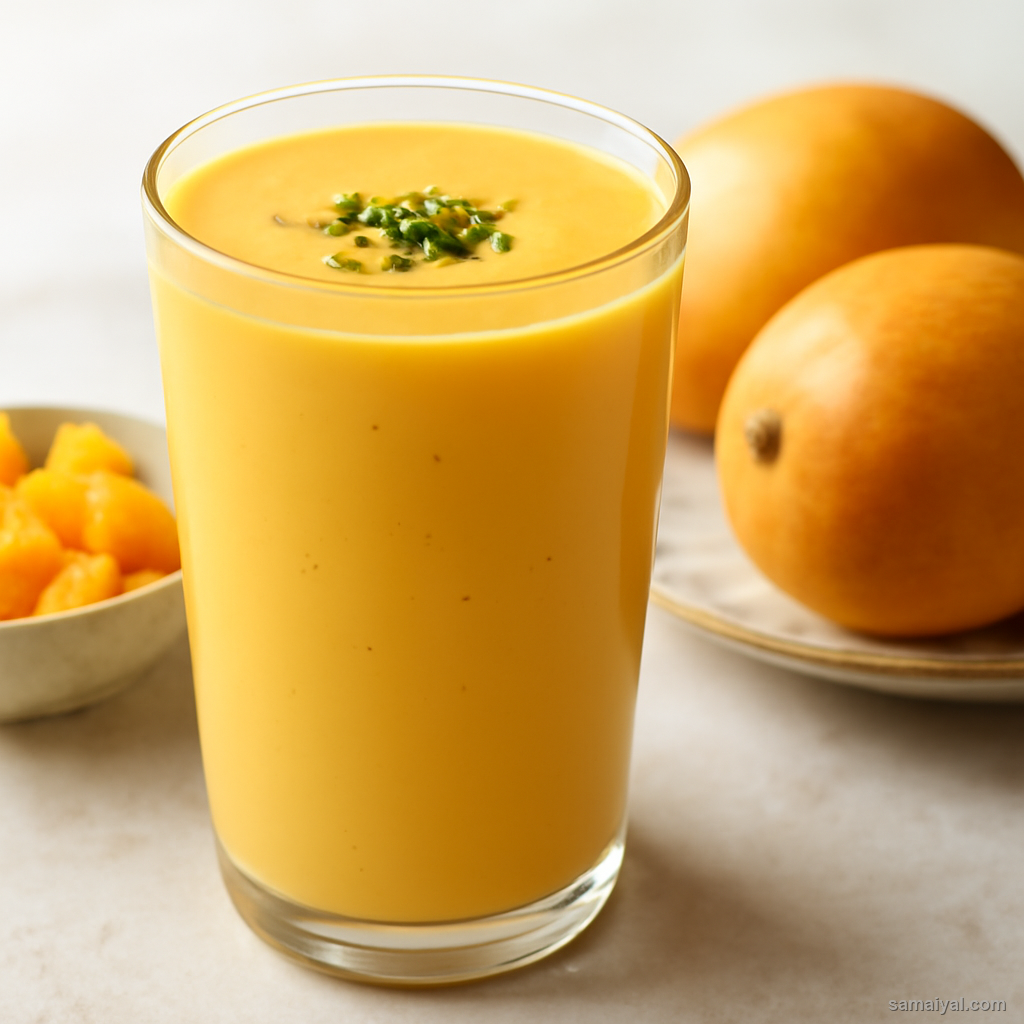
Mango Lassi
Thick yogurt blended with sweet Alphonso mangoes — cool, creamy and the perfect Indian...
Medicinal Assam tea with ginger, tulsi and pepper — the immunity tonic of every Assamese household
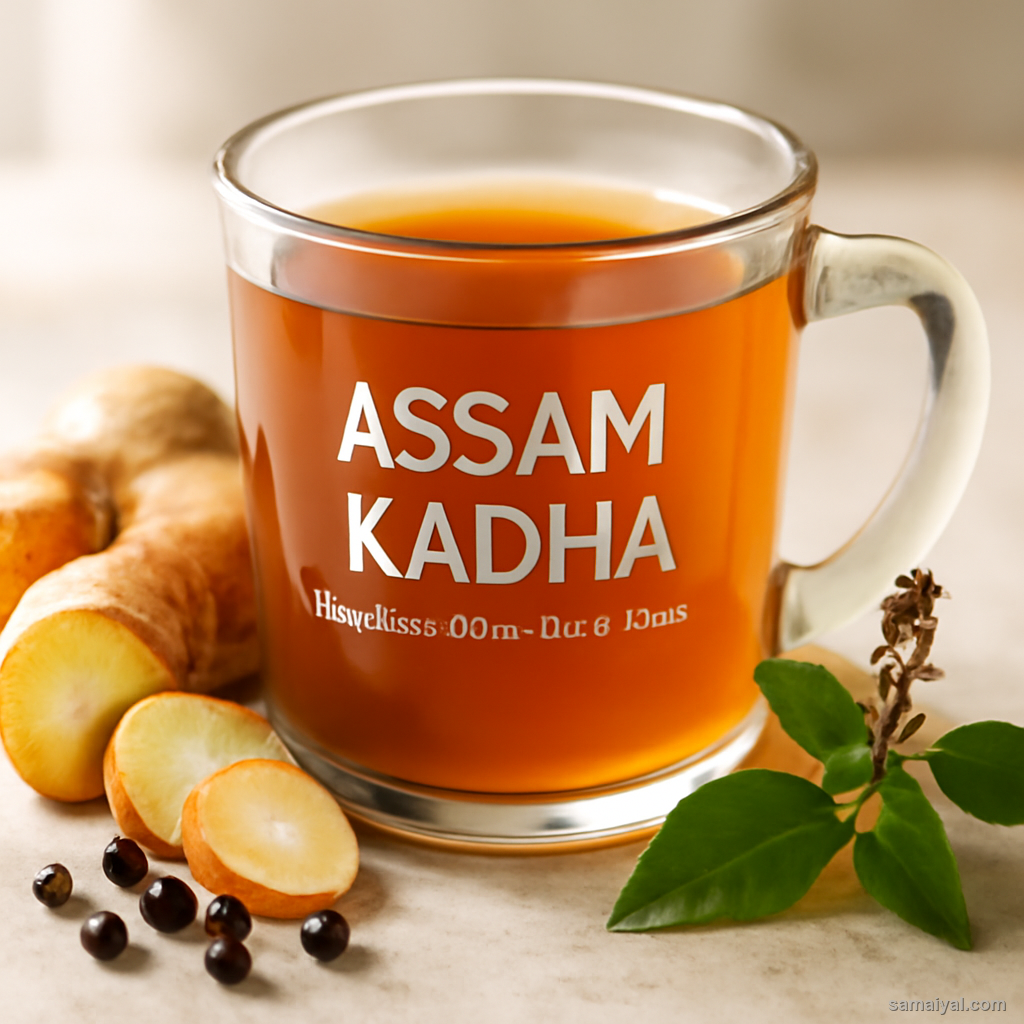
About Assam Tea Kadha: This is the medicinal version of the world-famous Assam black tea — brewed daily in winter and during illness across Assamese households. The combination of fresh ginger, tulsi, peppercorns and the strong malty Assam tea creates a warming tonic that soothes sore throats, clears congestion and lifts the spirits in cold or rainy weather.
Use genuine Assam tea: For an authentic flavour, use a strong loose-leaf Assam black tea (CTC or orthodox). Avoid weak Darjeeling or scented teas — Assam tea is robust and malty, which is exactly what stands up to the spices in a kadha.
Prepare the ginger: Take a 1 inch piece of fresh ginger. Scrape off the thin skin with the back of a spoon. Crush firmly with the flat of a heavy knife or in a mortar — crushing releases the juices far better than slicing or grating thinly.
Wash the tulsi: Pick 6 fresh tulsi (holy basil) leaves from the plant. Wash gently in cold water. Tear roughly with your fingers just before adding to the tea — tearing releases the aromatic oils that knife-cutting often crushes.
Lightly crush the peppercorns: Take 3 black peppercorns. Crush with the flat of a heavy knife or with the back of a spoon — you only want them broken, not powdered. Crushing opens them up so they release their warming pungency more readily.
Boil the water: Pour 3 cups of cold water into a small saucepan. Place over high heat and bring to a rolling boil.
Add the spices first: Once the water is boiling, add the crushed ginger, torn tulsi leaves and crushed peppercorns. Reduce heat to medium-low.
Simmer to extract flavour: Let the spices simmer in the water for 5 minutes uncovered. The water will turn pale yellow and the steam will smell strongly of ginger and pepper. This pre-extraction is what gives kadha its therapeutic strength.
Add the tea leaves: Now add 2 tsp of Assam black tea leaves to the simmering pot. Stir once.
Steep for the right time: Reduce heat to very low or switch off entirely. Let the tea steep for exactly 3 minutes. Steeping longer than this makes the tea bitter and astringent — Assam tea has high tannins that release quickly.
Strain immediately: Place a fine-mesh sieve over a teapot or directly over your serving cups. Pour the kadha through, pressing the solids gently with the back of a spoon to extract every drop of flavour. Discard the spent solids.
Let it cool slightly: Allow the strained tea to cool for 1 minute. Adding honey to actively boiling liquid destroys its beneficial enzymes and turns it bitter — kadha needs to be just below boiling.
Add the honey: Stir in 1 tsp honey per cup. Use raw, unprocessed honey if possible. Stir until fully dissolved.
Serve and dose properly: Pour into small cups. Drink hot in slow sips. For acute illness drink up to 3 times a day; as a daily tonic, once a day in the morning is plenty. The pepper makes it inadvisable for very young children — give them a milder version with honey, ginger and tulsi only.
Thick yogurt blended with sweet Alphonso mangoes — cool, creamy and the perfect Indian...
 ⭐ Featured
Spiced black tea with ginger, cardamom and cinnamon — India's universal warm embrace in a cup.
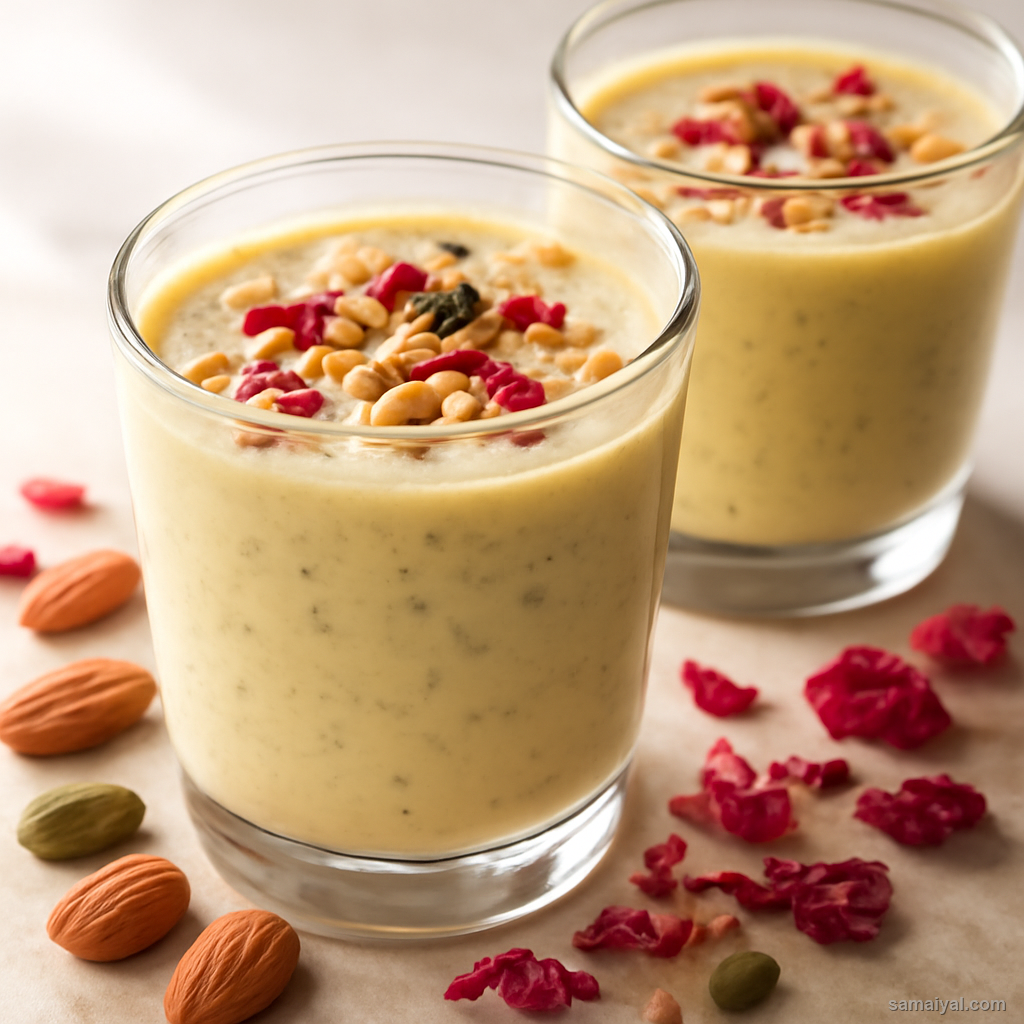
Chilled almond-spice-rose milk drink traditionally made for Holi — refreshing,...

Indian spiced lemonade with roasted cumin and black salt — light, tangy and the best...
Comments & Tips
Be the first to share your experience with this recipe!
Leave a Comment