 ⭐ Featured
Butter Paneer Masala
Creamy tomato-based curry with soft paneer cubes — the all-time favourite of Indian...
Eggplant roasted and then cooked in spiced gravy — the two-technique Bihari baingan
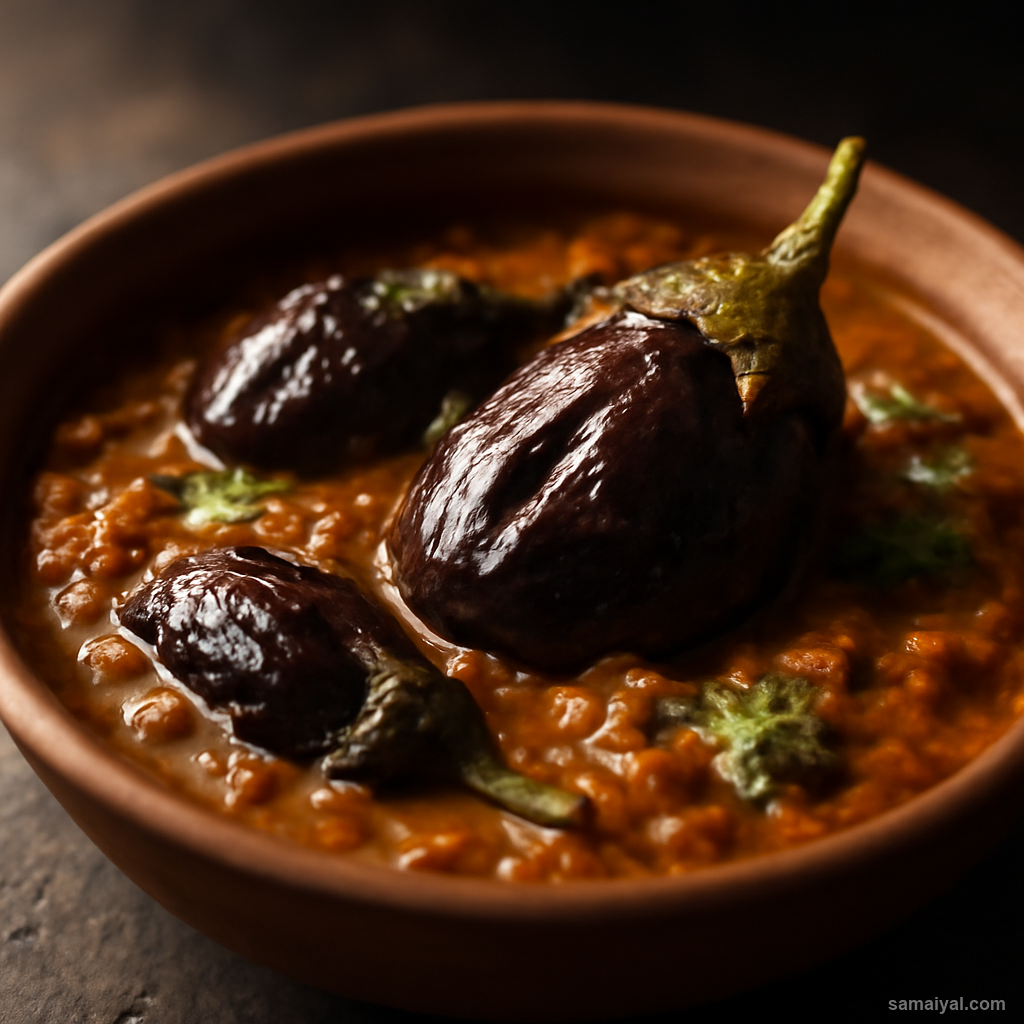
About Bihari Masala Baingan: Masala Baingan uses two techniques — roasting eggplant over flame for smokiness, then braising in masala for depth. It captures the best of both methods, distinguishing it from simpler Indian eggplant curries that use just one technique. The result is eggplant with both smoky char character and rich gravy depth — a sophisticated home dish from Bihar.
Choose the right eggplants: Use 3 medium eggplants (about 600g total). The medium-sized purple eggplants work best — large ones have too many seeds, small ones are too thin. The skin should be glossy and tight.
The size matters: Each eggplant should be about 15-20cm long and 6-8cm in diameter. Uniform sizes ensure even roasting.
The critical fire-roasting: This is the dish's defining first stage. Apply 1 tsp oil to each eggplant and rub all over the skin to keep it from drying out completely.
For gas flame: Place each eggplant directly on a medium gas flame, holding by the stem with long tongs. Turn every 2-3 minutes for 12-15 minutes total.
Watch the eggplants transform: As they roast, the skin will char and turn black, the flesh inside softens dramatically. The eggplants are ready when the entire body has slightly collapsed and feels completely soft when squeezed gently.
For oven roasting (alternative): If you have no gas flame, place oiled eggplants on a foil-lined baking tray. Roast at 220C for 35-40 minutes, turning halfway. Finish under the broiler for 2-3 minutes per side for char marks.
Let the eggplants cool: Transfer the roasted eggplants to a plate and cool for 10 minutes — too hot to handle straight off the heat.
Peel the eggplants: Once cool enough to handle, peel off all the charred black skin with your fingers — it pulls off easily. Discard the skin. Discard the green stems.
Cut into pieces: Cut the smoky flesh into 3-4cm pieces — bite-size. Some Bihari families mash the flesh roughly; this recipe keeps it as recognisable pieces for textural variety.
Prepare the onion: Take 1 medium onion. Peel and finely chop into 5mm dice.
Prepare the garlic: Take 3 garlic cloves. Crush, peel and mince finely.
Prepare the tomatoes: Take 2 medium tomatoes. Chop into fine 5mm dice. Slightly over-ripe tomatoes work even better.
Use a wide pan: Use a wide kadhai or heavy frying pan.
Heat the mustard oil correctly: Pour 2 tbsp mustard oil into the pan over medium-high heat. Heat for 1-2 minutes until smoking heavily.
Fry the onion: Reduce heat to medium. Add the chopped onion. Stir-fry for 6-7 minutes, stirring often, until deep golden brown.
Add the garlic: Add the minced garlic. Stir for 1 minute until fragrant.
Add the tomatoes: Tip in the chopped tomatoes. Cook on medium heat for 6-8 minutes, stirring every 2 minutes, until the tomatoes have completely broken down into a thick paste and oil starts to separate at the edges.
Add dry spices: Sprinkle in 1 tsp turmeric powder, 1 tsp red chilli powder, and 1 tsp coriander powder. Stir for 30 seconds — the masala will turn a beautiful deep rust colour.
The critical eggplant addition: Add the smoky roasted eggplant pieces to the pan. Stir gently to coat with the masala — do not stir aggressively, which can mash the eggplant.
The slow simmer: Reduce heat to medium-low. Cook uncovered for 15 minutes, stirring gently every 3-4 minutes. The eggplant will absorb the masala flavours and the colour will deepen.
The critical no-water rule: Unlike many curries, this one cooks without added water. The eggplant releases its own moisture, and the masala provides body. Adding water dilutes the smoky depth.
If too dry: If the eggplant looks too dry after 8 minutes, add 2-3 tbsp hot water — never more.
Mash some eggplant for body: Use the back of a wooden spoon to gently crush about a third of the eggplant pieces against the side of the pan. This naturally thickens the masala into a glossy coating around the remaining pieces.
Add salt: Add salt to taste — about 3/4 tsp. Stir gently.
Final taste check: Taste a piece of eggplant. The dish should hit you with multiple flavours — soft smoky eggplant, sweet caramelised onion, tangy tomato, warm coriander, gentle chilli, pungent mustard oil. The smoky character should be the dominant note.
Garnish: Switch off the heat. Sprinkle 2 tbsp finely chopped fresh coriander over the top.
Serve with rotis: The most traditional Bihari pairing is hot soft rotis or paratha. The smoky-rich eggplant pairs beautifully with bread.
Serve with rice: Plain steamed rice is also a classic accompaniment. The neutral rice lets the smoky eggplant flavour shine.
For a complete Bihari meal: Pair with a dal (Tadka or Palak), a small portion of yogurt, and a piece of pickle. The combination is hearty and satisfying.
For a vegetarian feast: Combine with chana masala (recipe id 1387) and rice for a substantial vegetarian feast — the two dishes complement each other beautifully.
A cultural and technique note: The two-stage cooking approach — fire-roasting then masala-braising — distinguishes the Bihari masala baingan from simpler eggplant curries (like Bengali chochchori) and from pure chokhas (like Bihari baigan chokha, recipe id 1315). It represents the more elaborate Bihari home cooking that goes beyond rural quick dishes.
Variations: Some Bihari families add 1/4 cup yogurt to the masala for a tangier version. Others add 1 tsp roasted ground cumin at the end for additional aromatic depth. Both work well.
Leftover storage: Stored in the fridge in an airtight container, masala baingan keeps for 3-4 days and tastes even better the next day after the flavours have deepened. The eggplant absorbs more masala overnight, becoming richer. Reheat gently on the stovetop with a splash of water if too thick.
⭐ Featured
Creamy tomato-based curry with soft paneer cubes — the all-time favourite of Indian...
 ⭐ Featured
Velvety spinach curry with golden-fried paneer — nutritious, vibrant and absolutely delicious.

Bold, tangy chickpea curry packed with spices — a street food staple that works as a main dish.

Dry-spiced potatoes and cauliflower — simple, aromatic, and endlessly satisfying.
Comments & Tips
Be the first to share your experience with this recipe!
Leave a Comment