 ⭐ Featured
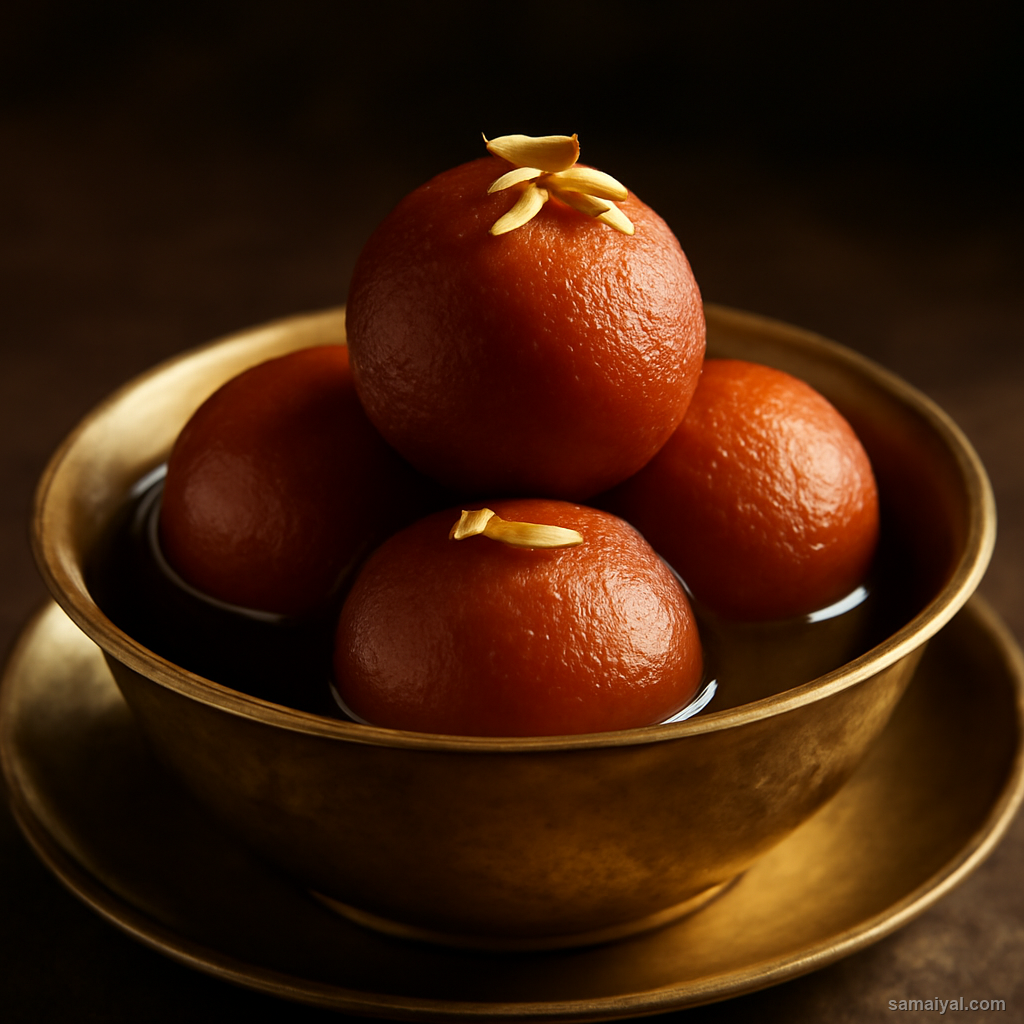
Gulab Jamun
Soft milk-solid dumplings soaked in fragrant rose sugar syrup — India's most beloved sweet.
Extremely fine rice flour cooked with ghee and sugar into a light, fluffy, snow-white sweet that dissolves on the tongue — the most delicate of Burdwan's three famous sweets (alongside Mihidana and Lal Doi), made from a specific variety of fine rice flour and a very precise technique.

Make a thick rice milk: Bring 1 litre milk to a boil. Add fine rice flour while whisking continuously. Cook on medium heat stirring for 10 to 12 minutes until very thick — the consistency of very thick porridge.
Add ghee: Add 3 tbsp ghee. Stir through. Cook 2 more minutes.
Add sugar: Add sugar. Stir until dissolved.
Add maida: Add 1 tbsp maida. Mix thoroughly. The maida gives the sitabhog its characteristic slight chewiness.
Add saffron and cardamom: Add saffron and cardamom. Stir.
Remove from heat: The mixture should be very thick, pulling away from the pan sides.
Cool slightly: Cool 5 minutes until handleable.
Shape into small balls or logs: While warm, shape into small spheres (about 2 cm) or small oblong pieces. Work quickly as it firms on cooling.
Arrange on a plate: Place the shaped sitabhog on a greased plate. They will firm further as they cool.
Cool completely: Allow to cool to room temperature. The finished sitabhog should be white, slightly firm on the outside and dissolve cleanly on the tongue.
Note: Sitabhog (sita = white as snow, bhog = sweet offering) is one of the three GI-tagged sweets of Burdwan (Bardhaman) district — the other two being Mihidana (tiny golden gram flour pearls) and Lal Doi (red-coloured set yogurt). All three are said to have been created to offer to the Maharaja of Burdwan. The specific fine rice flour made from gobindobhog — the aromatic short-grain rice grown only in Burdwan and Hooghly — is what gives sitabhog its white colour and delicate character.
⭐ Featured
Soft milk-solid dumplings soaked in fragrant rose sugar syrup — India's most beloved sweet.

Slow-cooked rice pudding with cardamom, saffron, nuts and rose water — pure comfort in a bowl.

Slow-cooked grated carrot pudding with ghee, milk and cardamom — a winter celebration classic.

Spongy soft chenna balls cooked in light sugar syrup — the iconic Bengali sweet.
Comments & Tips
Be the first to share your experience with this recipe!
Leave a Comment