 ⭐ Featured
Aloo Paratha
Stuffed whole-wheat flatbread with spiced potato filling — the quintessential Punjabi...
Tamil Nadu breakfast — sorghum dosa — ancient village grain crepe.
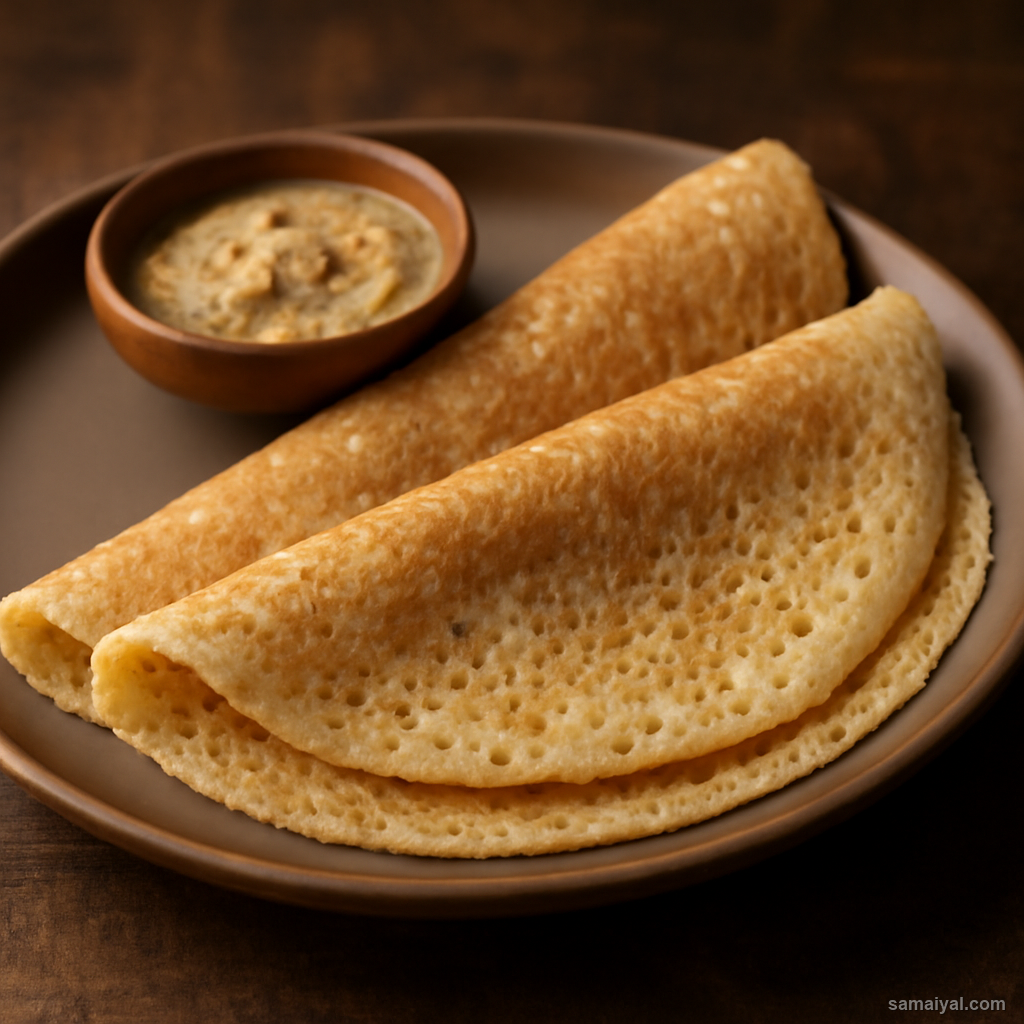
About Cholam Dosai: Cholam Dosai is the sorghum dosa — an ancient Tamil village grain crepe. Across rural Tamil Nadu, particularly in dryer regions where sorghum (cholam) thrives, this dosa has been the staple breakfast for generations. The grain is genuinely ancient — cultivated in India for thousands of years — and has been "rediscovered" by modern nutritionists as ideal for blood sugar management and gluten-free diets.
Gather ingredients: 1.5 cups whole cholam (sorghum, also called jowar in Hindi — available at every Indian grocery), 1/2 cup urad dal (split black gram, white version — provides protein structure and fermentation character), 1 tsp fenugreek seeds (essential for proper fermentation), salt to taste, neutral oil or ghee for cooking.
Wash and soak cholam: Wash the cholam in 2-3 changes of cold water. Cover with plenty of cold water. Soak overnight (8-12 hours).
Wash and soak urad dal: Wash separately in 2-3 changes of cold water. Cover with cold water. Add the 1 tsp fenugreek seeds. Soak for 4 hours.
Drain after soaking: Drain both cholam and urad dal separately.
Grind urad dal first: Place soaked drained urad dal (with fenugreek) in a small grinder. Grind for 4-5 minutes until very smooth and fluffy. Add water sparingly — only 2-3 tbsp at a time as needed. The fluffy texture is essential.
Grind cholam: Place soaked drained cholam in the grinder. Grind for 3-4 minutes until smooth. Add 1/2 cup water gradually as needed.
Combine and ferment: Mix both batters in a wide bowl. Add salt to taste — about 1 tsp. Stir thoroughly.
The critical fermentation: Cover with a cloth. Leave to ferment in a warm place for 6-8 hours (overnight in cold weather, less in tropical warmth). The batter should rise and develop a slightly sour fermented aroma.
Check batter consistency: Should be similar to regular dosa batter — pourable but with body. When you lift a spoon, the batter should drip in a steady ribbon. If too thick, add 2-3 tbsp water.
Heat the tawa: Heat a flat tawa (cast iron is most traditional) over medium-high heat. Test by sprinkling a few drops of water — should sizzle and evaporate within 1-2 seconds.
The critical first dosa: Drizzle 1/2 tsp oil on the tawa. Wipe with a paper towel — the wiping helps the first dosa not stick. Discard this first oil-soaked paper.
Spread the batter: Pour a ladle (about 1/2 cup) of batter onto the centre of the tawa. Use the back of the ladle to spread in concentric circles outward into a thin round (about 20-22cm diameter).
The colour difference: Cholam dosai will be slightly darker than rice dosa — pale tan rather than white. This is the natural colour of sorghum.
Add oil and cook: Drizzle 1/2 tsp oil around the edges and on the surface. Cook on medium heat 2-3 minutes until the bottom is golden brown and the edges crisp up.
Flip and cook: Flip with a wide spatula. Cook the second side 1-2 minutes.
Serve immediately: Cholam dosai has a mild nutty flavour. Serve hot with coconut chutney and sambar for a complete South Indian breakfast.
For blood sugar management: Sorghum has dramatically lower glycemic index than rice. People with diabetes or pre-diabetes find sorghum dosa significantly better for blood sugar control than rice dosa.
A nutritional note: Cholam provides exceptional fibre, complete protein, B vitamins, iron, and magnesium. Naturally gluten-free.
Leftover batter storage: Fridge for 2-3 days. The fermentation continues slightly even when refrigerated. Stir before each use.
⭐ Featured
Stuffed whole-wheat flatbread with spiced potato filling — the quintessential Punjabi...
 ⭐ Featured
Thin crispy rice-lentil crepe filled with spiced potato masala — the iconic South...
 ⭐ Featured
Steamed fermented rice cakes served with tangy lentil vegetable soup — South India's...

Crispy ring-shaped lentil fritters with fluffy interior — a South Indian must-have with sambar.
Comments & Tips
Be the first to share your experience with this recipe!
Leave a Comment