 ⭐ Featured
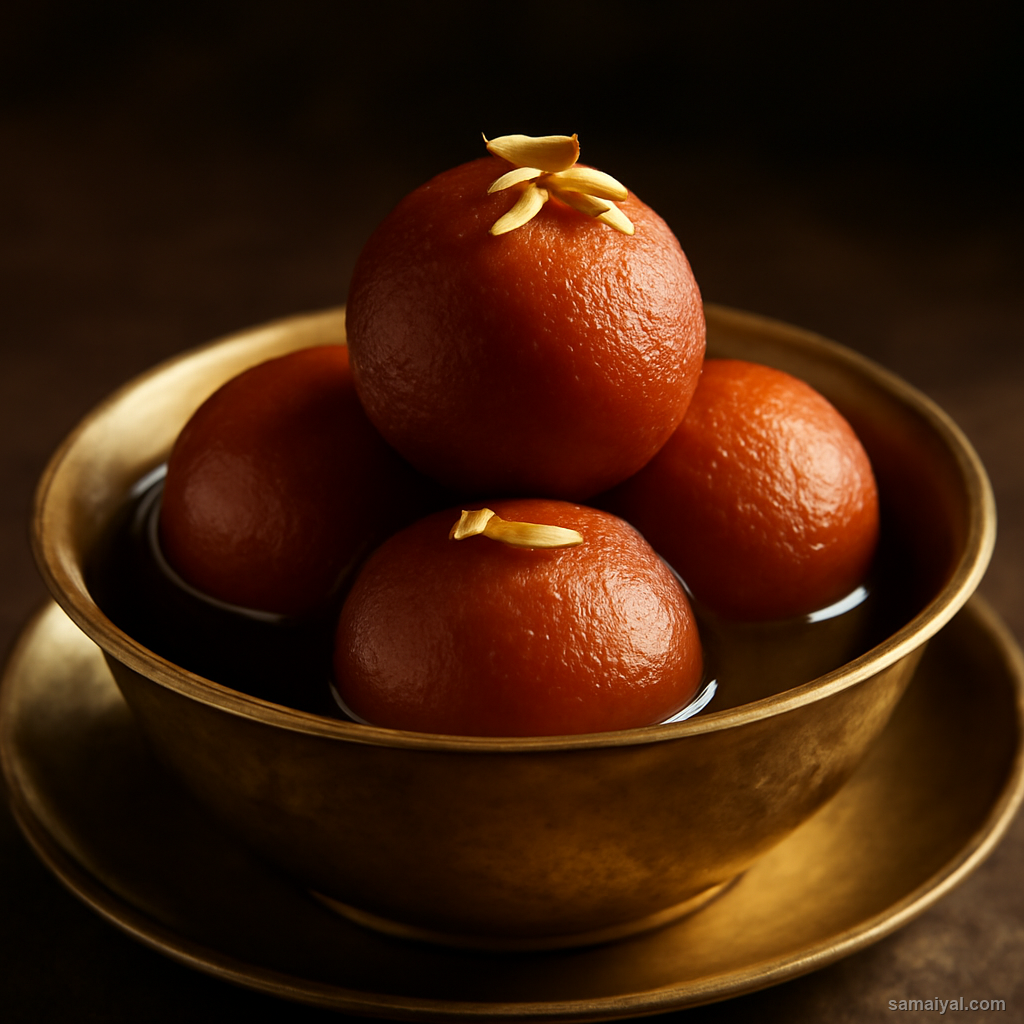
Gulab Jamun
Soft milk-solid dumplings soaked in fragrant rose sugar syrup — India's most beloved sweet.
Deep-fried crescent-shaped pastry shells filled with a sweet mixture of khoya, coconut and dried fruits — the most made Holi sweet across Uttar Pradesh, Madhya Pradesh and Rajasthan. Every family makes hundreds of gujiya before Holi.

Make the pastry dough: Combine maida, ghee and salt. Rub the ghee into the flour with your fingertips until the flour looks like damp, crumbly sand — this rubbing-in step creates flakiness. Add cold water gradually — about 1/2 cup — mixing until a firm, smooth dough forms. Minimal kneading keeps the pastry flaky. Cover with a damp cloth. Rest for 15 to 20 minutes.
Make the khoya filling: Crumble the khoya into a non-stick pan. Cook on low heat stirring for 3 to 4 minutes until the khoya warms, softens and turns slightly golden. Remove from heat. Let cool completely — hot khoya filling causes the pastry to become wet and difficult to seal.
Mix the filling ingredients: To the cooled khoya add desiccated coconut, powdered sugar, cardamom powder, chopped cashews, chopped almonds, raisins and saffron milk. Mix thoroughly with a spoon then with your hands. Taste — the filling should be sweet, fragrant and slightly grainy from the khoya. Adjust sugar if needed.
Divide the filling: Divide the filling into 16 to 18 equal portions. Roll each into a small smooth ball. Keep aside.
Roll the pastry into discs: Divide the rested dough into 16 to 18 equal balls. Roll each ball on a lightly oiled surface into a round disc about 10 to 11 cm in diameter — about 2 mm thick. The disc should be even and not too thick or the pastry will not crisp evenly.
Stuff and seal: Place one disc flat on your palm. Place one filling ball in the centre of the disc. Fold the disc in half over the filling, forming a half-moon (crescent) shape. Press the edges firmly together with your fingers to seal. Then, starting from one corner, fold and press the sealed edge in a pattern — pinch and fold alternately to create the traditional pleated seal. This pleated edge is both decorative and functional, preventing the gujiya from opening during frying.
Check all seals: Inspect each gujiya — any weak seal will open during frying and the filling will spill into the oil. If a seal looks weak, press again firmly.
Heat oil for slow frying: Pour oil or ghee to 6 cm depth in a heavy kadai. Heat on low-medium. Test: a small piece of dough should rise slowly within 4 to 5 seconds. Gujiya must be fried slowly — high heat makes them brown on the outside before the inside pastry is cooked.
Fry in batches on low heat: Add 4 to 5 gujiya at a time. Fry on low to medium-low heat for 10 to 12 minutes, turning gently every 2 minutes, until they turn an even golden colour all over. The slow frying ensures the pastry is fully crispy throughout.
Drain and cool: Remove with a slotted spoon. Drain on paper towels. Cool completely to room temperature. The pastry will continue to crisp as it cools.
Note: Gujiya is the most well-known Holi sweet of North India — made 2 to 3 days before Holi in every household. The making of gujiya is a family event — children help seal and pleat while elders fry. It is stored in large tins and eaten over the days of the Holi festival. Gujiya also appears in Madhya Pradesh, Rajasthan and Bihar under slightly different names and with small regional variations in the filling.
⭐ Featured
Soft milk-solid dumplings soaked in fragrant rose sugar syrup — India's most beloved sweet.

Slow-cooked rice pudding with cardamom, saffron, nuts and rose water — pure comfort in a bowl.

Slow-cooked grated carrot pudding with ghee, milk and cardamom — a winter celebration classic.

Spongy soft chenna balls cooked in light sugar syrup — the iconic Bengali sweet.
Comments & Tips
Be the first to share your experience with this recipe!
Leave a Comment