 ⭐ Featured
Gulab Jamun
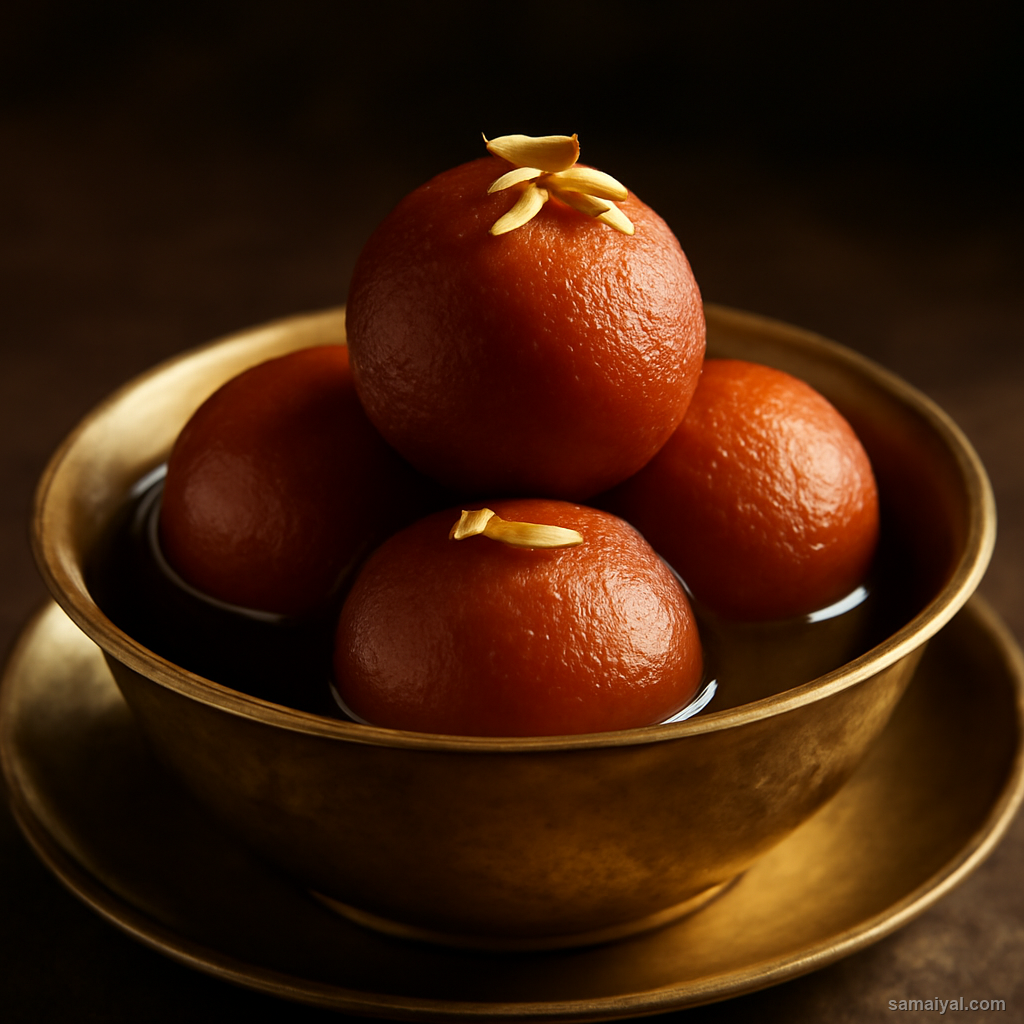
Soft milk-solid dumplings soaked in fragrant rose sugar syrup — India's most beloved sweet.
Soft, spongy deep-fried milk dumplings soaked in a saffron and cardamom sugar syrup — made extra fragrant with kewra water in the Hyderabadi style. The most widely eaten sweet at Hyderabadi weddings and Eid celebrations.

Make the sugar syrup first: Combine 2 cups sugar and 1.5 cups water in a wide pot. Heat stirring until the sugar dissolves completely. Bring to a boil then reduce to medium-low heat. Cook without stirring for 5 minutes. The syrup should reach a light single-string consistency — dip a spoon, let a drop cool, press between thumb and finger and pull apart — one thin thread forms. Add saffron water, cardamom powder, rose water and kewra water. Stir. Keep warm on the lowest heat.
Mix the dumpling dough: In a wide bowl combine milk powder, maida and baking soda. Mix the dry ingredients together. Add 1 tbsp ghee and rub into the flour mixture until combined.
Add milk carefully to form a soft dough: Add milk one teaspoon at a time. After each addition, mix gently. The dough should be very soft — softer than chapati dough, almost like very soft clay. Add only enough milk to bring the dough together. If the dough is too soft or sticky the gulab jamuns will crack during frying; if too hard they will be dense.
Rest the dough: Cover the dough with a damp cloth. Rest for 10 to 15 minutes. This resting is important — it makes the dough more pliable and easier to roll.
Shape the dumplings: Divide the dough into 18 to 20 equal small portions. Take one portion and roll it gently between your palms into a smooth ball. The surface should be completely smooth with no cracks — a cracked surface means the gulab jamun will break during frying. If cracks appear, the dough is too dry — add 1/2 tsp more milk to the remaining dough and knead gently.
Heat oil for frying: Pour oil or ghee to 6 cm depth in a heavy kadai. Heat on low-medium. This is critical — gulab jamuns must be fried on LOW heat. Test: a small piece of dough should rise slowly within 4 to 5 seconds. If it rises too quickly, the oil is too hot.
Fry on low heat very slowly: Add 5 to 6 dumplings at a time. They must fry slowly — the inside needs time to cook through before the outside browns. Stir gently and continuously with a slotted spoon to ensure even browning on all sides. This should take 8 to 10 minutes per batch. They are done when uniformly deep brown — not just golden.
Transfer to warm syrup immediately: Remove the fried gulab jamuns and immediately drop them into the warm (not cold) sugar syrup. They will sizzle briefly. The warm syrup soaks into the hot dumplings best — cold syrup does not penetrate as deeply.
Soak for at least 1 hour: Leave the gulab jamuns in the syrup for minimum 1 hour — 2 to 3 hours is better. As they soak they will plump up, become very soft and absorb the saffron and cardamom flavour throughout.
Serve warm or at room temperature: Serve 3 gulab jamuns per person with a spoonful of the fragrant syrup poured over them. They can be served at room temperature or gently warmed.
Note: Gulab Jamun is made at every Hyderabadi wedding, Eid celebration and major feast. The Hyderabadi version uses kewra water and saffron in the syrup — giving it a more complex, floral fragrance than other regional versions. The key to good gulab jamun is patience — the slow frying on low heat cannot be rushed and the 1 to 2 hour soaking in syrup cannot be shortened.
⭐ Featured
Soft milk-solid dumplings soaked in fragrant rose sugar syrup — India's most beloved sweet.

Slow-cooked rice pudding with cardamom, saffron, nuts and rose water — pure comfort in a bowl.

Slow-cooked grated carrot pudding with ghee, milk and cardamom — a winter celebration classic.

Spongy soft chenna balls cooked in light sugar syrup — the iconic Bengali sweet.
Comments & Tips
Be the first to share your experience with this recipe!
Leave a Comment