 ⭐ Featured
Gulab Jamun
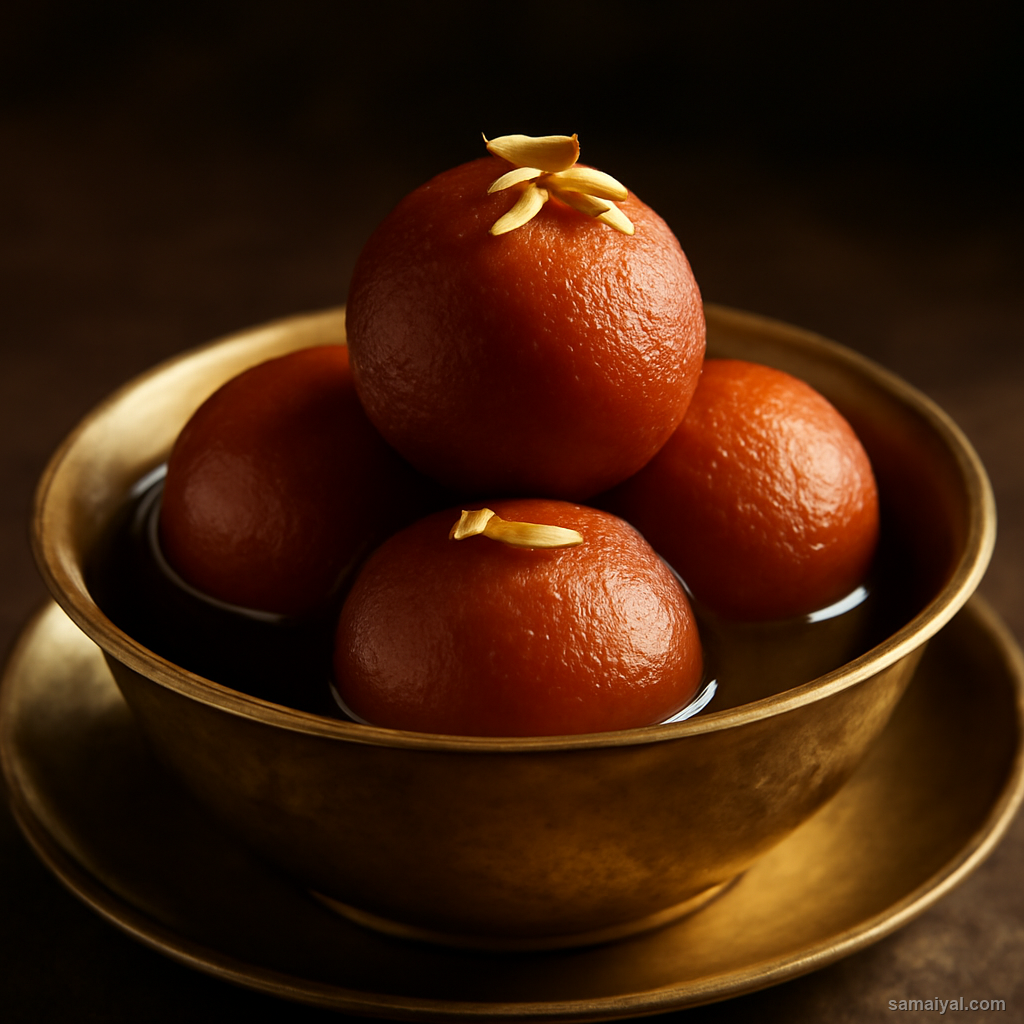
Soft milk-solid dumplings soaked in fragrant rose sugar syrup — India's most beloved sweet.
Deep-fried bread slices soaked in a thick, saffron-flavoured reduced milk with fried nuts and raisins — the Hyderabadi festive bread pudding. Double roti is the local name for bread in Hyderabad, giving this preparation its name.

Reduce the milk: Pour 1 litre full-fat milk into a wide, heavy pot. Bring to a boil. Reduce to medium heat. Cook stirring every 3 minutes for 25 to 30 minutes until reduced by half and noticeably thick. Add sugar, saffron milk and cardamom. Cook 5 more minutes.
Fry cashews and raisins: Heat 1 tsp ghee. Fry cashews until golden. Fry raisins until puffed. Remove and keep for garnish.
Deep fry the bread slices: Heat oil or ghee in a pan on medium. Fry the bread triangles for 1 to 2 minutes per side until deep golden and crispy. Do not burn. Drain on paper towels.
Arrange bread in a serving dish: Place the fried bread triangles in a wide, deep serving dish in a single overlapping layer.
Pour hot milk: Pour the hot reduced sweetened milk over the fried bread immediately. The bread will absorb the milk rapidly.
Let soak: Let the bread soak in the hot milk for 10 minutes. The fried bread slices will absorb the saffron-flavoured milk while retaining some texture — not turning fully soggy.
Garnish: Scatter the fried cashews, puffed raisins and sliced pistachio over the surface.
Serve warm: Double Ka Meetha is traditionally served warm — immediately after the milk is poured and soaked.
Alternatively serve cold: Refrigerate for 2 hours and serve cold — many prefer the chilled version where the milk has set to a thick, creamy coating.
Garnish again before serving: If serving cold, add fresh garnish just before serving.
Note: Double Ka Meetha (double = bread, meetha = sweet) is the signature Hyderabadi sweet served at every major Hyderabadi occasion — Eid, Muharram and wedding celebrations. The name comes from the Hyderabadi pronunciation of 'double roti' (bread). It was influenced by the shahi tukda of Mughal cooking but developed its own identity in the Nizam's Hyderabad. Served at the end of every major feast in Hyderabadi culture.
⭐ Featured
Soft milk-solid dumplings soaked in fragrant rose sugar syrup — India's most beloved sweet.

Slow-cooked rice pudding with cardamom, saffron, nuts and rose water — pure comfort in a bowl.

Slow-cooked grated carrot pudding with ghee, milk and cardamom — a winter celebration classic.

Spongy soft chenna balls cooked in light sugar syrup — the iconic Bengali sweet.
Comments & Tips
Be the first to share your experience with this recipe!
Leave a Comment