 ⭐ Featured
Butter Paneer Masala
Creamy tomato-based curry with soft paneer cubes — the all-time favourite of Indian...
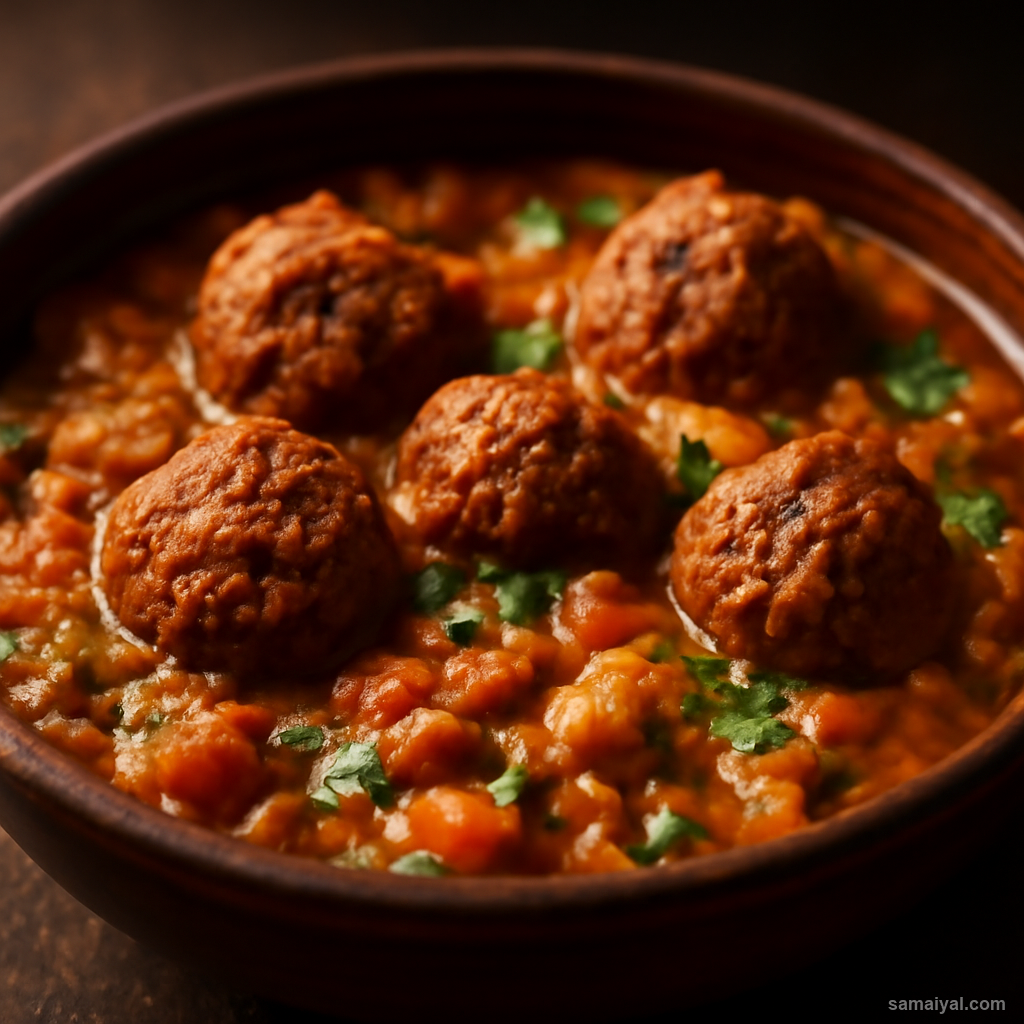
Sun-dried urad dal dumplings (badi) cooked in a spiced tomato and onion curry — the badi absorb the curry and become soft, protein-high additions to an otherwise vegetable curry. A technique of preserving lentils as a dry ingredient used across Jharkhand and Chhattisgarh.
Fry the dried badi: Heat 2 tbsp oil in a pan on medium. Add the dried badi. Fry stirring for 2 to 3 minutes until they puff slightly and turn golden. Remove and keep aside. The frying rehydrates and puffs the dried dumplings.
Heat remaining oil: In the same pan heat the remaining 1 tbsp oil. Add cumin seeds — wait to crackle. Add bay leaves and asafoetida. Stir 10 seconds.
Cook onions deeply: Add finely chopped onions. Cook on medium heat for 10 to 12 minutes until very deep golden.
Add ginger and garlic: Add ginger paste and garlic paste. Stir 2 minutes.
Add tomatoes: Add chopped tomatoes. Cook 6 minutes until soft and oil separates.
Add spice powders: Turn to low. Add red chilli powder, coriander powder and turmeric. Stir 2 minutes.
Add water and salt: Add 1.5 cups water and salt. Bring to a boil.
Add the fried badi: Add the fried badi to the simmering curry. Stir gently.
Simmer 15 minutes: Cook on medium-low heat for 15 minutes. The badi will absorb the curry and swell — they should be soft on the outside from the absorbed curry while retaining a slight firmness inside. Add garam masala.
Serve: Scatter coriander leaves. Serve with steamed rice or roti.
Note: Badi Sabzi is made across the central Indian tribal belt — from Jharkhand through Chhattisgarh and into parts of Odisha and Bengal. The badi represents an ancient food preservation technique — sun-dried lentil dumplings that can be stored for months without refrigeration and then reconstituted in a curry. In communities where fresh vegetables are unavailable in certain seasons, badi provides both the textural element of a vegetable and the protein of lentils.
⭐ Featured
Creamy tomato-based curry with soft paneer cubes — the all-time favourite of Indian...
 ⭐ Featured
Velvety spinach curry with golden-fried paneer — nutritious, vibrant and absolutely delicious.

Bold, tangy chickpea curry packed with spices — a street food staple that works as a main dish.

Dry-spiced potatoes and cauliflower — simple, aromatic, and endlessly satisfying.
Comments & Tips
Be the first to share your experience with this recipe!
Leave a Comment