 ⭐ Featured
Butter Paneer Masala
Creamy tomato-based curry with soft paneer cubes — the all-time favourite of Indian...
Hard wheat dough balls stuffed with sattu (roasted gram flour) mixed with mustard oil, garlic, ginger and ajwain, cooked over coals or in a tandoor until charred and crunchy outside and cooked through. The UP version of the Bihar Litti with slight regional differences.
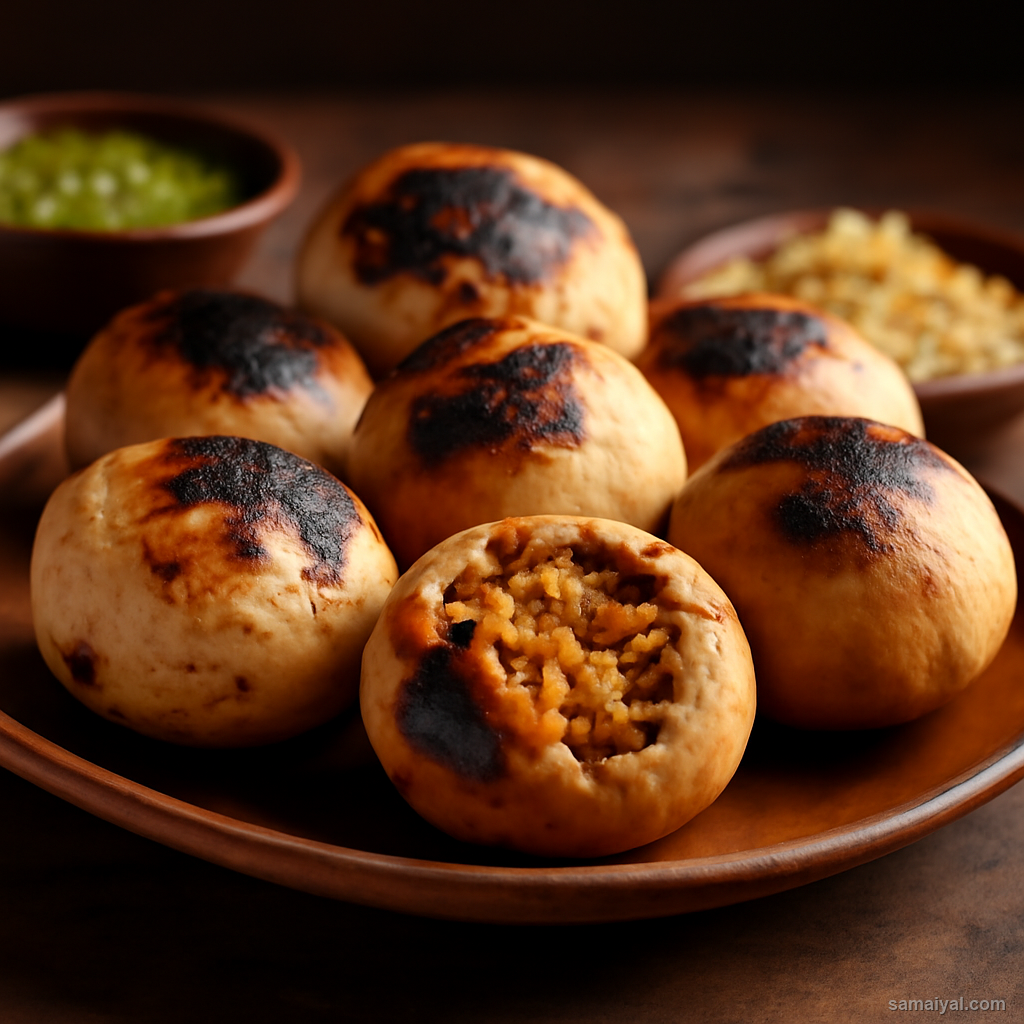
Make the sattu filling first: Place 1 cup gram flour in a dry pan on low heat. Roast stirring continuously for 4 to 5 minutes until the flour turns golden-tan and smells very nutty. Remove immediately. Cool completely. This roasted gram flour is sattu. To the cooled sattu add 1 tbsp mustard oil, minced garlic, grated ginger, chopped green chilli, ajwain, cumin seeds, lemon juice, asafoetida and salt. Mix everything together with your hands until the mixture resembles damp, crumbly sand. Taste — it should be savoury, tangy from the lemon, slightly pungent from the mustard oil. Add 1 to 2 tbsp water if the mixture is too dry to hold together when pressed.
Make the dough: In a wide bowl combine wheat flour, ghee, ajwain and salt. Mix the ghee into the flour with fingertips until crumbly. Add water gradually and knead into a stiff, smooth dough — much stiffer than chapati dough. Litti dough must be stiff or it will not become crunchy during baking. Divide into 8 equal balls.
Stuff the litti: Take one dough ball. Flatten it in your palm into a disc about 7 to 8 cm wide. Place a generous spoonful of the sattu filling in the centre — about 1.5 tbsp. Bring the dough edges upward around the filling, pleating and pinching firmly at the top. Seal completely — no filling should show. Roll gently between palms into a smooth ball. Press very gently to flatten slightly.
Bake in the oven: Preheat oven to 200°C (400°F). Place the stuffed litti on a baking tray. Bake for 25 to 30 minutes, turning them once halfway through, until they turn deep golden-brown on all sides. Tap one — it should sound hollow, indicating the inside is cooked through.
Or cook over direct gas flame: The traditional method is over coal or fire. Using tongs, hold one litti directly over a medium gas flame. Rotate every 30 seconds. Cook for 8 to 10 minutes total until all sides have charred black spots and the litti is cooked through. Brush off any large charred bits.
Apply ghee immediately: While still hot from the oven or flame, apply melted ghee liberally over each litti. The ghee will soak into the hot crust.
Crack the litti open: After applying ghee, crack each litti open slightly — press with both thumbs at the top to create a crack. Pour a small spoonful of ghee directly into the crack so the filling also gets some ghee flavour.
Serve with accompaniments: Serve the hot litti alongside raw onion slices, lemon wedges and one or two green chillies.
Eat by dipping in ghee: The traditional way to eat litti is to break it apart and dip each piece into a small bowl of melted ghee. The crunchy wheat shell, the aromatic sattu filling and the ghee together are the complete experience.
Also serve with chokha: Optionally serve alongside chokha — roasted brinjal or tomato mashed with mustard oil, green chilli and garlic. This litti-chokha combination is the classic pairing from Bihar and eastern UP.
Note: While litti-chokha is most associated with Bihar, it is also widely made in eastern UP districts of Varanasi, Mirzapur and Sonbhadra where the food culture blends Bihar and UP. The UP version uses slightly more ghee and sometimes adds mango pickle pieces inside the sattu filling. It is a working-class food of the Bhojpuri-speaking belt that spans both states.
⭐ Featured
Creamy tomato-based curry with soft paneer cubes — the all-time favourite of Indian...
 ⭐ Featured
Velvety spinach curry with golden-fried paneer — nutritious, vibrant and absolutely delicious.

Bold, tangy chickpea curry packed with spices — a street food staple that works as a main dish.

Dry-spiced potatoes and cauliflower — simple, aromatic, and endlessly satisfying.
Comments & Tips
Be the first to share your experience with this recipe!
Leave a Comment