 ⭐ Featured
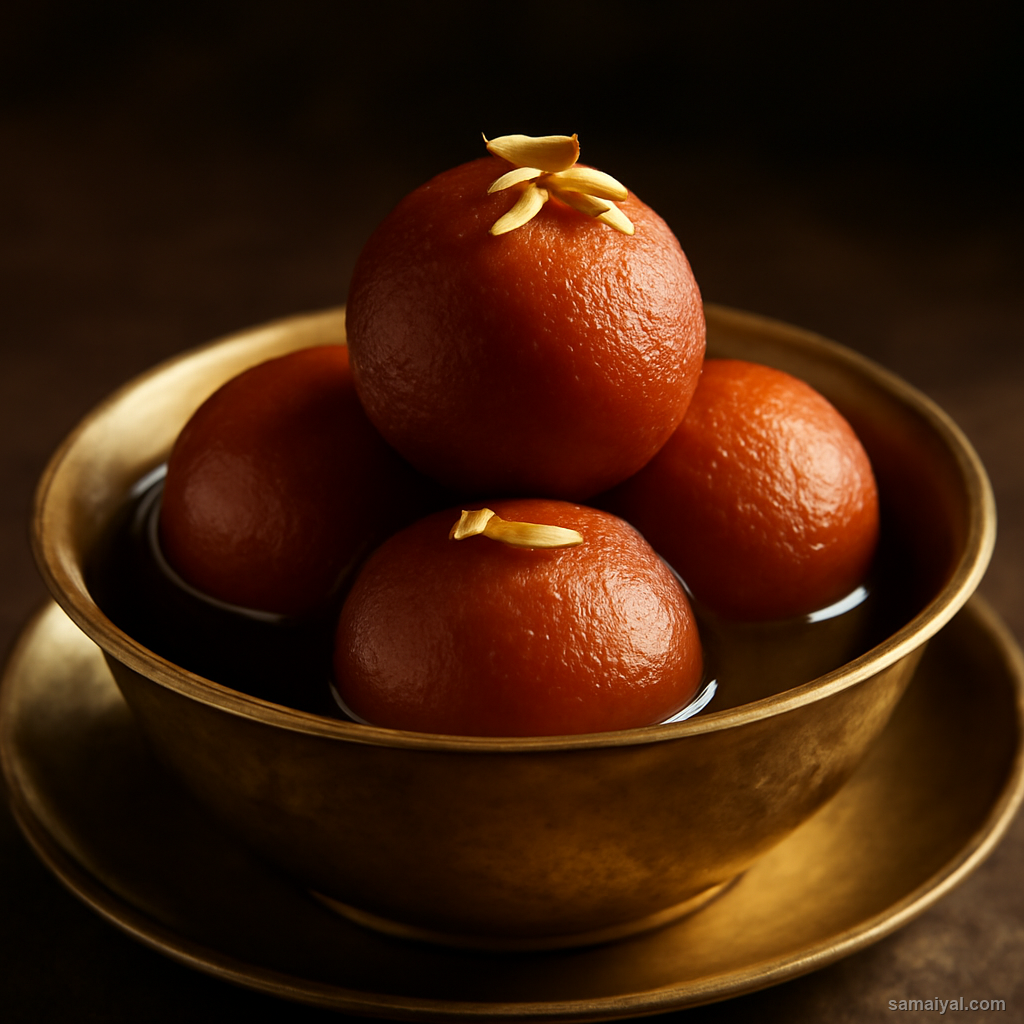
Gulab Jamun
Soft milk-solid dumplings soaked in fragrant rose sugar syrup — India's most beloved sweet.
Red winter carrots grated and slow-cooked in full-fat milk with ghee, sugar and cardamom until thick and fudge-like — the most made winter dessert of UP. The red Delhi carrots available December to February make a much sweeter, more fragrant halwa than the orange variety.

Wash and grate the carrots: Wash and peel the carrots. Grate on the coarse side of a box grater. Red winter carrots are significantly softer and sweeter than orange carrots — they grate more easily and cook faster.
Fry cashews and raisins: Heat 1 tsp ghee in a small pan. Fry cashews until golden. Fry raisins briefly until puffed. Keep aside.
Cook grated carrots in milk: Place the grated carrots and full-fat milk in a wide, heavy pot. Bring to a boil on medium-high heat while stirring.
Simmer until milk is absorbed: Reduce to medium. Cook stirring every 3 to 4 minutes for 30 to 35 minutes. The carrot will gradually absorb all the milk. Stir more frequently as the mixture thickens to prevent scorching.
Add ghee: Once most of the milk has been absorbed and the mixture looks thick and bright red, add 4 tbsp ghee. Stir well.
Fry in ghee: Cook on medium heat, stirring continuously, for 8 to 10 minutes after adding the ghee. The halwa will fry in the ghee, turning slightly more caramelised and fragrant. The ghee will separate around the sides when the halwa is ready.
Add sugar: Add sugar. Stir. The sugar will dissolve and the halwa will become briefly looser, then firm again.
Cook to the right consistency: Continue cooking and stirring for 5 to 8 minutes after adding sugar until the halwa is thick, pulls cleanly from the pan sides and the ghee separates clearly around the edges.
Add cardamom and saffron: Add cardamom powder and saffron milk. Stir once.
Serve warm: Transfer to a serving bowl. Garnish with fried cashews and raisins. Serve warm — gajar halwa is best served freshly made and hot.
Note: Gajar Halwa is made across North India in winter but the UP version uses the red Delhi carrots (specifically grown in the NCR and western UP plains in winter) which produce a sweeter, deeper coloured halwa than the orange variety available year-round. In UP the halwa is associated with winter weddings — served as a dessert at the wedding feast. The Allahabad (Prayagraj) version is made with generous ghee reflecting the city's tradition of generous winter cooking.
⭐ Featured
Soft milk-solid dumplings soaked in fragrant rose sugar syrup — India's most beloved sweet.

Slow-cooked rice pudding with cardamom, saffron, nuts and rose water — pure comfort in a bowl.

Slow-cooked grated carrot pudding with ghee, milk and cardamom — a winter celebration classic.

Spongy soft chenna balls cooked in light sugar syrup — the iconic Bengali sweet.
Comments & Tips
Be the first to share your experience with this recipe!
Leave a Comment