 ⭐ Featured
Butter Paneer Masala
Creamy tomato-based curry with soft paneer cubes — the all-time favourite of Indian...
Steamed rice dumplings stuffed with spiced chana dal — Bihar's everyday comfort dumpling
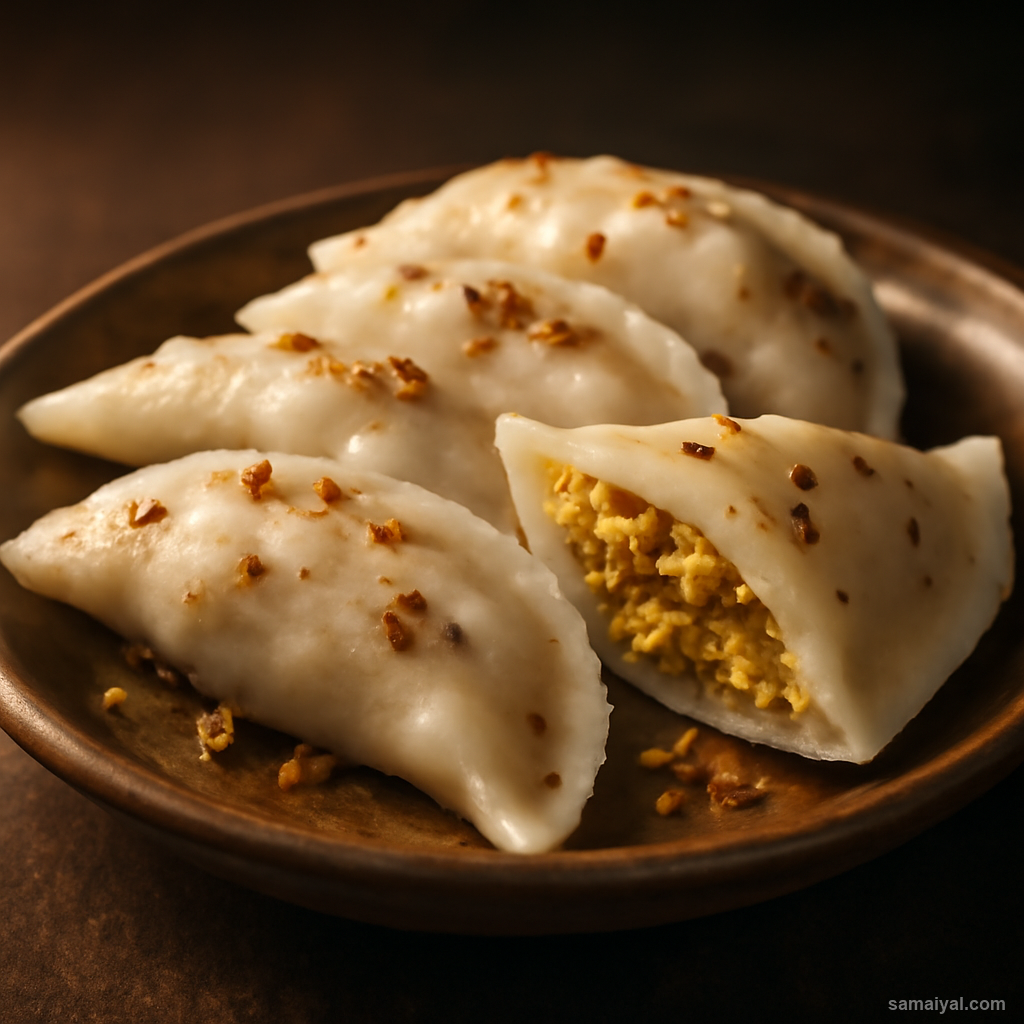
About Dal Pitha Bihar: Dal Pitha is the Bihari steamed dumpling — soft rice flour shell with a spiced lentil filling. Across rural and urban Bihar, dal pitha is the everyday comfort food. Demonstrates Bihari resourcefulness: simple rice flour and chana dal transformed into something satisfying through careful technique. A Bihari version of the steamed dumpling concept found across Asia. Naturally gluten-free.
Gather ingredients: 1 cup chana dal (split Bengal gram, the yellow pulse), 2 cups rice flour, 1 tsp cumin seeds, 1/2 tsp turmeric powder, 1 tsp grated fresh ginger, 2 finely chopped green chillies, 1 tsp mustard oil (essential for characteristic Bihari pungency; substitute with neutral oil if unavailable but loses authenticity), salt to taste, 2 cups water for cooking dal.
Soak the dal: Wash chana dal in 2-3 changes of cold water. Cover with plenty of cold water and soak 2 hours. Drain.
Cook the dal: Place soaked dal in a saucepan with 2 cups fresh water and 1/2 tsp turmeric. Bring to a boil over high heat, then reduce to medium-low and simmer 25-30 minutes until very soft. Test: should mash easily between thumb and finger. If still firm, cook 5-10 more minutes. Drain completely through a sieve, pressing gently to remove excess water (wet filling produces leaky pithas).
Make the filling: Toast the 1 tsp cumin seeds in a small dry pan over medium heat for 60 seconds, shaking often, until fragrant. Cool slightly and grind to a coarse powder. Mash the cooked dal coarsely with a potato masher — some texture should remain (not pureed). Add the toasted ground cumin, turmeric, grated ginger, chopped green chillies, mustard oil, and salt to taste — about 3/4 tsp. Stir for 1 minute, ensuring all ingredients are evenly distributed. Texture should be coarse moist paste — holds together when squeezed in your fist. If too wet, add 1 tbsp roasted gram flour (sattu) or besan to absorb moisture. If too dry (rare), add 1 tsp warm water.
Make the dough: Place the 2 cups rice flour in a wide bowl with a pinch of salt. Pour about 3/4 cup warm water (slightly warm, not hot — warm water hydrates rice flour more effectively than cold) over the flour. Use a wooden spoon to mix, then your hands as the dough comes together. Add more water 1 tbsp at a time until soft and pliable — softer than wheat dough, like playdough texture. Knead 3-5 minutes (rice flour does not develop gluten). Cover with a damp cloth and rest 10 minutes.
Divide and shape: Pinch off 50g portions of dough (12-14 portions). Keep all under the damp cloth as you work. Take one dough portion, flatten between palms into a round disc about 8cm wide and 5mm thick — even thickness throughout. Place 1-2 tablespoons of dal filling in the centre. Do not overfill — too much filling makes sealing difficult and may leak.
Seal the pithas: Bring the edges of the disc together over the filling. Pinch firmly to seal completely. The traditional Bihari shape is a half-moon (semicircle) with a sealed crimped edge. Pinch the joined edges between thumb and index finger, working along the entire seam to ensure no gaps. Some traditions twist the edge into a decorative pattern. The seal must be airtight — any gaps let filling leak during steaming. Place the shaped pithas on a plate. Let rest for 5-10 minutes — this allows the seals to set.
Prepare and steam: Use a bamboo steamer or any standard steamer setup. Fill the bottom pan with at least 5cm of water. Line the steamer surface with banana leaves or muslin cloth — prevents the pithas from sticking. Bring water to a rolling boil over high heat. Once boiling, arrange the pithas in the steamer in a single layer. Leave space between each (they expand slightly). Cover and steam 15-20 minutes. Do not lift the lid during steaming.
Doneness check: After 15-20 minutes, lift the lid carefully. Pithas should look glossy, slightly translucent, and feel firm but tender. The critical test: pierce one with a thin knife or toothpick — should come out clean (no wet rice flour clinging). Filling should be hot. If undercooked, steam 5 more minutes. Switch off heat and rest covered 5 more minutes — residual heat finishes the cooking.
Serve warm: Lift onto a serving plate. Filling is at its best when warm and dough is at peak texture. The most traditional Bihari accompaniment is a small drizzle of raw mustard oil over each pitha — pungent oil enhances the dal filling beautifully. For more elaborate serving, pair with green coriander chutney. Many Bihari families serve plain yogurt alongside — cooling yogurt balances the spiced filling.
Serve across the day: Excellent breakfast — substantial, nutritious, naturally gluten-free; pair with hot Indian tea. Smaller versions (about 5cm) make excellent tea-time snacks. For light dinner, 3-4 pithas with chutney and yogurt is satisfying. For children, dal pitha is excellent — soft, mildly spiced, easily eaten; rice + lentils provides complete protein.
Variations: Some Bihari families add 1/4 cup grated coconut to the dal filling for sweetness. Others add 2 tbsp grated paneer for protein boost. Both work well.
A cultural and nutritional note: The dal pitha tradition reflects the Bihari principle of using simple ingredients with respect and care. The dish is humble — no expensive ingredients, no elaborate techniques — but rewarding. The combination of rice flour (carbohydrate) and chana dal (protein) provides complete nutrition. Naturally low in fat (just 1 tsp oil in the filling) and high in fibre.
Leftover storage: Stored in fridge in an airtight container, dal pithas keep for 2-3 days. Dough firms up considerably when cold. Refresh by re-steaming briefly (5 minutes over boiling water) — never microwave at high power, which makes the texture rubbery.
⭐ Featured
Creamy tomato-based curry with soft paneer cubes — the all-time favourite of Indian...
 ⭐ Featured
Velvety spinach curry with golden-fried paneer — nutritious, vibrant and absolutely delicious.

Bold, tangy chickpea curry packed with spices — a street food staple that works as a main dish.

Dry-spiced potatoes and cauliflower — simple, aromatic, and endlessly satisfying.
Comments & Tips
Be the first to share your experience with this recipe!
Leave a Comment