 ⭐ Featured
Aloo Paratha
Stuffed whole-wheat flatbread with spiced potato filling — the quintessential Punjabi...
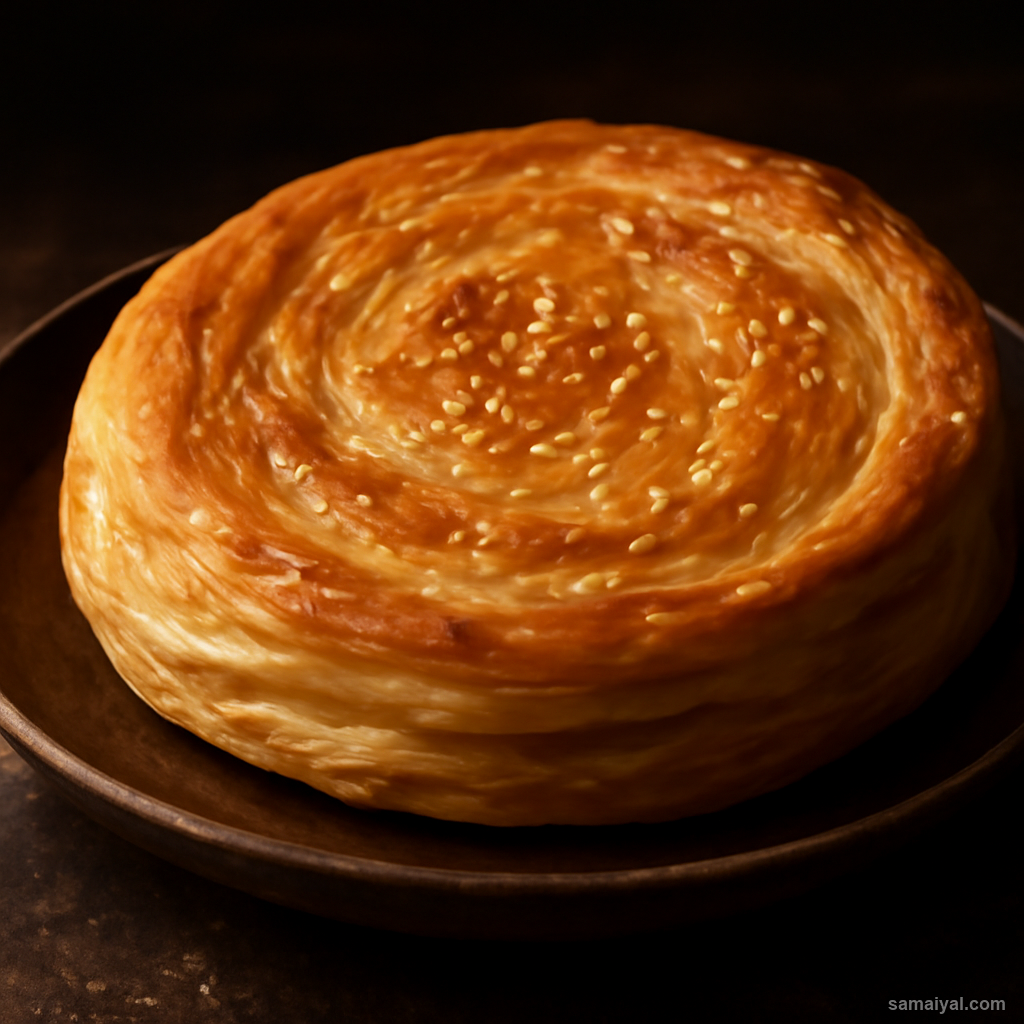
A thick, flaky, slightly sweet and layered flatbread made with ghee and maida baked in a tandoor — the Nawabi bread of Lucknow served at Eid breakfasts and festive morning meals alongside nihari or haleem. Different from naan in its multiple layered, flaky interior structure.
Activate yeast: Dissolve dry yeast in warm water with a pinch of sugar. Rest 10 minutes until foamy.
Make the dough: Combine maida, 4 tbsp ghee, sugar and salt. Rub ghee into flour. Add activated yeast and warm milk to form a soft, smooth dough. Knead 8 minutes. Rest 1 hour until doubled.
Divide and roll: Punch down the risen dough. Divide into 6 portions. Roll each into a rectangle about 20 x 10 cm.
Apply ghee layer: Spread 1/2 tsp room-temperature ghee over the surface of each rectangle.
Fold and roll: Fold the rectangle into thirds (like a letter). Roll out again. Fold and roll one more time. This creates the layered structure.
Shape: Shape each folded piece into a thick oval or round.
Let rest 15 minutes: Rest the shaped bakarkhani so the gluten relaxes.
Preheat oven to 230°C (450°F): Or prepare a tandoor.
Apply toppings: Brush the top of each bakarkhani with milk. Sprinkle sesame seeds and nigella seeds.
Bake: Bake directly on a hot baking stone or the oven rack for 7 to 8 minutes until puffed, golden and slightly charred on the surface. Serve warm.
Note: Bakarkhani (from bakar — a type of flatbread and khani — to eat, in Urdu) is the festive bread of Lucknow's Muslim culinary tradition — baked in tandoors by the specialist bakers (nanbai) of the old city of Lucknow in the Aminabad and Nakhas areas. The layering technique — applying ghee and folding multiple times before baking — produces a bread with a flaky, slightly laminated interior that tears in layers. Served specifically at Eid ul-Fitr morning breakfast alongside nihari or haleem.
⭐ Featured
Stuffed whole-wheat flatbread with spiced potato filling — the quintessential Punjabi...
 ⭐ Featured
Thin crispy rice-lentil crepe filled with spiced potato masala — the iconic South...
 ⭐ Featured
Steamed fermented rice cakes served with tangy lentil vegetable soup — South India's...

Crispy ring-shaped lentil fritters with fluffy interior — a South Indian must-have with sambar.
Comments & Tips
Be the first to share your experience with this recipe!
Leave a Comment