 ⭐ Featured
Aloo Paratha
Stuffed whole-wheat flatbread with spiced potato filling — the quintessential Punjabi...
Soft rice-and-moong-dal porridge tempered with pepper, cumin and ghee — Tamil Nadu's comfort breakfast.
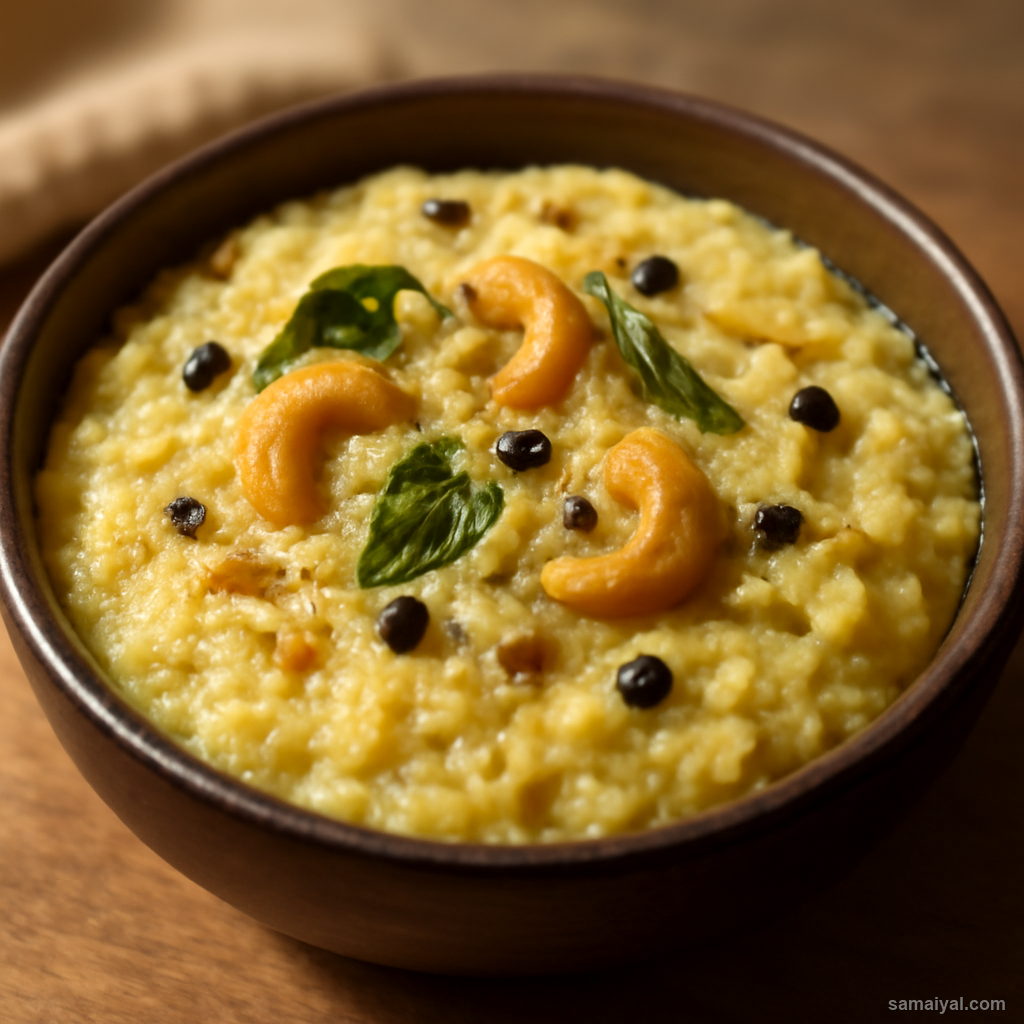
About Pongal: Pongal is the most sacred South Indian dish — a creamy porridge made from rice and moong dal cooked together with black pepper and cumin, generously finished with ghee. It is made during the Pongal harvest festival and eaten for breakfast across Tamil Nadu.
Dry roast the moong dal: Take half cup yellow moong dal (split mung beans). Dry roast in a pan without any oil on medium heat for 3-4 minutes, stirring continuously, until it turns light golden and emits a nutty aroma. Do not let it turn dark brown. This roasting adds depth of flavour.
Wash and combine: Wash 1 cup raw rice and the roasted moong dal together. Drain.
Pressure cook: Place the rice and dal in a pressure cooker with 4.5 cups water, half tsp turmeric and 1 tsp salt. Cook on high heat for 4-5 whistles. The mixture should be very soft and mushy — much more overcooked than regular rice. If using a regular pot cook for 30-35 minutes with extra water until completely broken down.
Mash well: Open the pressure cooker after the pressure releases naturally. The rice and dal should have merged into a thick, soft porridge. Mix well with a spoon — if too thick add half cup hot water and stir.
Prepare the tempering: Heat a generous amount of ghee — at least 3 tbsp — in a small pan. Ghee is essential for authentic pongal, not oil. Add 1 tsp cumin seeds and 1 tsp coarsely crushed black pepper. Let them sizzle for 30 seconds. The pepper is what gives pongal its distinctive warming flavour.
Add cashews and ginger: Add 2 tbsp cashews and fry until golden — this takes about 1 minute. Add 1 inch ginger finely grated and 1 sprig curry leaves. They will sizzle.
Combine: Pour the entire ghee tempering over the pongal and mix thoroughly. The generous ghee is what makes pongal so satisfying and is not optional.
Final consistency: Pongal should be thick but flowing — it should slowly spread when served on a plate, not stand in a mound. Add more hot water and mix if too thick.
Serve: Pongal is traditionally served on a banana leaf with sambar, coconut chutney and a small serving of pickle. It must be eaten piping hot as it thickens rapidly when it cools.
⭐ Featured
Stuffed whole-wheat flatbread with spiced potato filling — the quintessential Punjabi...
 ⭐ Featured
Thin crispy rice-lentil crepe filled with spiced potato masala — the iconic South...
 ⭐ Featured
Steamed fermented rice cakes served with tangy lentil vegetable soup — South India's...

Crispy ring-shaped lentil fritters with fluffy interior — a South Indian must-have with sambar.
Comments & Tips
Be the first to share your experience with this recipe!
Leave a Comment