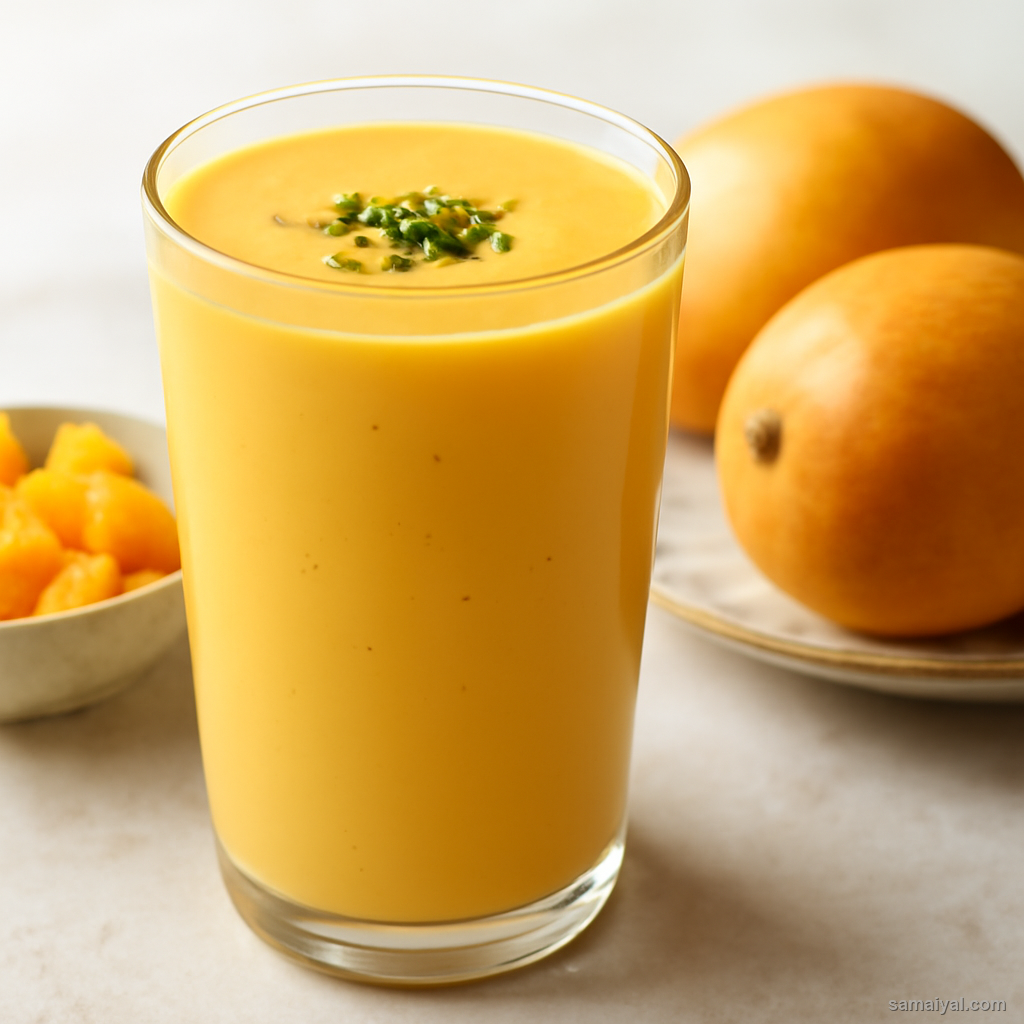
Mango Lassi
Thick yogurt blended with sweet Alphonso mangoes — cool, creamy and the perfect Indian...
Black tea brewed and then combined with fresh camel milk — a tea specific to the camel-herding communities of the Thar Desert where camel milk is the primary available dairy. Camel milk is naturally saltier, lower in fat and lighter in colour than cow or buffalo milk, giving the chai a distinctly different character.
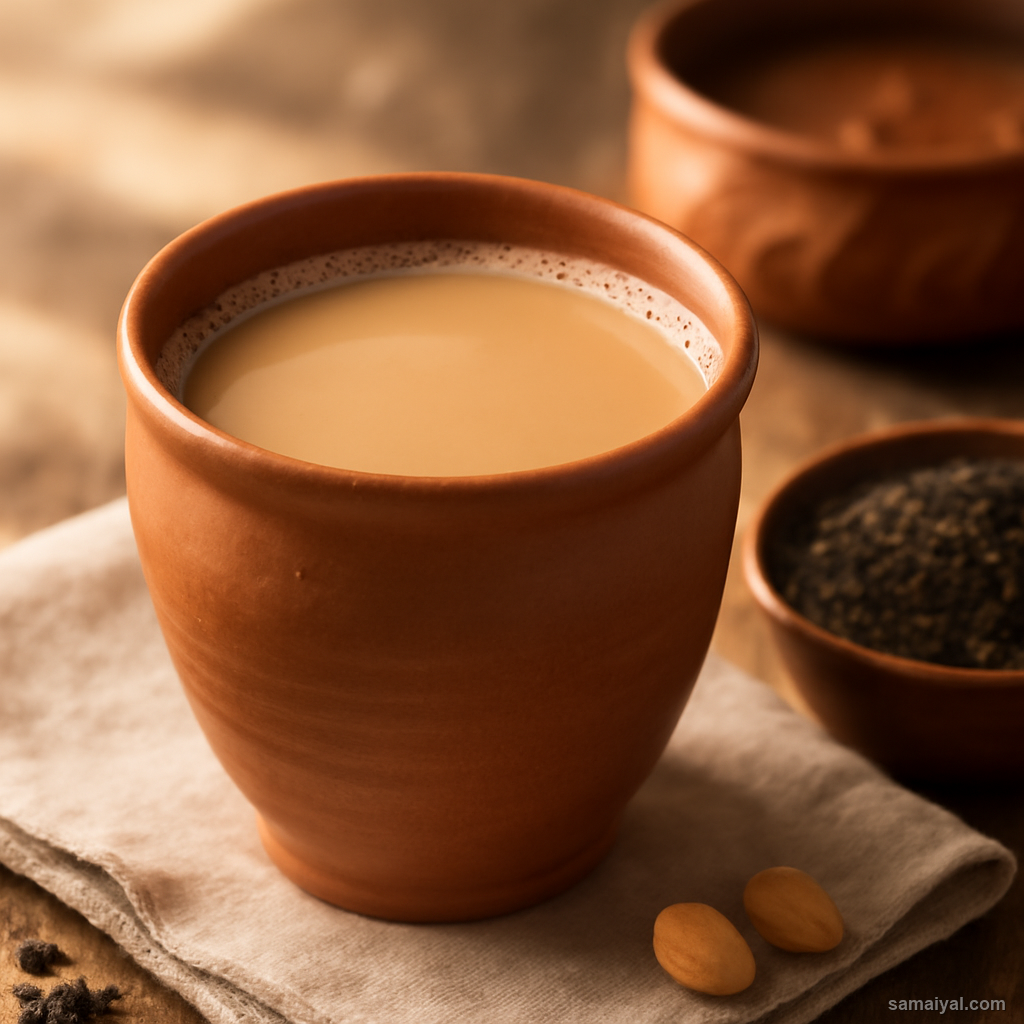
Brew strong tea in water: Bring 1 cup water to a boil. Add tea leaves and crushed cardamom. Boil for 2 minutes on medium heat to make a very strong tea concentrate.
Strain the tea concentrate: Pour through a tea strainer. Discard the leaves.
Heat the camel milk separately: Heat 2 cups camel milk in a separate pot on medium heat. Bring to a near-boil — camel milk should not be boiled vigorously as it tends to separate more readily than cow milk.
Combine tea and camel milk: Add the hot camel milk to the strong tea concentrate. Stir.
Add sugar: Add sugar to taste. Stir until dissolved.
Note the colour difference: Camel milk tea is noticeably lighter and thinner in colour than cow milk chai — the fat content of camel milk is lower than buffalo or cow milk, producing a thinner, lighter appearance.
Note the flavour: The chai should taste distinctly lighter with a slightly savoury undertone — camel milk's natural saltiness is always present.
Serve in glasses.
Drink immediately: Camel milk chai is drunk immediately — it does not hold well.
Serve at the correct temperature: Very hot, in the desert morning.
Note: Camel milk has been the primary dairy product of the Raika (Rebari) camel-herding community of Rajasthan for millennia — these nomadic herders travel with their camel herds across the Thar Desert, drinking camel milk as their primary nutrition. Fresh camel milk is available at the camel fairs of Pushkar and Bikaner and at camel farms around Jaisalmer. Camel milk is now gaining recognition in nutritional research for its lower fat content, higher mineral content and different protein structure compared to cow milk.
Thick yogurt blended with sweet Alphonso mangoes — cool, creamy and the perfect Indian...
 ⭐ Featured
Spiced black tea with ginger, cardamom and cinnamon — India's universal warm embrace in a cup.
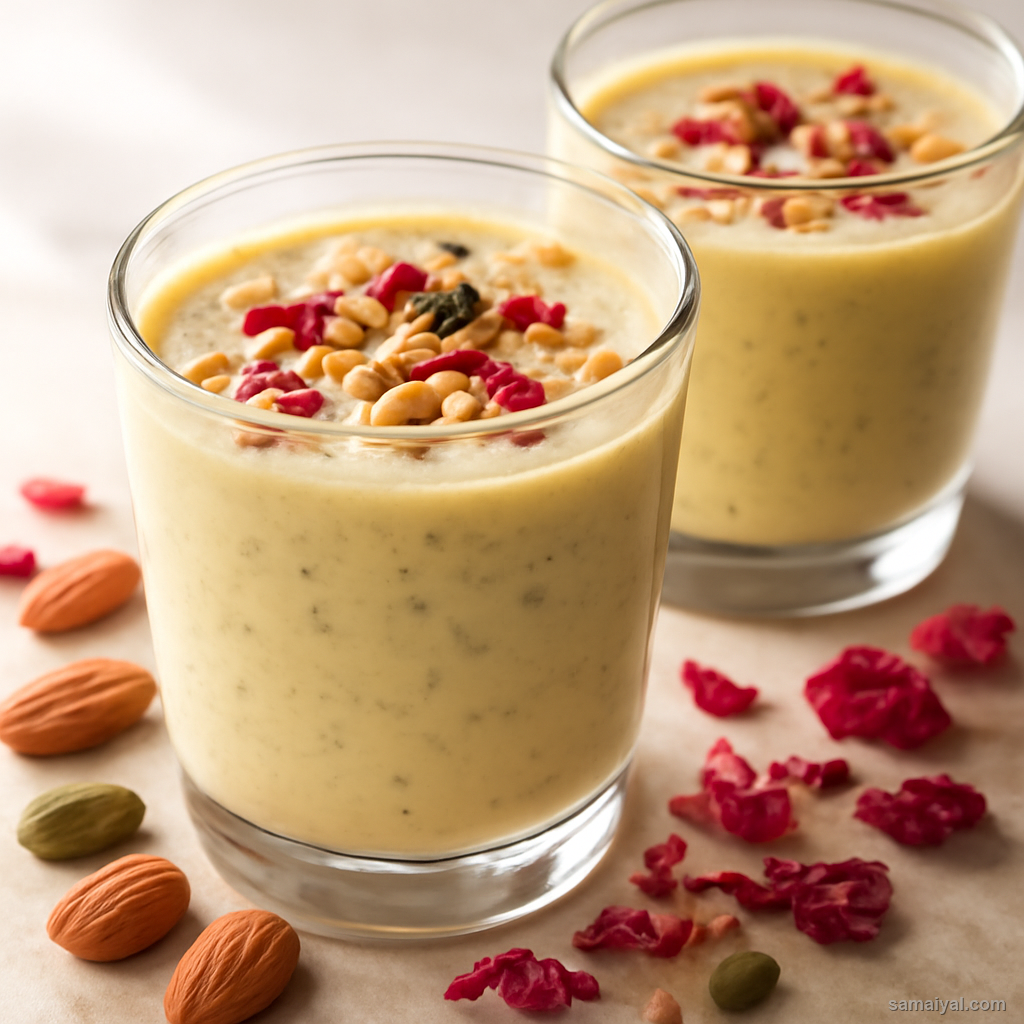
Chilled almond-spice-rose milk drink traditionally made for Holi — refreshing,...

Indian spiced lemonade with roasted cumin and black salt — light, tangy and the best...
Comments & Tips
Be the first to share your experience with this recipe!
Leave a Comment