 ⭐ Featured
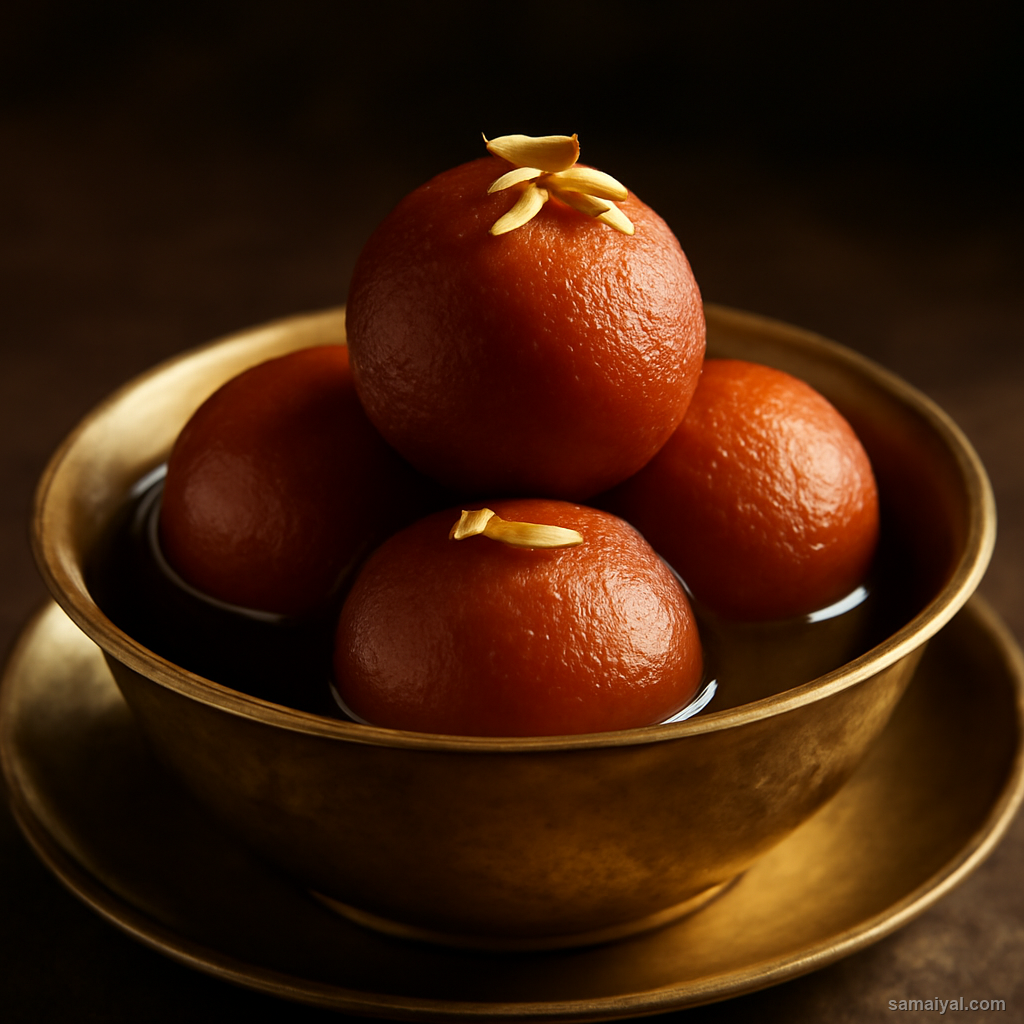
Gulab Jamun
Soft milk-solid dumplings soaked in fragrant rose sugar syrup — India's most beloved sweet.
Water chestnut flour roasted in ghee with sugar and cardamom into a smooth, slightly sticky halwa — the Navratri and Ekadashi fasting sweet of UP that uses singhara (water chestnut) flour which is permitted during fasting when regular wheat flour is not. Eaten as the sweet course during the nine fasting days.

Heat ghee: Heat 3 tbsp ghee in a heavy, wide pan on medium-low.
Add water chestnut flour: Add the singhara atta to the hot ghee. Stir immediately and continuously.
Roast on medium-low: Roast stirring continuously for 4 to 5 minutes until the flour turns one shade darker and smells faintly sweet and nutty. Water chestnut flour roasts much faster than wheat flour — watch carefully.
Boil water and sugar separately: In a small pot, boil 2 cups water. Add sugar and stir until dissolved. Keep the sugar syrup warm.
Add warm sugar syrup: Pour the warm sugar syrup into the roasted flour all at once while stirring vigorously. Stand back — it will spit dramatically.
Stir without stopping: Stir continuously as the halwa cooks and thickens rapidly. The singhara flour thickens much faster than wheat flour — within 3 to 4 minutes it will pull away from the pan.
Add cardamom: Add cardamom powder. Stir.
Check: The halwa should be smooth, slightly sticky (this is the character of water chestnut), pulling cleanly from the pan sides and fragrant with ghee and cardamom.
Add fried cashews: Stir in the fried cashews.
Serve warm: Serve in small portions as the sweet during fasting days.
Note: Singhara (water chestnut) grows abundantly in the ponds and lakes of UP — particularly in the Farrukhabad, Kannauj and Unnao districts where water chestnut cultivation is traditional. During the two Navratri fasting periods (spring and autumn) the markets of Lucknow, Allahabad and Varanasi are full of singhara atta being sold specifically for fasting sweets and breads. The slightly sweet, sticky character of water chestnut flour makes the halwa distinctly different in texture from wheat flour halwa.
⭐ Featured
Soft milk-solid dumplings soaked in fragrant rose sugar syrup — India's most beloved sweet.

Slow-cooked rice pudding with cardamom, saffron, nuts and rose water — pure comfort in a bowl.

Slow-cooked grated carrot pudding with ghee, milk and cardamom — a winter celebration classic.

Spongy soft chenna balls cooked in light sugar syrup — the iconic Bengali sweet.
Comments & Tips
Be the first to share your experience with this recipe!
Leave a Comment