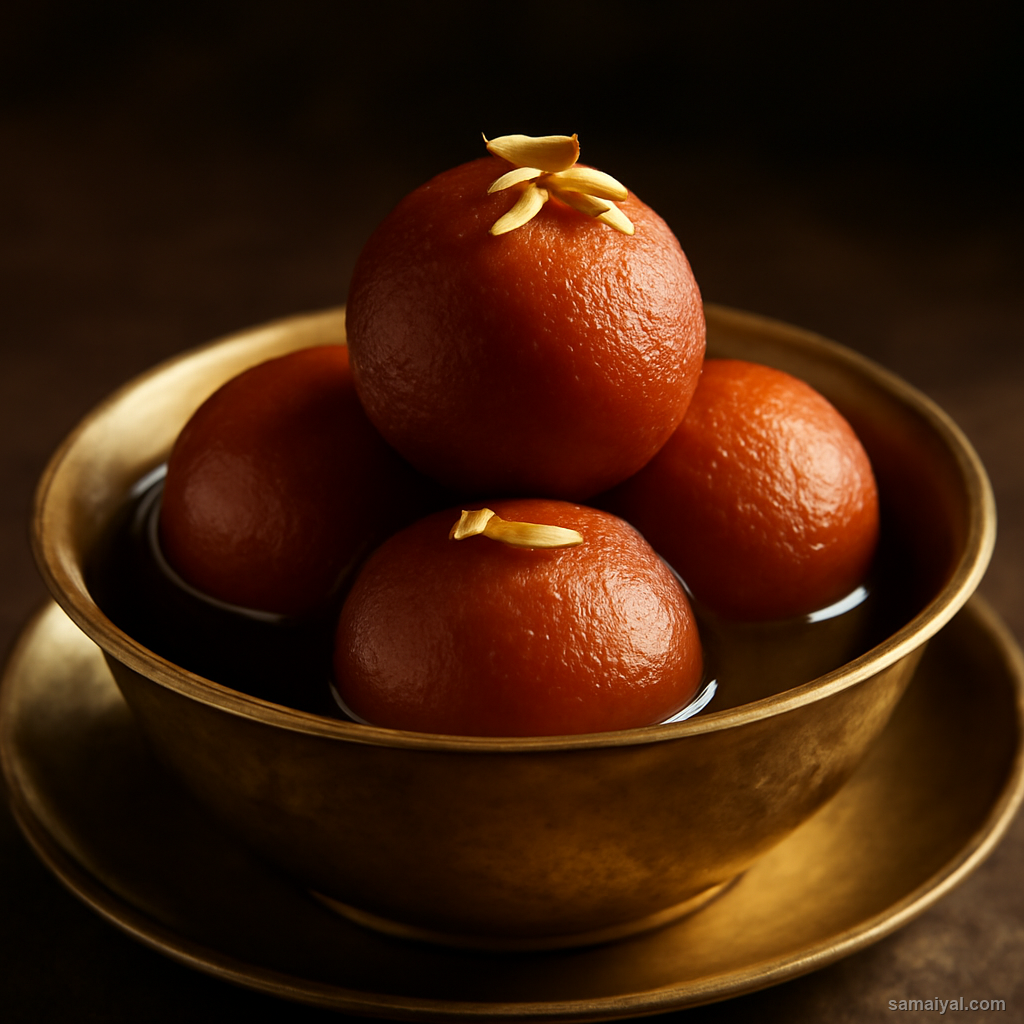
 ⭐ Featured
Gulab Jamun
Soft milk-solid dumplings soaked in fragrant rose sugar syrup — India's most beloved sweet.
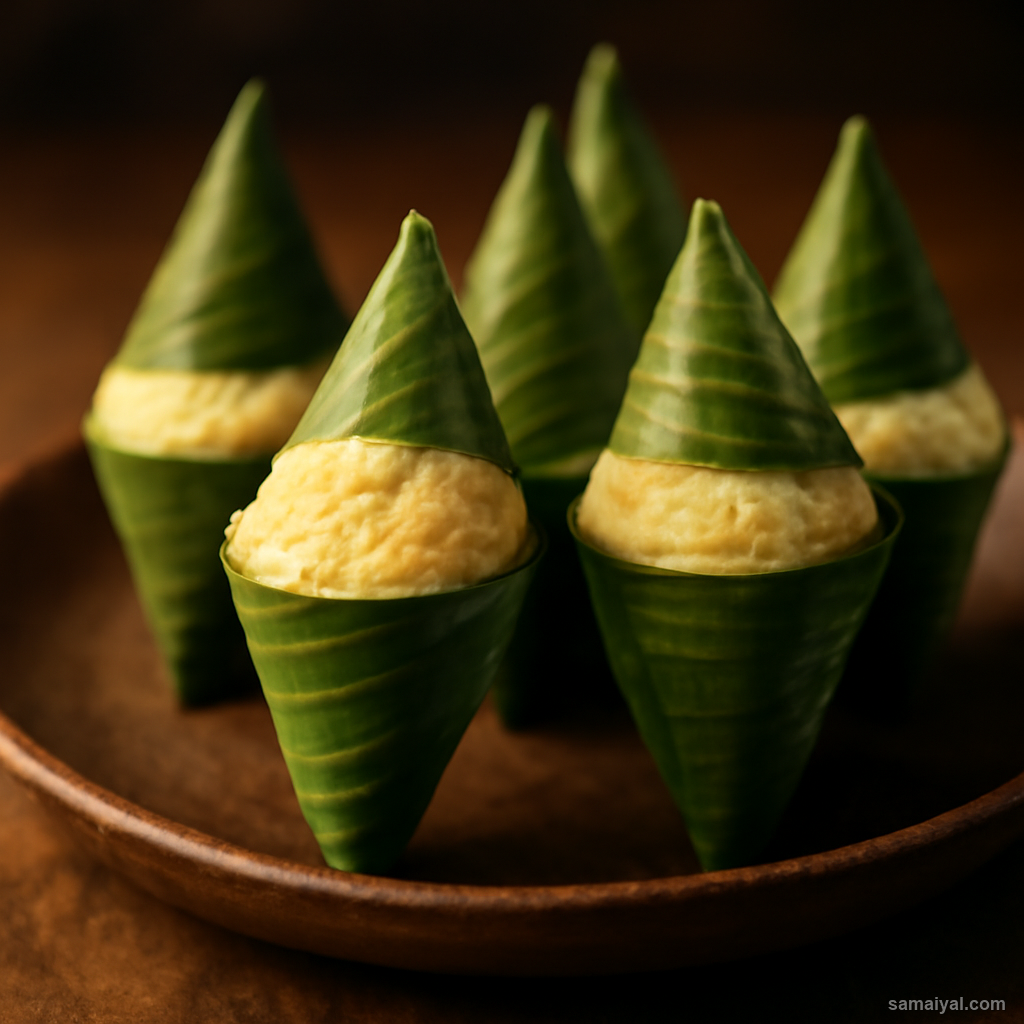
Khoya (reduced milk solids) sweetened with sugar and cardamom, wrapped in a cone-shaped maalu leaf and allowed to set — the leaf imparts a faintly green, earthy flavour to the khoya. A speciality of Almora and Bageshwar in Uttarakhand.
Crumble and soften the khoya: Place 400 g soft khoya in a wide pan. Heat on very low heat, stirring gently, for 2 to 3 minutes until the khoya softens to a smooth, malleable mass. Remove from heat.
Add sugar and cardamom: Add powdered sugar and cardamom powder to the warm softened khoya. Mix vigorously for 3 minutes until completely smooth and the sugar is fully incorporated. Taste — the khoya should be sweetened to a pleasant level, not cloyingly sweet.
Prepare the leaf cones: If using maalu leaves, each leaf is shaped into a cone by folding the leaf into a funnel shape and securing with a toothpick. If using banana leaf, cut into 10 cm squares, warm each over a flame to make pliable, then fold into a cone shape and secure with a toothpick.
Fill the cones: Spoon the sweetened khoya mixture into each leaf cone, pressing gently to fill without air pockets. The cone should be about 3/4 full.
Garnish the top: Add 3 to 4 very thin pistachio slices on the exposed top surface of each filled cone.
Set in the refrigerator: Place the filled cones upright in a cup or a small container so they stand without tipping. Refrigerate for 1 to 2 hours until the khoya firms up and holds the cone shape.
Serve in the leaf: Singodi is served in its leaf cone — the guest unfolds the leaf slightly to eat the sweet directly from it.
The leaf flavour: When refrigerated in the leaf for 1 to 2 hours, the khoya absorbs a faint, clean, earthy-green fragrance from the leaf that is the defining characteristic of singodi.
Eat within the same day: Singodi is best eaten within 4 to 6 hours of preparation — the leaf flavour fades if stored for longer.
Serve cold: Serve directly from the refrigerator.
Note: Singodi is a speciality of Almora and Bageshwar in Kumaon, Uttarakhand. The sweet is named for the singod (water chestnut) shape of the maalu leaf cone. The maalu leaf (from a Bauhinia species) imparts a unique, clean green flavour to the khoya that no other leaf can replicate — this fragrance is what makes singodi unlike any other khoya sweet. Almora's sweet shops have been selling singodi for generations and it is a prized souvenir sweet of the Kumaon hills.
⭐ Featured
Soft milk-solid dumplings soaked in fragrant rose sugar syrup — India's most beloved sweet.

Slow-cooked rice pudding with cardamom, saffron, nuts and rose water — pure comfort in a bowl.

Slow-cooked grated carrot pudding with ghee, milk and cardamom — a winter celebration classic.

Spongy soft chenna balls cooked in light sugar syrup — the iconic Bengali sweet.
Comments & Tips
Be the first to share your experience with this recipe!
Leave a Comment