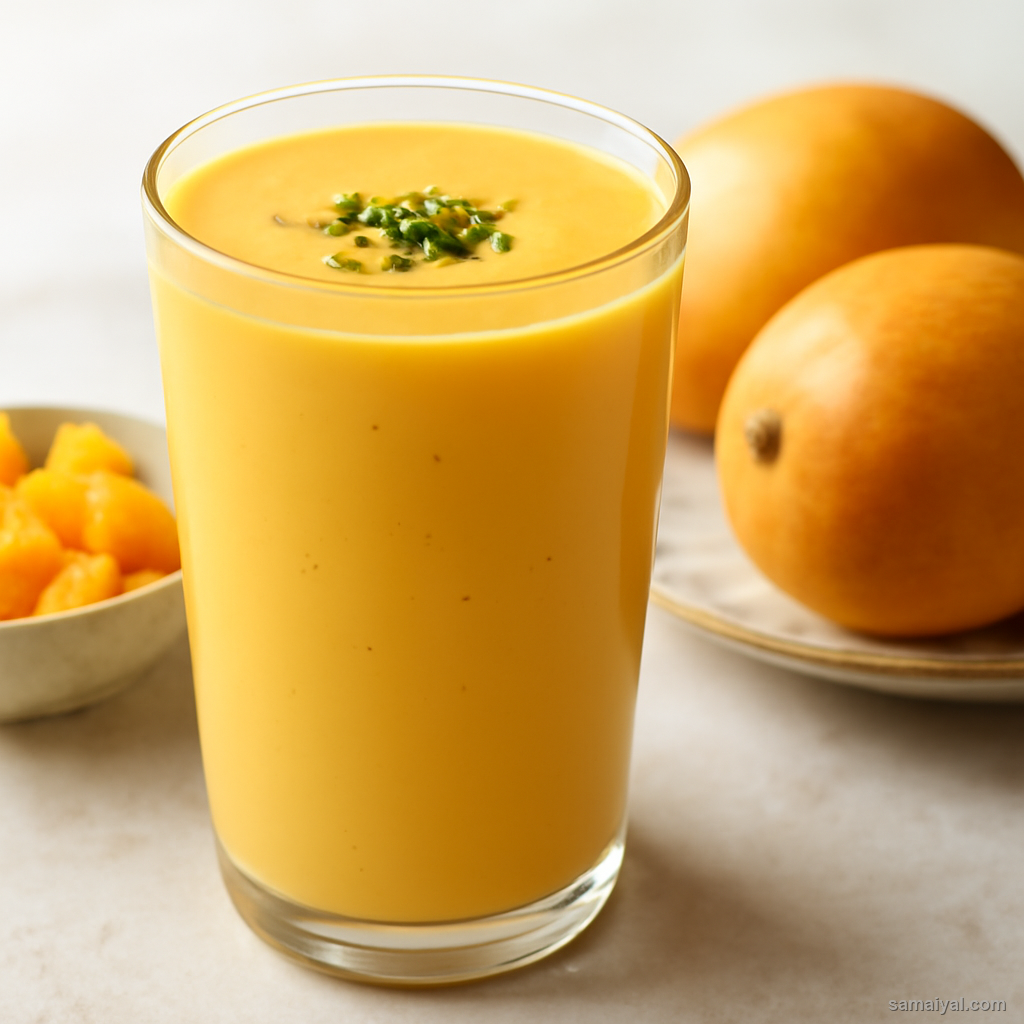
Mango Lassi
Thick yogurt blended with sweet Alphonso mangoes — cool, creamy and the perfect Indian...
Fermented wild honey drink — the ancient ceremonial beverage of several Arunachali tribes

About Wild Honey Mead Arunachal: Wild honey mead is the ancient ceremonial beverage of several Arunachali tribes — particularly the Adi, Galo, Apatani and Mishmi communities. Variations exist in different villages, with some adding fruit, others using only honey, but the basic technique remains constant: honey, water, simple flavourings, time. This recipe is provided for cultural and educational documentation; consume responsibly and only if you are of legal drinking age.
IMPORTANT LEGAL AND HEALTH NOTES: This is an alcoholic beverage. It must only be consumed by adults of legal drinking age. Home-brewing alcohol may have legal restrictions in your region — check local laws before attempting. The fermentation process can fail unpredictably; if anything looks or smells off (visible mould, foul rot smell, pink/green discolouration), discard the entire batch.
This is a variation of recipe id 1178: This recipe represents a slightly different tribal variation of the same wild honey mead concept. The technique is similar but the proportions and serving traditions vary slightly between Arunachali communities. Both recipes can be made; comparing them is a way to understand regional variation.
Source quality honey: Use 500g of wild honey if available. Wild honey contains natural yeasts that drive fermentation. Pasteurised commercial honey has been heat-treated and will not ferment — use only raw, unprocessed honey.
The critical no-heat rule: Never heat the honey or water above body temperature. Heat destroys the wild yeasts that drive fermentation. Use room-temperature water throughout.
Use the right water: Use 2 litres of clean drinking water. If your tap water has chlorine, use bottled or filtered water — chlorine kills wild yeasts.
Prepare a clean working space: Sterilisation matters in fermentation. Wash all surfaces, hands and equipment thoroughly with hot soapy water.
Dissolve the honey: In a large clean glass jar (5-6 litre capacity), combine the 500g honey with 2 litres of room-temperature water. Stir vigorously with a wooden spoon for 2-3 minutes until the honey is fully dissolved. The mixture should look cloudy at first, then clarify slightly as the honey integrates.
The water-honey ratio: The 4:1 water-to-honey ratio produces a moderate-strength mead. The Arunachali tribal preference varies — some communities prefer 5:1 (lighter, more drinkable), others prefer 3:1 (stronger, sweeter).
Prepare the ginger: Take a 2-inch piece of fresh ginger. Peel and grate finely. Place the gratings in your fist over a small bowl and squeeze hard to extract the juice. You should get about 1 tsp of clear ginger juice. Discard the squeezed pulp.
Add the flavourings: Add the 1 tsp ginger juice and the juice of 1 fresh lemon to the honey-water. Stir well. The ginger and lemon both inhibit harmful bacteria while encouraging beneficial fermentation.
The vessel: Glass is best — it lets you observe the fermentation. Avoid metal containers — they react with the slightly acidic environment.
Leave headspace: Leave at least 5cm of empty space at the top of your jar. Fermentation produces CO2, which can build pressure and crack containers if there is no room.
Cover with a cloth: Cover the jar with a clean breathable cloth (cheesecloth or muslin works well). Secure with a rubber band or string. The cloth keeps insects out while allowing CO2 to escape.
Do not seal airtight: Sealing airtight is dangerous — pressure from CO2 can cause the container to explode.
Ferment at room temperature: Place the jar in a warm dark spot (20-26°C is ideal). Cold temperatures slow or stop fermentation; very hot temperatures produce off-flavours.
The 24-hour check: After 24 hours, you should see slight bubbling on the surface and smell a faint sweet-fruity aroma.
Daily skimming: Each day, skim off any foam with a clean spoon. Foam is a normal byproduct but can develop off-flavours if left too long.
The bubble check: As fermentation progresses, you should see small bubbles rising continuously through the liquid.
The 3-day check: At 3 days, the mead should taste mildly sweet, slightly fizzy, with a subtle alcoholic warmth.
The full fermentation: After 3-5 days total, fermentation should be at the right point. The mead will be gently fizzy, pleasantly alcoholic, and balanced between sweet and dry.
Stop fermentation when ready: Beyond 5 days, the mead becomes drier and eventually turns sour. Best to harvest at 3-4 days for sweeter mead; 5 days for drier version.
Final safety check: Before drinking, ensure the mead smells pleasantly fermented (sweet-fruity-alcoholic), looks clear with a slight golden colour, and has no visible mould. If wrong, discard the batch.
Filter through cloth: Place a clean muslin cloth over a large bowl. Pour the contents through the cloth. Squeeze any solids gently to extract every drop of liquid.
Serve traditionally: Pour into bamboo cups or small clay tumblers. Serve at room temperature in small cups — the Arunachali tradition emphasises moderation and ceremony rather than large servings.
The ceremonial offering: Traditional Arunachali tribal hospitality dictates that mead is served to guests with both hands and a slight bow. The recipient takes the cup with both hands. Refusing entirely is considered rude; even a small symbolic taste is expected.
Serving protocols: Mead is consumed in moderation — small amounts at a time. The traditional way is to take small sips during conversations or shared meals.
A cultural and historical note: Wild honey collection has been part of Arunachali tribal life for centuries. The skilled gatherers who climb cliff faces using bamboo ladders to harvest wild combs represent one of the most extraordinary traditional professions in India. Their honey, used in mead-making, supports this risky and celebrated tradition. Buying genuine wild honey from Arunachali sources (rather than home-brewing) is a way to support the gatherers economically.
The fruit-added variation: Some Adi and Galo communities add 1 cup of crushed fresh fruit (mountain berries, jamun, or local apples) along with the honey. The fruit accelerates fermentation and adds flavour complexity. This is the most festive variation, made for major celebrations.
Leftover storage: Filtered mead is best consumed within 1-2 weeks, kept refrigerated. The alcohol slows further fermentation but the mead continues evolving in flavour over time. The early days produce sweeter, lighter mead; the later days produce drier, more complex mead.
Thick yogurt blended with sweet Alphonso mangoes — cool, creamy and the perfect Indian...
 ⭐ Featured
Spiced black tea with ginger, cardamom and cinnamon — India's universal warm embrace in a cup.
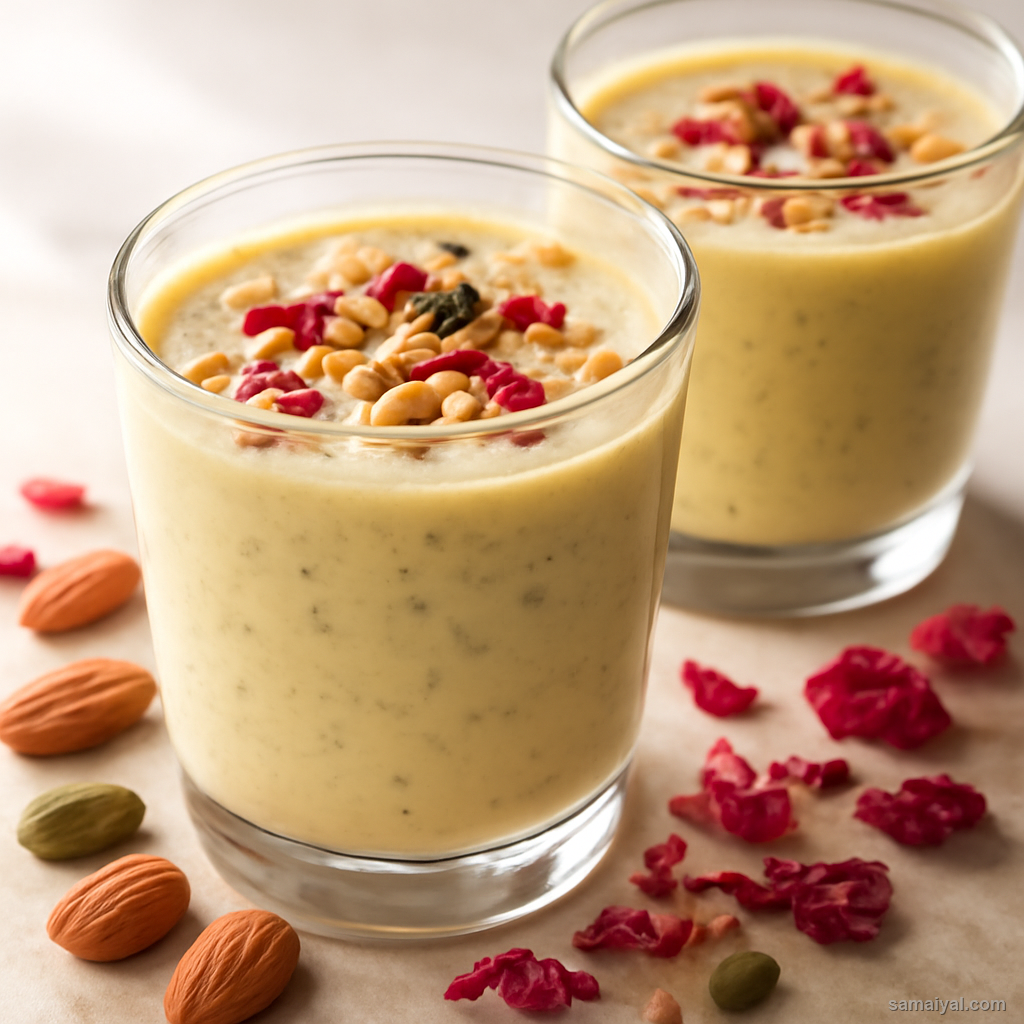
Chilled almond-spice-rose milk drink traditionally made for Holi — refreshing,...

Indian spiced lemonade with roasted cumin and black salt — light, tangy and the best...
Comments & Tips
Be the first to share your experience with this recipe!
Leave a Comment